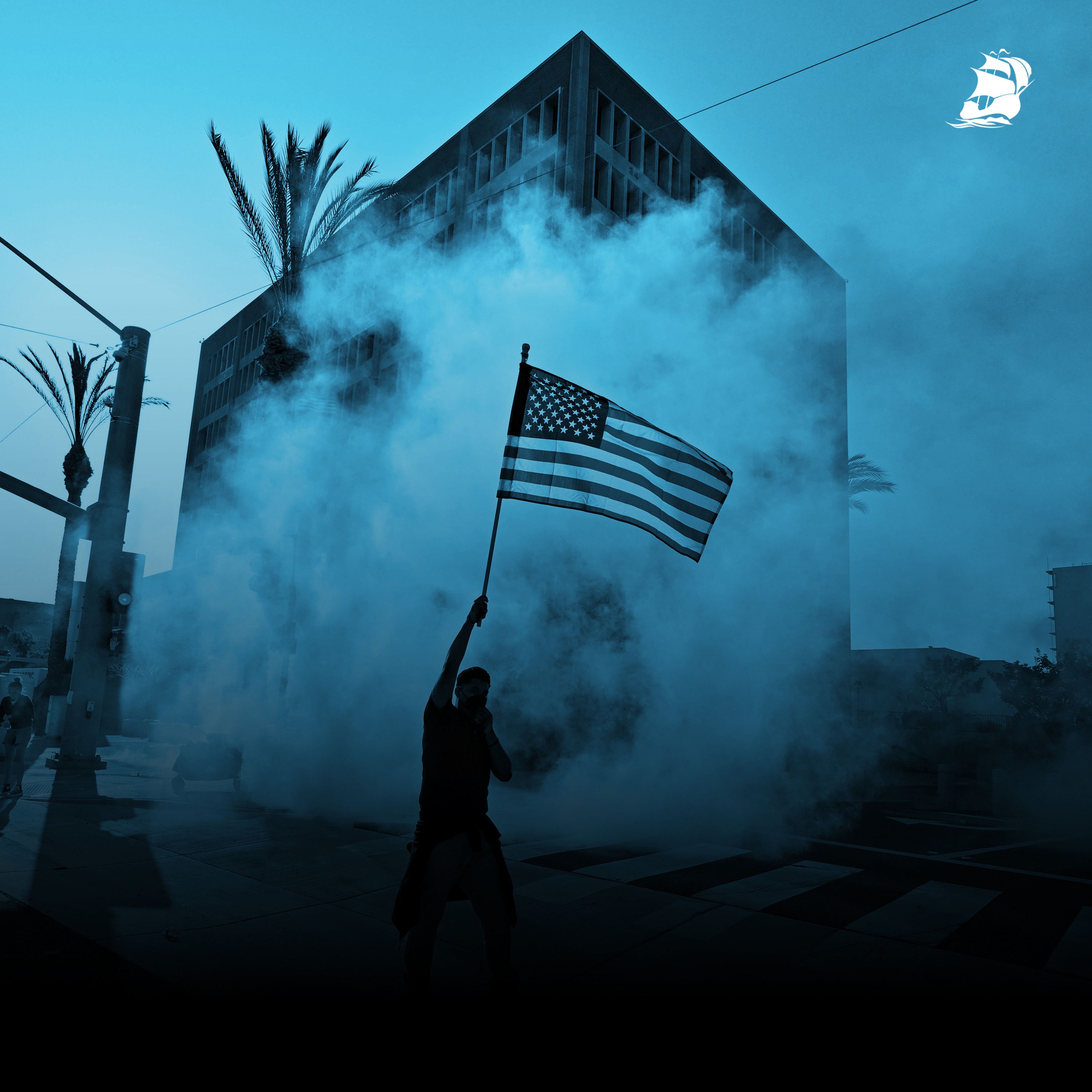
Overview of Robert Kagan and Marianne Williamson: Slipping Into Dictatorship
This Bulwark Podcast episode (host Tim Miller) features two interviews: foreign-policy scholar Robert (Bob) Kagan and author/activist Marianne Williamson. Kagan warns that Trump-era policies are unraveling the post–World War II international order and risking a return to a dangerous multipolar world; he also sounds the alarm about democratic erosion at home. Williamson frames the crisis as moral, spiritual, and socio-economic — arguing that mass economic despair and institutional failures made the country vulnerable to authoritarianism and calling for a values-based, “all-systems” response.
Segment 1 — Robert Kagan (contributing writer, The Atlantic; senior fellow, Brookings)
Key points
- The post‑WWII order is historically unusual: U.S. primacy plus cooperative responses from other states created a long peace. Trump-era moves risk returning to a 19th/early‑20th‑century-style multipolar world with frequent great‑power conflict.
- “Spheres of influence” talk is dangerous and naive: granting Russia/China regional dominance would sacrifice the freedom of many countries (e.g., Baltic states, Poland, Korea, Southeast Asia) and leave the U.S. with the poorest “sphere” (parts of the Western Hemisphere).
- Allies won’t simply tolerate being treated as tributaries; alienating tariffs and threats erode public support for the U.S. and will push democracies to take their security into their own hands.
- China and Russia likely see a window of opportunity during perceived U.S. retreat; Xi may be prepared to act on Taiwan within a few years.
- Domestic democratic erosion: Kagan warns Trump will not allow fair defeats and may try to nationalize or delegitimize elections, use intimidation (e.g., ICE operations) to suppress turnout, and exploit legal chaos to prevent seating new representatives.
- Institutions are weakened: the DOJ, courts, and parts of the federal government have been reshaped in ways that lower barriers to authoritarian moves; the Supreme Court’s deference on “national security” decisions is a risk.
- Military/militarization concerns: U.S. policy under Trump elevates hard power (bigger portfolios for the military, diminished diplomacy/soft power), and foreign adventurism (bombing/kinetic pressure) is often performative rather than strategic.
- On Iran and the Middle East: Kagan is skeptical that bombing or rushed kinetic policies will produce stable, pro‑democracy outcomes — he sees much of the administration’s posture as motivated by domestic political showmanship.
Notable quotes
- “If we replicate the 19th‑century kind of world today, we would be having major wars… pretty much once every decade.”
- “This is kind of America against everybody.”
- “At the end of the day, things are about power… they’re wielding force and they have a near monopoly of power.”
Suggested follow‑ups/readings
- Kagan’s Atlantic piece (“America versus the World”) and his book Rebellion: How Anti‑Liberalism Is Tearing America Apart.
Segment 2 — Marianne Williamson (author, activist, former presidential candidate)
Key points
- Democracy is in a deep crisis; recovery will take a long time and require civic/spiritual awakening and mass mobilization by citizens, not just elites.
- Root cause analysis: chronic mass economic suffering (underinsurance, wage stagnation, lack of opportunity) created a political petri dish for strongmen and extremism. Political elites ignored or minimized this.
- Why she ran: to shift the party and national conversation toward addressing the underlying human and moral suffering that produces political instability.
- Democratic Party critique: elites are disconnected from people’s lived experience; the party often prioritized technocratic, incremental fixes over emotional and moral engagement with voters’ pain.
- On the wellness/“spiritual” voters and RFK Jr.: Williamson defends asking legitimate health and food‑policy questions while rejecting anti‑vaccine positions (she opposes making polio vaccine optional and decries anti‑vax misinformation). She rejects any alignment with Trump or fascist forces.
- Department of Peace / militarization: advocates for reducing militarism, reallocating focus toward diplomacy, humanitarian aid, and an integrative approach to public health and societal well‑being.
- Afghanistan and women’s rights: criticizes how the withdrawal was handled and argues the U.S. failed many Afghan women who had helped U.S. efforts.
- Spirituality as politics: sees spiritual language as “path of the heart” — insists spiritual/moral renewal must accompany policy changes; cites historical examples where religious movements powered social justice reforms.
Notable quotes
- “Donald Trump was a symptom… we squandered.”
- “Our job is not to wake other people up. Our job is to wake up.”
- “You don’t heal by just pointing the blame at other people.”
Practical takeaways
- Address economic insecurity at scale (healthcare access, underinsurance, widening inequality) to reduce the social fuel for authoritarian appeals.
- Rebuild moral and emotional connection between political leaders and voters — policy alone is insufficient.
Cross‑cutting themes
- Democratic erosion + authoritarian risk: Both guests emphasize the risk at home — legally, institutionally, and via intimidation tactics — and the need to take threats seriously.
- Geopolitics and diminished alliances: Internationally, U.S. disengagement/abrasiveness weakens alliances and serves adversary interests (China, Russia).
- Militarization vs. soft power: Critics point to overreliance on force and underinvestment in diplomacy, development, and multilateral tools.
- The personal/political: Williamson frames the crisis as moral/spiritual and sociological; Kagan frames it as strategic and material. Both see citizen engagement as essential.
Action items — what listeners should watch and consider
- Watch 2026 midterms and state/federal election administration — expect legal challenges, delays, and tactics that could create contested outcomes.
- Follow U.S. relations with key allies (Europe, Japan, Korea) for signs of strategic decoupling or independent military buildup.
- Monitor China’s posture toward Taiwan and Russia’s actions in Eurasia — both may see short windows to pursue objectives if the U.S. appears internally weakened.
- Support civil society, local journalism, and election protection groups to bolster democratic resilience.
- Engage locally: community organizing, voter mobilization, and economic policy advocacy to address underlying grievances Williamson highlights.
Notable sponsors/ads (from episode)
- Rocket Money (subscription/budgeting app)
- Soul (hemp‑derived CBD/THC products)
- BetterHelp (online therapy)
Produced by: Katie Cooper; audio engineering/editing by Jason Brown.
If you want a very short summary: Kagan warns the U.S. is unraveling its post‑WWII security order and facing both external danger (China/Russia) and internal democratic erosion; Williamson argues the crisis is rooted in moral/economic failure and calls for spiritual‑political renewal plus policy fixes to heal the social conditions that fuel authoritarianism.