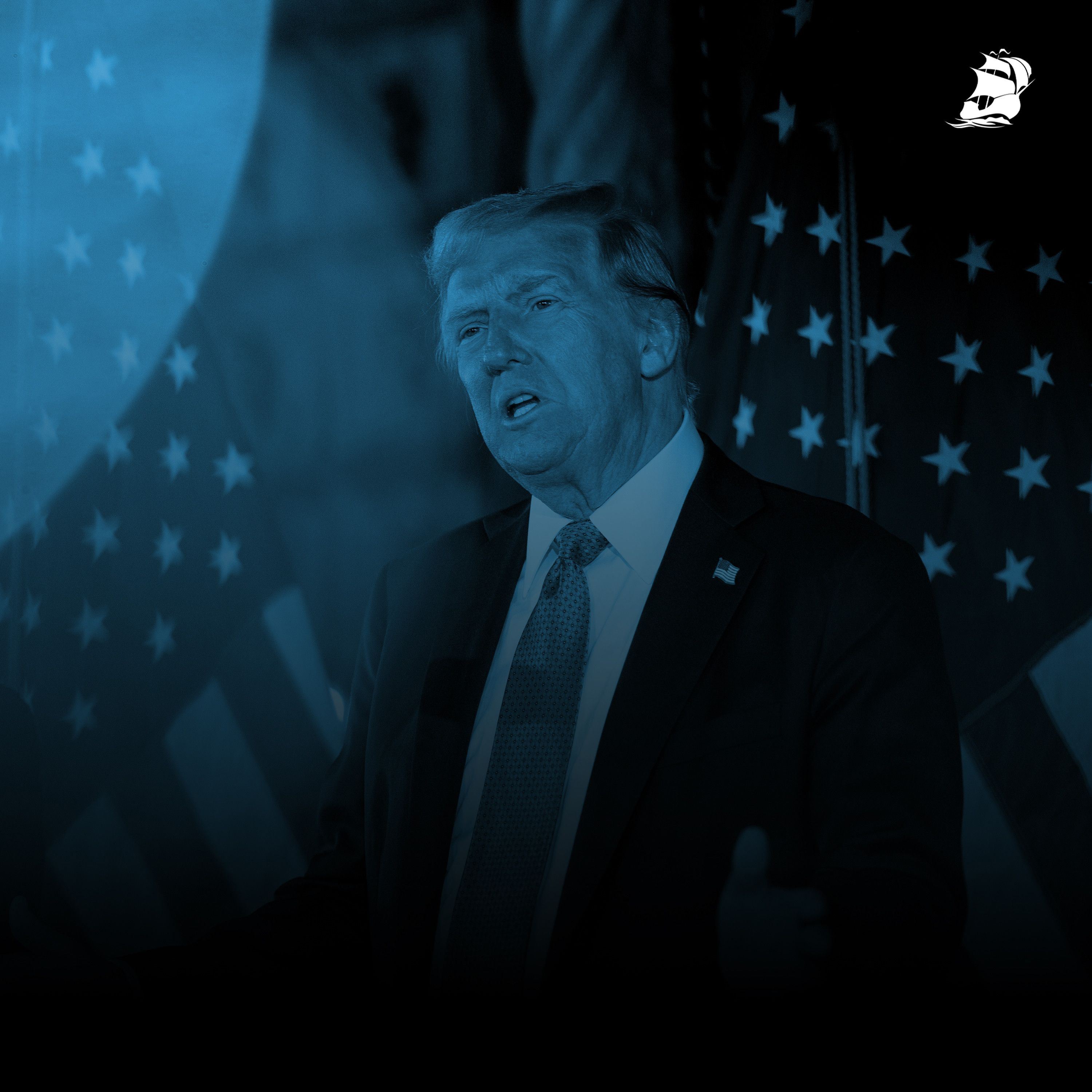
Overview of The Bulwark Podcast — "Mike Murphy: We’re Living in a Nightmare"
Veteran Republican strategist Mike Murphy joins host Tim Miller to give a broad, blunt assessment of the Trump presidency and its effects on U.S. politics, foreign policy, and industry. Murphy calls the current moment a “nightmare,” argues Trump’s foreign theatrics (Davos/“Board of Peace”) flatter an ego while damaging alliances, and warns that short-term business gains under Trump mask long-term geopolitical and economic costs. The conversation ranges from European reactions to Trump, GOP accommodation of Trumpism, the 2026 midterm outlook and 2028 trajectories, to concrete policy consequences for the auto industry, DHS/ICE enforcement in Minnesota, California politics, and a proposed California wealth tax.
Main topics discussed
-
Trump on the world stage
- Murphy criticizes Trump’s Davos appearance (the “Board of Peace”), calling it an embarrassing rogues’ gallery and saying it signals an effort to reshape international institutions around autocratic allies.
- He warns the board effectively “owns Gaza” — a ludicrous and dangerous position that could force disastrous U.S. involvement.
- Foreign leaders see the U.S. as the stabilizing metronome; Trump’s behavior disrupts that and risks long-term damage to alliances.
-
GOP behavior and intra-party dynamics
- Murphy is baffled by many Republicans’ continued support for Trump (calls them the “no better caucus”), including figures like Marco Rubio and Dan Crenshaw.
- Predicts some Republican distance will be tactical (post-primary/midterms) rather than principled; expects short-term “forward bump” as filing deadlines pass.
- Foresees a bruising midterm for Republicans and a chaotic Republican nomination process toward 2027–28.
-
Domestic politics and polls
- Notes recent polling (NYT/Siena) shows Trump’s coalition largely reverted to pre-2020 profiles; many voters who defected in 2024 have “snapped back.”
- Emphasizes the economy and pocketbook issues drive these movements—political performance alone won’t sustain support.
-
Business, Davos, and the “short-termism” argument
- Murphy summarizes Ken Griffin’s Davos comments: some executives feel liberated by Trump’s rollback of regulation and claim it helps short-term profitability.
- Murphy counters this is short-sighted—removing environmental and industrial policy (car standards, EV support) will cost U.S. manufacturing long-term and help China.
-
Auto industry, EVs, and industrial policy
- Trump’s rollback of CARB standards and other policies weakens U.S. competitiveness in EVs; Chinese EV strategy is a politicalindustrial play that threatens long-term U.S. scale.
- Murphy argues the right set of nationalist/pro-producer policies could defend industry, but Trump’s mix (tariffs + chaos) is destructive.
-
DHS/ICE enforcement and Minneapolis
- Murphy condemns aggressive ICE actions in Minnesota, recounts instances of mistaken arrests and poor interagency coordination, and endorses strong state/local pushback against federal overreach.
- He frames the ICE behavior as part of a broader pattern of abuses and politicized staffing in the Trump administration.
-
California politics and Gavin Newsom
- Murphy praises Newsom’s brand-building (anti-Trump performative moments) but advises he must move from pre-season trolling to substantive policy leadership if he’s to be a national player.
- On California policy controversies (undocumented Medicaid, ethnic-studies curriculum, high gas taxes), Murphy suggests Newsom should claim California as a lab—owning successes and mistakes.
-
Wealth tax ballot measure (California)
- Murphy’s poll work shows the proposed one-time 5% billionaire levy polls poorly in practice wording; he expects significant legal and fiscal blowback if it advances and thinks it’s badly written and potentially harmful to state revenues.
-
Staffing and competence in the Trump administration
- Anecdotes (from the Kash Patel/Trump-era FBI staffing) are used to illustrate unprofessionalism and incompetence at the top of government: extravagant, unserious demands and mismanagement that undermine alliances and intelligence cooperation.
Key takeaways / Murphy’s judgments
- We are in a geopolitical “nightmare”: Trump’s conduct damages alliances, creates incentives for nuclear proliferation among allies, and increases global instability.
- Short-term business relief under Trump (fewer regulations) is real for some executives, but it’s paid for with long-term geopolitical and industrial costs.
- The Republican Party’s accommodation of Trump is politically self-preserving, not principled; this will have consequences in the midterms and beyond.
- The auto industry and U.S. industrial base need coherent, forward-looking policy (incentives + standards) to compete with China; Trump’s approach undermines that.
- Democrats should be strategic with their power—avoid tactical mistakes (e.g., overreliance on impeachment) that would play into GOP narratives.
- Local and state governments should push back where federal enforcement becomes abusive or politically weaponized.
Notable quotes
- “We’re living a nightmare.” — Murphy on current U.S. geopolitics under Trump.
- “It’s either greed or stupid greed.” — Murphy characterizing Trump’s operating motives.
- “We now have the superpower that they rely on—the metronome beat of western democracy—run by a crockpot egomaniac child.” — on the perception of U.S. leadership abroad.
- “Trump has snapped the leash off and let the dogs run.” — on business reaction to deregulation.
- “This is toddler-with-the-chainsaw economics.” — describing Trump’s economic and trade policy approach.
Actionable points Murphy recommends (implicit)
- For Democrats in power: use institutional power judiciously — prioritize governance and avoid purely punitive or performative moves that could backfire.
- For U.S. industry and policymakers: build coordinated, long-term industrial policy (incentives and standards) to maintain competitiveness, especially in EVs and semiconductors.
- For states and cities: prepare legal and policing countermeasures where federal agencies overreach (use municipal and state authority as appropriate).
- For voters and observers: focus on pocketbook issues and midterm impacts—short-term economic gains can obscure longer-term strategic risks.
Who’s speaking / podcast details
- Host: Tim Miller (The Bulwark)
- Guest: Mike Murphy — veteran Republican strategist (McCain, Schwarzenegger, Romney), co-host of Hacks on Tap, co-director at USC’s Center for Political Future, runs American EV Jobs Alliance.
- Tone: political analysis with sharp, partisan critique and anecdotal color; mixes policy detail with cultural/personal observations.
This episode is a wide-ranging critique of the Trump presidency’s institutional, geopolitical, and industrial consequences and a warning that short-term gains may impose lasting costs.