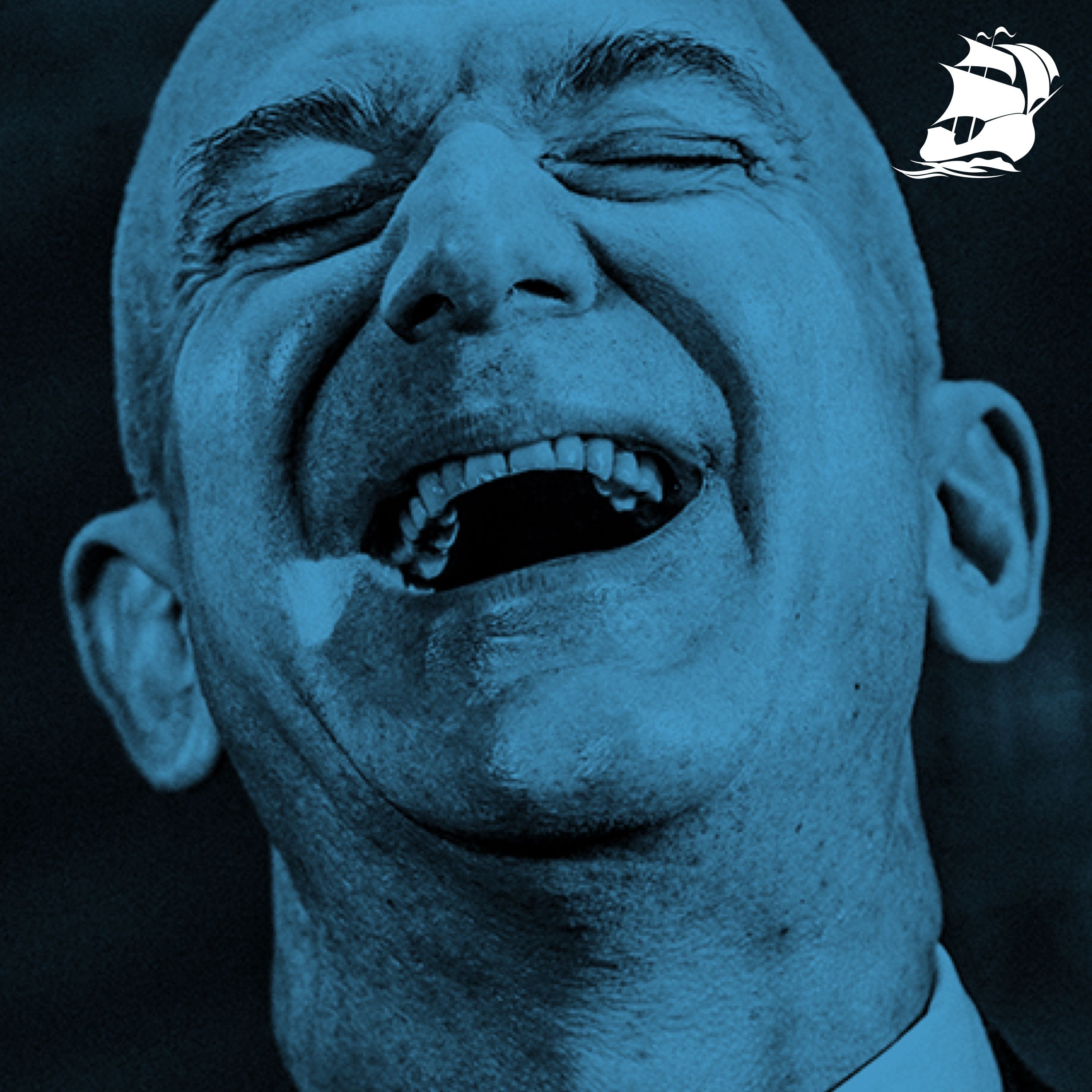
Overview of Marty Baron: Behind the Washington Post’s Demise
This Bulwark podcast episode features Tim Miller interviewing Marty Baron, former executive editor of The Washington Post and author of Collision of Power: Trump, Bezos, and The Washington Post. Baron recounts the paper’s transformation after Jeff Bezos bought it in 2013, explains why he believes recent leadership choices and owner priorities have produced a “retreat” rather than a viable reset, and proposes remedies (including nonprofit conversion and renewed investment in digital innovation) to preserve watchdog journalism.
Key takeaways
- Bezos’ early ownership (2013–circa 2020) funded a successful push to national/international, digital-first journalism; The Post grew staff and was profitable for several years.
- Baron says Bezos initially defended editorial independence (e.g., around Trump pressure and the Snowden coverage) and actively supported the newsroom.
- Recent cutbacks and memos about changing audience focus look to Baron more like a retreat than a strategic reset; they risk hollowing out accountability journalism.
- Two major forces underpin the current crisis: (1) failure to diversify revenue/product mix at the scale of competitors (e.g., NYT’s Wirecutter, cooking, games, The Athletic) and (2) owner conflicts of interest tied to Bezos’ other businesses (Amazon, Blue Origin) and the return of Trump.
- Baron proposes a nonprofit model with an independent board, a long runway for experimentation, and recommitment to investigative reporting and modern digital formats (podcasts, short video).
Background: how we got here
- Baron joined The Post in early 2013; Bezos acquired the paper in October 2013.
- Under Bezos, the paper shifted from primarily regional to national/international and fully digital; staff expanded from ~540 toward ~1,000 by Baron’s retirement in Feb 2021.
- The Post won Pulitzers and was named among the most innovative media companies (Fast Company 2015, 2018).
- “Democracy Dies in Darkness” was adopted as a mission statement during this period (Baron says Bezos pushed for it).
What Baron identifies as causes of the current collapse
- Business/product strategy failures
- The Post did not diversify revenue/products at the scale of peers (NYT’s Wirecutter, cooking app, games; NYT also acquired The Athletic for sports).
- Traffic declines from platforms/search (Facebook, Google) and disruptive effects of AI necessitate new strategies; Baron sees insufficient evidence of a coherent plan or execution.
- Owner/business conflicts and politics
- Baron argues Bezos’ commercial interests (Amazon cloud contracts, Blue Origin’s dependence on government work) create pressure to repair relationships with the Trump administration.
- Bezos’ public appearances (e.g., at Blue Origin events with Trump officials) risk eroding the Post’s independence and brand.
- Baron believes Trump’s threats are more credible post-2024 and that companies fear economic retaliation via federal contracting.
- Editorial repositioning mistakes
- Internal memos about writing for a broader slice of the audience were read by Baron as moving away from a facts-first accountability remit toward political calculus—potentially alienating core readers.
- Industry-wide pressures
- Accelerating change in audience habits (podcasts, short video, newsletters) and tech-driven traffic shifts demand ongoing, experimental investment.
Baron's recommended remedies
- Consider converting The Washington Post into a nonprofit with:
- A genuinely independent board
- Charitable or philanthropic funding to give long runway and room to experiment
- A requirement to pursue profitability over time but not at the expense of mission
- Reinvest in digital-first products: podcasts, short-form video, newsletters, and product diversification (transactions, apps, games).
- Recommit to watchdog journalism—particularly coverage of corruption and conflicts of interest in government.
- Be transparent with readers to restore trust and reclaim lost subscribers.
Notable quotes and insights
- “It looks more like a retreat to me.” (On the Post’s recent changes.)
- “We need reporters on the ground…around the world.” (On consequences of shrinking the newsroom.)
- “The primary responsibility…is to hold its government accountable.” (On the Post’s mission.)
- On the motto: Bezos “wanted that motto…he called it a mission statement.”
- Proposed remedy: “I’d like to see it put into a nonprofit…give it runway…a really good board that’s truly independent.”
Topics discussed in the episode
- Bezos’ acquisition and early support for editorial independence
- The Snowden coverage and codified national-security standards
- “Democracy Dies in Darkness” origin and reception
- Jared Kushner’s attempts to pressure Post leadership
- Comparisons to The New York Times’ business/product diversification
- The impact of AI, search/social traffic decline, and platform-driven disruption
- Conflicts of interest related to Bezos’ Amazon and Blue Origin
- Trump-era threats, pressure on corporations, and chilling effects on institutions
- Possible futures for The Washington Post (nonprofit vs. new ownership vs. new strategy)
- The continuing need for investigative reporting into corruption
Actionable items (for newsrooms and readers)
For newsroom leaders:
- Prioritize a clear, public, contemporary vision that links mission to product and revenue strategy.
- Build diversified revenue streams (product acquisitions, apps, transaction-based products, subscription bundles).
- Invest in digital formats where audiences live now (podcasts, short video, newsletters).
- Maintain strict editorial independence policies and transparency about owner conflicts.
For readers/subscribers:
- Demand clarity on editorial independence and transparency from legacy outlets.
- Support investigative journalism through subscriptions or donations if you value accountability reporting.
Final assessment
Baron frames the recent cuts at The Washington Post not merely as cost-cutting but as the result of strategic drift, insufficient product diversification, and owner/business conflicts that imperil the paper’s watchdog role. His prescription emphasizes insulation from owner business pressures (nonprofit structure or genuinely independent governance), renewed investment in digital innovation, and an unwavering commitment to accountability reporting.