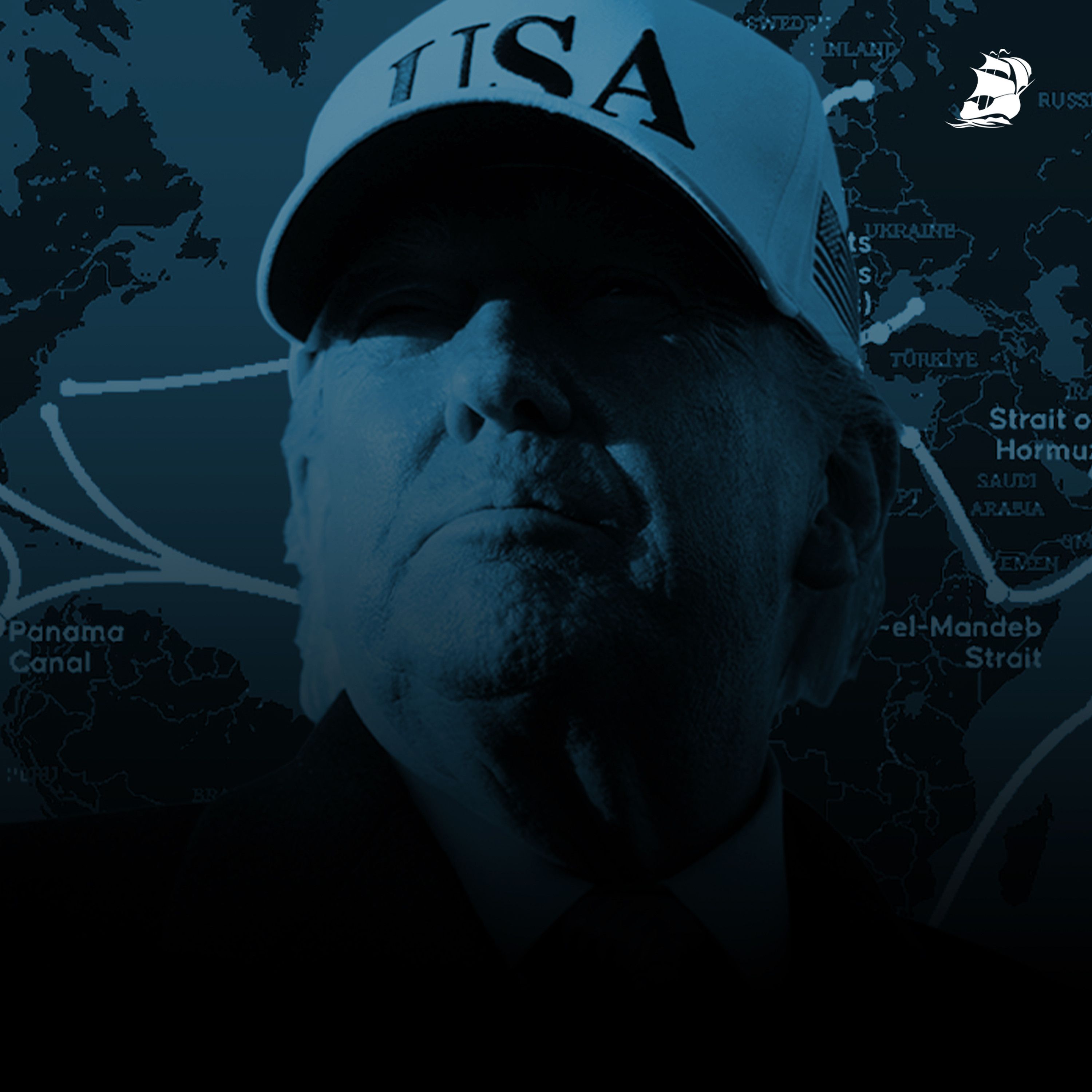
Overview of The Bulwark Podcast — "Jeffrey Goldberg and Joe Weisenthal: Pandora's Box Has Been Opened"
This episode (host Tim Miller) features two long interviews. First, Jeffrey Goldberg (Editor-in-Chief, The Atlantic) discusses Pentagon culture and leadership, SignalGate (Pete Hegseth), press access to the Pentagon, and the broader political implications of the Iran war and Israeli politics. Second, Joe Weisenthal (Bloomberg, co-host of Odd Lots) analyzes the war’s economic fallout: oil and energy markets, safe-haven flows, supply-chain bottlenecks (fertilizer, helium, semiconductors), and the longer-run implications for reserve currencies and Gulf economies. Both segments emphasize that immediate tactical military success can co-exist with strategic confusion — and that policy choices now open wider geopolitical and economic “Pandora’s boxes.”
Guests & context
- Host: Tim Miller (The Bulwark)
- Guest 1: Jeffrey Goldberg — Editor-in-chief, The Atlantic; long-time foreign‑policy journalist
- Guest 2: Joe Weisenthal — Executive editor of news, Bloomberg Digital Brands; co-host of Odd Lots
Key topics covered
Jeffrey Goldberg (Pentagon, Iran, Israel)
- SignalGate (Pete Hegseth texting in a Signal chain):
- Goldberg argues senior officials should be held to the same standards as subordinates; he frames Hegseth’s conduct as performative and irresponsible.
- He criticizes Hegseth’s public style and rhetorical grandstanding and sees it as symptomatic of appointing people without proper judgment for sensitive roles.
- Pentagon press access and the mainstream press corps:
- Goldberg defends the national-security press as “patriotic” — critical but not anti-security — and laments efforts to cast reporters as enemies of the state.
- Kicking reporters out of the Pentagon impedes convenience but won’t stop independent reporting.
- Iran war assessment:
- Tactical: CENTCOM/Admiral Cooper has performed well — degrading air defenses and missile systems — earning high tactical marks.
- Strategic: Lacks clear long-term objectives; Goldberg stresses “you can’t grade it because they didn’t hand in the homework.”
- Limitations: Air campaigns can’t disarm internal security/repression (e.g., Revolutionary Guard checkpoints), so desired political outcomes inside Iran remain unlikely to be achieved solely by strikes.
- Geopolitical ripple effects: Risks encouraging other powers (e.g., China) to question U.S. will to secure narrow waterways like Taiwan Strait.
- Israeli politics and Jewish diaspora relations:
- Goldberg has long warned about rising illiberalism in Israel; he worries that Netanyahu’s coalition has opened a difficult-to-close “Pandora’s box.”
- He defends the necessity of preventing mass death and sees a two-state solution as the only plausible way to reduce large-scale violence, though he’s skeptical about near-term prospects.
Joe Weisenthal (Markets, commodities, supply chains)
- Immediate economic impacts of the Iran war:
- Oil surge: Brent near ~$100+/bbl (varies), with actual consumer pain magnified by refinery throughput limits and shipping constraints (Strait of Hormuz).
- Market psychology: Prices and markets are heavily influenced by political signals (e.g., Trump tweets), and the perceived likelihood of a long blockade/war is often underpriced.
- Tactical vs strategic effects on markets:
- Tactical successes (neutralizing missiles/air defenses) don’t remove the physical chokepoint problem — the Strait of Hormuz — which drives global risk premia.
- If markets believed the strait would be closed for long, prices would spike much higher.
- Safe-haven behavior is context-dependent:
- Dollar, gold, Treasuries, Bitcoin — all can act as safe havens in different scenarios; none are universally reliable. Right now the US dollar has been the most liquid safe haven.
- Gold can be sold to meet margin calls; Treasuries lose appeal in high-inflation/war scenarios.
- Secondary economic risks:
- Fertilizer (urea) shortages hitting during planting seasons → near-term food-price inflation risks.
- Helium, rare earths and niche industrial commodities: small markets but critical inputs (semiconductors, AI infrastructure); supply disruptions could cause outsized industrial pain.
- Gulf economies and capital flows: Dubai/Abu Dhabi facing travel/capital disruptions; Russia benefits from higher oil prices, while Gulf states may suffer because of shipping/logistics constraints.
- Longer-term structural effects:
- Repeated shocks since COVID (trade wars, pandemic, Ukraine, now Iran) push countries toward stockpiling, reshoring, and redundancy — raising the floor for commodity prices and changing global trade dynamics.
- Questions about the dollar’s reserve status are long‑term and gradual, but persistent political and productive-capacity concerns could chip away at dollar dominance over time.
Main takeaways
- Tactical military operations can be competent while the strategic objective remains undefined — damaging long-term political outcomes and alliances.
- Leadership selection (judgment, discipline, respect for norms) matters: performative or ill-disciplined appointees create risks beyond immediate operational decisions.
- Economic spillovers from a regional war are broad: energy prices, fertilizer/food chains, niche industrial inputs, sovereign wealth and capital flows all interact — some effects are immediate, others will be durable.
- Markets price perceptions and politics as much as fundamentals; messaging from leaders (and unpredictable actors) can sharply move markets.
- Recurrent global shocks are accelerating deglobalization tendencies: more stockpiling, onshoring, and redundancy — which raise structural costs and may alter long-run geopolitical economic balances.
Notable quotes & lines
- Goldberg on SignalGate and leadership: “You can have rules and regulations…and the deeper problem is you have to hire people with judgment, discretion and smarts.”
- On tactical vs strategic in Iran: “On a tactical level, it's somewhere between an A and an A+. On a strategic level, you can't grade it because they didn't hand in the homework.”
- Weisenthal on markets underpricing risk: “The market prices would be much higher than they are today if people really took seriously that we are in a state of war.”
Actions / what to watch next
- Monitor the Strait of Hormuz status and shipping disruptions: that’s the primary physical choke point for oil.
- Track oil benchmarks (Brent/WTI), refinery utilization rates, and strategic petroleum reserve moves.
- Watch fertilizer (urea) and food-price reports over the next planting months for signs of inflationary pressure.
- Follow Pentagon press‑access updates and any formal investigations or policy changes around SignalGate/official communications standards.
- Keep an eye on Israeli domestic politics and Israeli-Palestinian policy shifts that could affect regional stability.
- Listen to Atlantic and Odd Lots coverage for deeper dives (Goldberg’s Atlantic pieces on Middle East; Bloomberg’s Odd Lots on specific supply-chain/commodity issues).
Further reading/listening: Atlantic reporting by Jeffrey Goldberg; Bloomberg/Odd Lots episodes on oil, fertilizers, and supply-chain inputs.