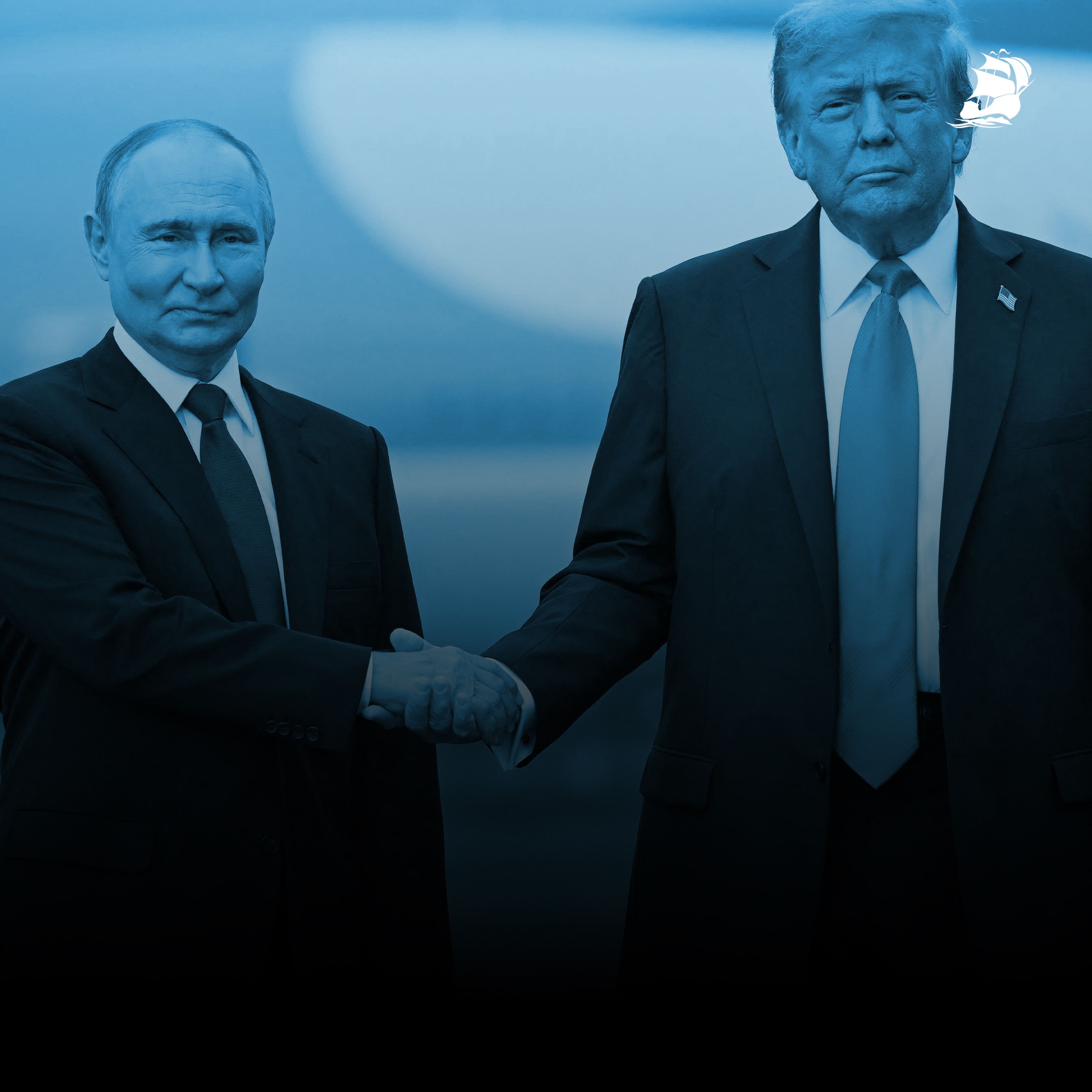
Overview of Fiona Hill: Putin and the Art of Manipulating Trump
This episode of The Bulwark Podcast (host Tim Miller) features Fiona Hill — former deputy assistant to the president and senior director for European and Russian affairs on the U.S. National Security Council (Trump’s first term), a former national intelligence officer for Russia and Eurasia, and a Brookings senior fellow. The conversation reviews Hill’s background, her reasons for joining the Trump administration, her impeachment testimony, and a wide-ranging assessment of Vladimir Putin’s methods, Russian interference in 2016, the Trump–Putin dynamic, and geopolitical consequences (Greenland, Venezuela, Ukraine, NATO, and growing European decoupling).
Guest background
- Fiona Hill: Northern England upbringing (coal-miner family), scholarship to study Russian, Harvard fellowship, long career focused on Russia and Vladimir Putin (Brookings, National Intelligence Council). Author of a memoir and a book about Putin.
- Host: Tim Miller (The Bulwark).
Key topics discussed
- Hill’s path from Northern England to Russian studies and U.S. policymaking.
- Her reasons for entering the Trump administration, and the limits she encountered.
- 2016 Russian interference: aims, methods, and long-term effects on U.S. politics.
- Putin’s playbook: KGB training, patient manipulation, exploiting existing trends and vulnerabilities.
- Trump–Putin interactions (Helsinki/G20/Hamburg): translating, flattery, pliability, and the risks of ad hoc meetings without proper preparation.
- Specific episodes: proposed Venezuela–Ukraine linkage, Greenland “purchase” episode, and Trump’s broader approach to foreign policy.
- European reaction and Mark Carney’s Davos speech on a “rupture” in the liberal order and economic weaponization.
- Ukraine war: failure of consistent U.S. leadership, human cost, and the need for unified Western support.
- Concerning patterns: ad-hoc envoys (e.g., Steve Whitkoff), “board of peace” proposals with authoritarian figures, and potential for corruption/enrichment schemes.
Main takeaways
- Russia’s 2016 campaign succeeded because it exploited pre-existing fissures and aligned with actors who already wanted the same outcomes; it aimed to weaken the West broadly, not only elect a single candidate.
- Putin is a practiced manipulator who looks for vulnerabilities; flattery and subtle framing are his tools. Trump is especially susceptible to flattery and symbolic gestures, which Putin exploits.
- Ad-hoc diplomacy (private meetings without proper staff, notes, interpreters, or follow‑through) is highly dangerous with Putin; it invites manipulation and produces little durable policy.
- Trump’s Greenland episode and other unilateral proposals have alienated close allies (Denmark, NATO members), accelerating European moves to reduce strategic dependence on the U.S.
- Mark Carney’s “rupture” thesis: countries are increasingly treating integration as a vulnerability when economic levers are weaponized. That risk encourages greater European self-reliance, military buildup, and even nuclear proliferation fears.
- On Ukraine: inconsistent U.S. policy and domestic political disputes have undermined a coherent Western response at great human cost; if Ukraine falls, blame will fall largely on Western disunity.
- Schemes like the so-called “board of peace” (cash pledges, inclusion of authoritarian governments) look less like serious diplomacy and more like opportunistic, potentially corrupt initiatives.
Notable quotes & soundbites
- “Russia was the foreign power that systematically attacked our democratic institutions in 2016.” (Hill, citing U.S. intelligence and bipartisan reports)
- “If you think you're being part of the problem, you've got to leave.” (Advice Hill received before joining the administration)
- On Putin: he “was a recruiter… always looking for people's vulnerabilities.”
- On Greenland: “The Greenlander people are not for sale.”
- From Mark Carney (played in episode): “We are in the midst of a rupture not a transition.”
Examples & anecdotes from the episode
- Hill recounts the confusion about private meetings (Helsinki vs. Hamburg vs. G20), the role of translators, and how lack of staff/note-taking made President Trump easy to manipulate.
- Discussion of Russian efforts hinting at a Venezuela-for-Ukraine swap as an enticement rather than a fully formed proposal — part of a pattern of testing and recruitment.
- Greenland: Trump’s public talk of buying Greenland created diplomatic shock and alienated Denmark and other NATO partners despite existing security arrangements and investments.
- Steve Whitkoff and other private envoys are compared to past ad-hoc operatives (e.g., Rudy Giuliani), raising concerns about being used as “useful idiots” by Russia.
Implications / recommended actions (Hill’s perspective and inferred conclusions)
- U.S. policymakers should avoid ad-hoc, personality-driven diplomacy with authoritarian leaders; always bring qualified staff, interpreters, and written records.
- Rebuild and reassure alliances: alienating close partners undermines shared security architectures (NATO, Arctic cooperation).
- Congress needs to act to provide consistent support for Ukraine; local and state leaders should also use their platforms to mobilize support.
- Europe will act to reduce dependencies; the U.S. should not assume it will remain the unquestioned security/economic anchor if it continues to weaponize ties unpredictably.
- Be skeptical of initiatives that lack institutional oversight (e.g., cash-based “boards” or deals involving authoritarian leaders).
Why this episode matters
- It connects firsthand experience inside the Trump-era NSC to present-day geopolitical risks: how personal vulnerabilities and style-driven diplomacy can have strategic consequences.
- Hill’s blend of biography, policy experience, and intel background gives context to Russian influence operations, transatlantic reactions, and the stakes for Ukraine and NATO cohesion.
- The discussion highlights the broader structural risk Carney describes: the erosion of rules-based integration when economic and political ties become coercive.
Bottom line
Fiona Hill argues that Putin’s long-term strategy is to exploit existing fissures and sympathetic actors in the West; the Trump style — ad-hoc, personal, and flattery-prone — was an especially fertile environment for that strategy. The result has been weakened alliances, a fractured Western response to crises (notably Ukraine), and rising European efforts to decouple or build independent capabilities. Hill urges institutional, allied, and congressional action to restore steadier, rules-based Western policy.