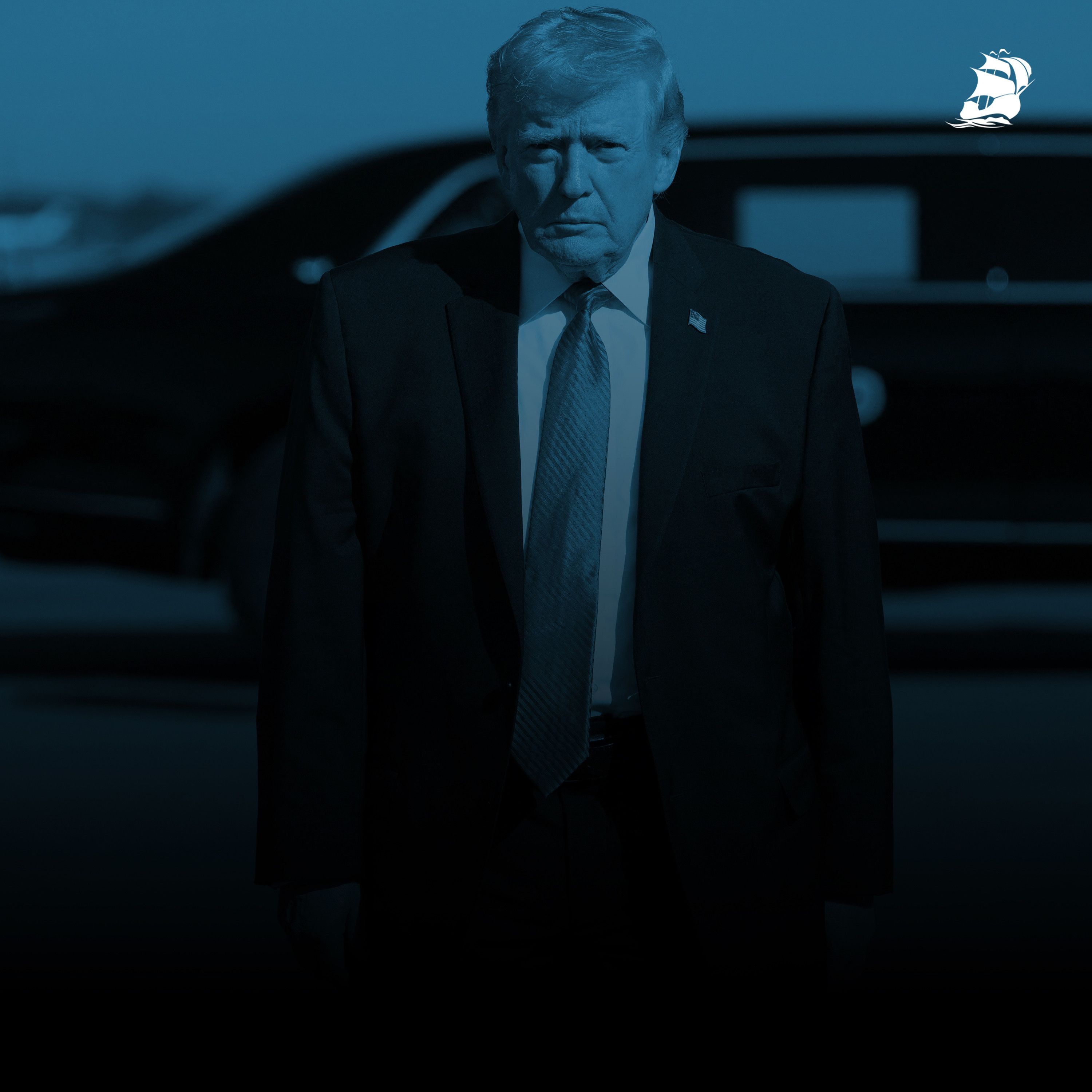
Overview of The Bulwark Podcast: Bill Kristol — "Trump Is in Way over His Head"
This episode (host Tim Miller; guest Bill Kristol) analyzes the recent U.S.–Iran confrontation, domestic political fallout, and the chaotic policymaking around both foreign and homeland-security issues. Kristol argues the administration has no coherent plan, is bluffing its way through escalation, and is already producing significant economic and political damage (higher oil prices, disrupted travel, and messaging opportunities for opponents). The conversation moves from the Iran strikes and market effects to DHS funding/ICE deployment, poor public communications by senior officials, grotesque presidential rhetoric, and a darker reflection on honor versus shamelessness in today’s politics.
Key topics covered
- Rapid timeline of the Iran escalation and de‑escalation: strikes, threats to Iranian energy infrastructure, reported negotiations, Iran’s denial, and Israeli strikes.
- Economic consequences: oil above $100/barrel, supply-chain uncertainty, higher gas and grocery prices, and investor unease.
- White House and national security dysfunction: contradictory messaging, bluffing, and lack of an exit strategy.
- DHS shutdown and ICE deployment to airports: long lines, passenger disruption, and political dealmaking in the Senate.
- Political strategy: what Democrats should do (press offensively on the war and the shutdown) and how Republicans are internally conflicted.
- Moral and cultural critique: Trump’s shamelessness, his tweets (including an appalling reaction to Robert Mueller’s death), and the erosion of the “honor system” in politics.
- Lighter/cautionary moments: bizarre anecdotes about Trump appointees (e.g., FEMA official’s “teleport to a Waffle House” claim) used to illustrate chaotic staffing choices.
Timeline and factual highlights (as discussed)
- Friday: Trump reportedly lifts sanctions on Iranian oil currently at sea, giving Tehran a windfall.
- Iran fires missiles at Diego Garcia; missiles intercepted and possibly out of previously known range.
- Trump threatens to obliterate Iranian power plants unless they reopen the strait; later announces a 5‑day pause pending talks.
- Iran publicly denies U.S. talks occurred; Israeli media report continued Israeli strikes on Iranian infrastructure.
- Markets reacted: oil prices elevated, then dipped somewhat after the announced pause; broader economic uncertainty remains.
Main takeaways and analysis
- No credible plan: Kristol asserts the administration lacks a coherent strategy to end hostilities and appears to be improvising—“bluffing, blustering, throwing stuff at the wall.”
- Dangerous brinkmanship: escalatory rhetoric (targeting energy infrastructure) risked a global energy shock and broader escalation; the pause likely avoided immediate catastrophe but hasn’t resolved underlying risks.
- Domestic consequences matter politically: rising fuel and food prices are immediate voter pain points that Democrats should emphasize—these are tangible harms ordinary people notice.
- Mixed signals from senior officials: examples like Scott Bessent’s interviews (patronizing, muddled explanations) underscore incompetence and poor communication.
- Shamelessness as political advantage: Yeats’ line Kristol cites captures the dynamic—shameless actors (Trump) can outcompete “honor‑bred” institutions and figures unless opponents adopt sharper tactics.
Notable quotes and soundbites
- Bill Kristol on the administration: “They don’t know what they’re doing. They have no plan to get out.”
- Iranian spokesperson (mocking): “Hey, Trump, you are fired.” (used to illustrate Iran’s public posture)
- Yeats (quoted by Kristol): “Word proved he lies, were neither shamed in his own nor in his neighbor’s eyes.” —used to explain how shamelessness became a political superpower.
- Kristol on political messaging: “Higher gas prices, lines at the airports, Trump’s responsible for both, period.”
Political and policy implications
- For the Biden/administration opposition: an opportunity for focused messaging—link the administration’s decisions to real economic pain and public-safety disruptions (airports, supply chains).
- For investors and markets: uncertainty has risen; Kristol suggests reassessing exposure to geopolitical risk (energy markets, treasuries).
- For regional diplomacy: U.S. ability to control escalation is limited by Israel and other regional actors; any “deal” will likely be messy and temporary.
- For domestic governance: the DHS standoff shows how presidential priorities (and personal whims) can create avoidable operational crises with immediate public impact.
Recommendations and action items (as argued in the episode)
- Democrats should go on offense: publicize the concrete harms (gas prices, airport lines), push for immediate DHS funding excluding ICE, and frame Trump as choosing chaos over solutions.
- Congressional tactics: pressure GOP senators who have privately agreed to partial DHS funding to force the issue publicly; make Trump’s obstruction the political story.
- For the public/investors: factor higher geopolitical risk into short‑term financial planning; expect continued price volatility and policy unpredictability.
- For journalists: be skeptical of early White House claims; verify with multiple sources (including adversarial ones) given the propensity for contradictory messaging.
Other notable segments and tone
- DHS/ICE reporting: on‑the‑ground anecdotes from New Orleans describing 3–4 hour lines and ICE agents unfamiliar with checkpoint equipment.
- Media critique: scorn for opaque or patronizing TV appearances by administration surrogates.
- Personal and moral critique: Kristol condemns Trump’s tweet about Robert Mueller’s death as “disgusting,” and worries about the administration laying rhetorical groundwork for targeting domestic opponents.
- Comic/cautionary: bizarre anecdotes (FEMA official claiming teleportation to a Waffle House) used to illustrate low hiring standards under the administration.
Final judgment of the episode
Bill Kristol paints the recent U.S.–Iran episodes and related domestic maneuvers as evidence that the administration is overmatched and improvising—with real economic and security costs. The episode argues for sharper political responses from opponents, greater public scrutiny, and sober recognition that a combination of incompetence and shamelessness can produce dangerous, sustained consequences.
If you want the core short version: Trump escalated aggressively, then bluffed a retreat; the result is higher economic risk, domestic operational failures (airports/DHS), and a political opening for opponents — all symptoms of failing leadership rather than a coherent strategy.