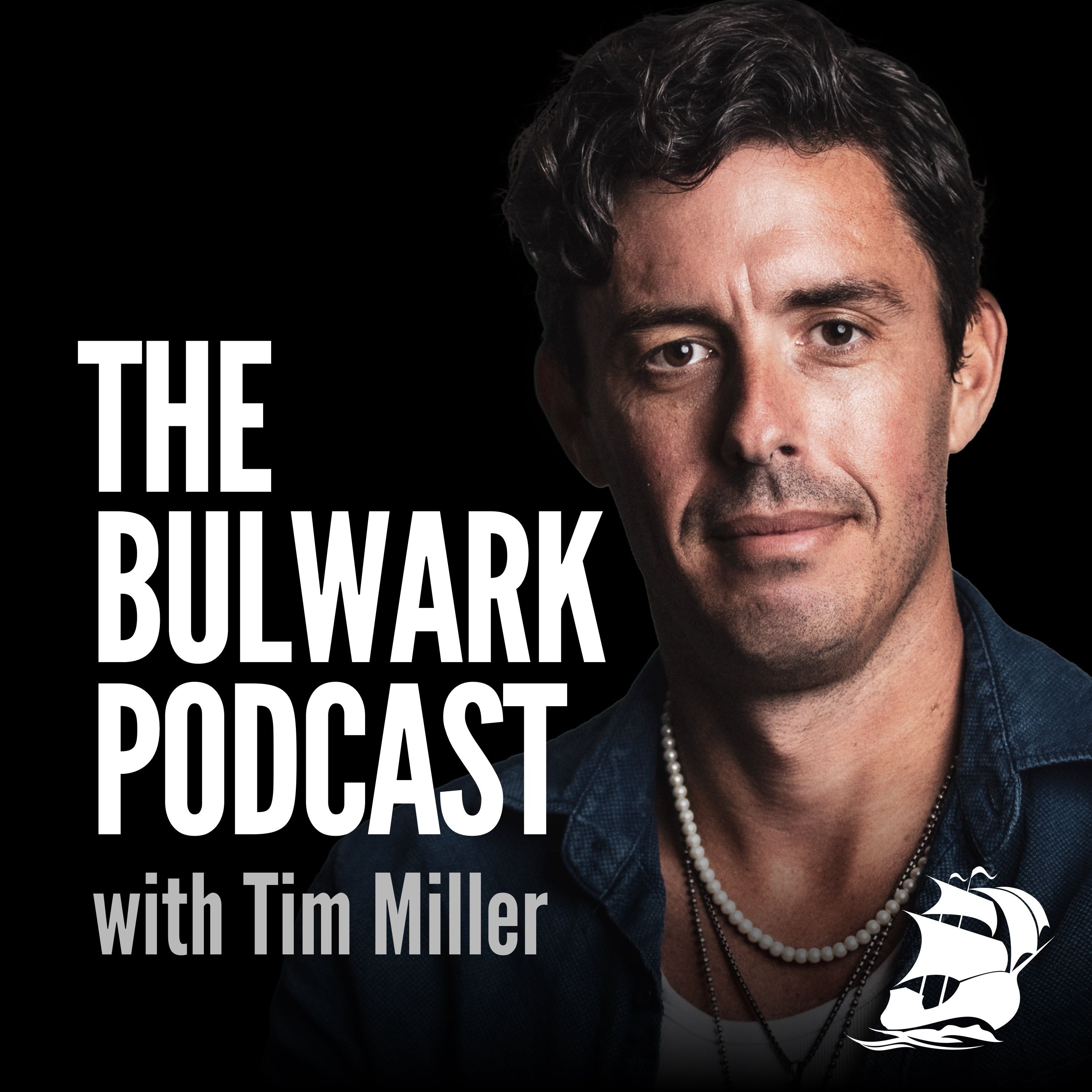
Overview of The Bulwark interview with Kara Swisher
Tim Miller talks with tech journalist Kara Swisher about the current tech boom, arguing that it feels a lot like 1999: hyped valuations, questionable fundamentals, and a small number of companies propping up a huge amount of market confidence. Swisher’s core message is blunt: the “tech bros” and billionaire owners should stop talking so much, stop pretending their self-interest is public virtue, and focus on building real products instead of manipulating politics, media, and markets.
AI, IPOs, and “1999” déjà vu
Swisher says the current AI moment resembles the late-dot-com bubble:
- There is real innovation happening, but also a lot of nonsense, hype, and fragile valuations.
- A few companies may become enormous winners, but many will likely not survive.
- The market is increasingly dependent on a small group of companies and narratives.
She is especially skeptical of the way AI spending is being justified without clear business value, pointing to comments like Uber’s CFO saying the company is spending too much on AI tokens without seeing the payoff.
Key concern
If these companies can’t show durable use cases, the AI boom may look retroactively like a bubble inflated by cheerleading and index-fund momentum.
Elon Musk: self-dealing, bundling, and valuation theater
A big chunk of the conversation is about Elon Musk and his companies. Swisher’s view is that Musk’s empire is less a coherent business model than a bundle of assets and self-dealing arrangements designed to maximize his personal payoff.
What she says about the Musk ecosystem
- SpaceX/Starlink: real and impressive, but still not necessarily a clearly profitable long-term business.
- Twitter/X: not really a business success; more of a data/infrastructure play.
- Grok/AI: Musk’s AI effort is not working well, so he’s effectively renting out compute to others.
- Tesla: a declining business propped up by Musk’s cult status and stock market momentum.
- Potential bundling into one IPO: Swisher sees this as a way to boost valuation and help Musk reach massive compensation targets.
Her bottom line
Musk’s structure lets him keep moving assets around, hide weak businesses inside stronger ones, and extract more money while forcing index funds and passive investors to buy in.
Why Swisher is worried about tech politics
Swisher strongly rejects the idea that these billionaires were ever genuinely liberal. In her view:
- Most of them were always transactional, not ideological.
- They support whichever political side will help them with taxes, regulation, contracts, or influence.
- Trump is a particularly cheap and easy presidency to buy into if you want access and favors.
She describes the dynamic as a kind of “coin-operated presidency” where tech executives and other rich donors buy influence through PACs and donations.
Main takeaway
Their embrace of Trump is not a moral conversion; it’s a strategic bet on power.
Bezos, the Washington Post, and billionaire hypocrisy
Swisher is equally dismissive of Jeff Bezos’s recent comments about Trump and the media.
Her reaction to Bezos
- She calls his praise of Trump disingenuous.
- She says Bezos talks like someone trying to rationalize his own interests.
- She argues that Bezos helped create the problems at The Washington Post through bad management and poor decisions, then blames the paper for not being profitable enough.
On media ownership
Swisher is clear that many media owners don’t care about journalism itself. They care about:
- influence,
- reputation management,
- and suppressing criticism.
She also notes that some of the newer owners, like the Ellisons, are not really buying media to “save news,” but because they want power, prestige, and, in David Ellison’s case, perhaps a movie business.
Why the backlash is growing
Swisher says the tech elite is now facing a real reputational collapse:
- People boo them at graduation speeches.
- AI polling is increasingly negative.
- Young people are less impressed by tech products and more skeptical of the industry’s social effects.
- The public can feel the greed, the self-dealing, and the disconnect.
Her view is that these executives make a mistake by blaming critics, media, or shadowy money networks instead of acknowledging that people simply don’t like what they’ve become.
The new elite lifestyle: isolated and insulated
She and Miller discuss how the ultra-rich live in a kind of private, insulated world:
- private travel,
- private security,
- private healthcare,
- private housing,
- private social circles.
Swisher references Succession’s “Kashmir prison” idea: the wealthy increasingly live in beautiful but isolated bubbles, cut off from ordinary people. She warns this is socially dangerous and historically unstable.
San Francisco, housing, and the next boom
Swisher briefly turns to San Francisco, where she still owns a house.
Her view
- The city may again become unaffordable for normal people if the AI boom continues.
- The lesson from the previous dot-com era is that booms without affordable housing and a diversified city base create painful busts later.
- She notes that the city has become attractive again after a quieter period, but the wealth concentration is likely to recreate old problems.
Younger generations and social media fatigue
One of the more hopeful parts of the conversation is Swisher’s observation that younger people seem less hooked on social media than older generations.
What she notices
- Her kids and their friends use social media much less.
- They use the internet more for practical things like sports stats, cooking, or YouTube as television.
- Many younger people simply don’t like how social media makes them feel.
She sees this as a sign of fatigue and maybe even resistance, especially compared with older adults who got pulled into the Fox News/MSNBC-style outrage loop.
GLP-1s, peptides, and longevity
Near the end, the discussion shifts to health and aging.
Swisher’s take
- GLP-1s: promising and increasingly proven, with benefits likely extending beyond weight loss.
- Peptides / GLP-3-type experiments: unproven, potentially risky, and often sourced without clear provenance.
- She warns against injecting questionable substances just because they’re trendy.
Her longevity advice
If you want to stay healthy and “handsome” longer, the basics still matter most:
- sleep,
- exercise,
- time with friends and family,
- time outdoors,
- cognitive challenge,
- a Mediterranean-style diet,
- improving VO2 max if possible.
Her message is that most expensive biohacks are overrated compared with ordinary, boring health habits.
Final takeaway
Swisher’s central argument is simple: tech billionaires have become too loud, too self-interested, and too disconnected from ordinary life. Whether it’s AI hype, political influence, media ownership, or personal branding, they should stop pretending they’re acting for the public good. In her view, the smartest move would be to shut up, build real things, and maybe give some of the money away.
Notable lines and ideas
- “We are in 1999” — her shorthand for the current AI/market moment.
- “They should all stop talking” — her repeated advice to tech CEOs.
- “Every accusation is a confession” — her view of how billionaires respond to backlash.
- The rich are increasingly living in “Kashmir prisons” — beautiful but isolated lives.