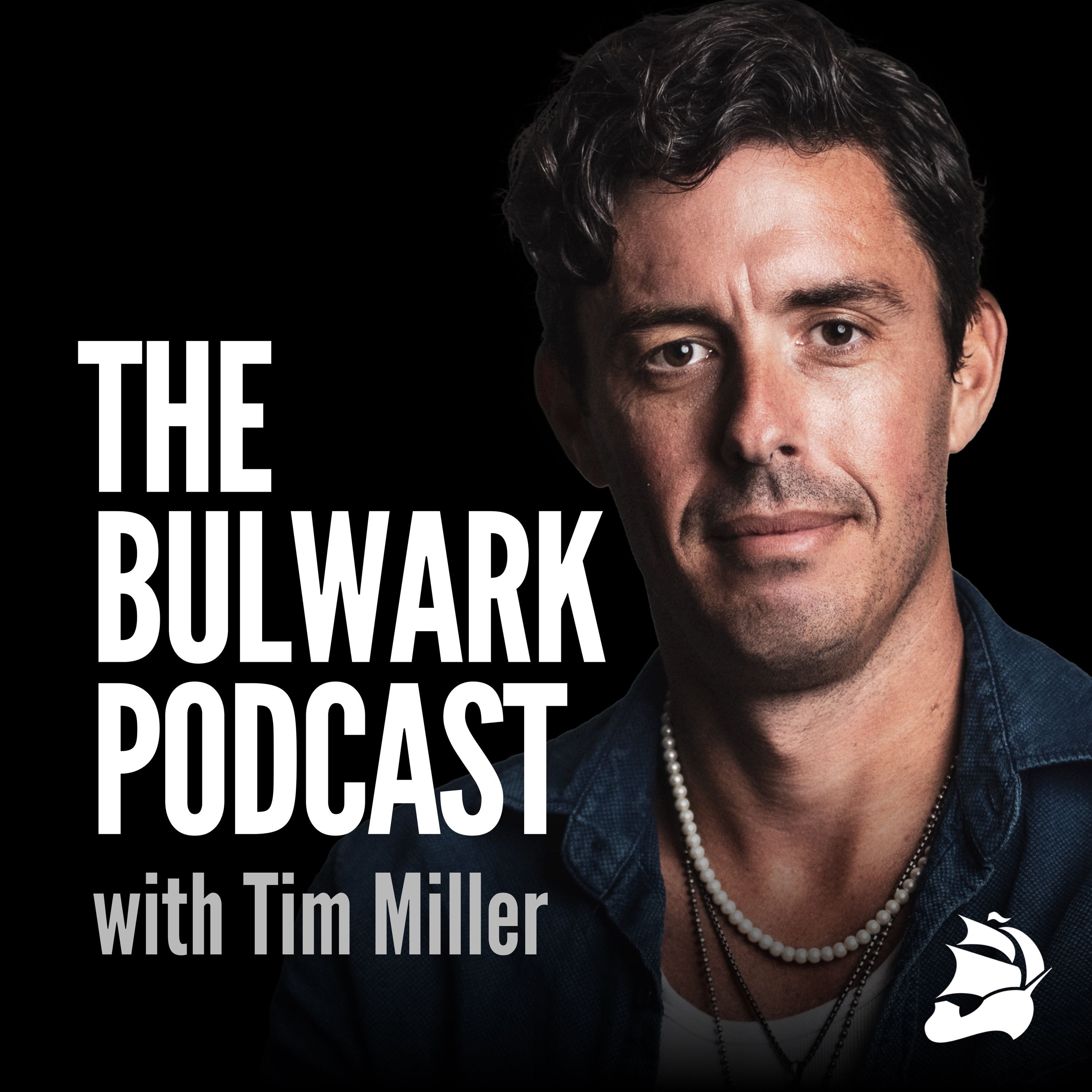
Overview of Jane Coaston: POTUS's Racism Notches Another Win
Tim Miller hosts Jane Coaston for a wide-ranging, fast-moving political conversation centered on racism, immigration, authoritarian overreach, and the bizarre state of the modern right. The episode opens with outrage over the Supreme Court’s handling of Temporary Protected Status for Haitian migrants, then moves into a separate case involving harsh federal prosecutions of anti-ICE protesters in Texas. From there, the discussion pivots to JD Vance’s revisionist praise of Watergate and Nixon, Usha Vance’s candid comments about religion and marriage, and a rapid-fire political potpourri on Democrats, the WNBA, abortion politics, and anti-democratic rhetoric on the right.
Racism, Immigration, and the Supreme Court
The TPS ruling and anti-Haitian animus
- Coaston and Miller react angrily to the Supreme Court’s decision affecting Temporary Protected Status for Haitians.
- They frame the ruling as a moral and practical disaster that strips legal protections from more than 300,000 Haitians and exposes them to deportation.
- Coaston argues that conservatives often only recognize racism when it affects them directly.
- She links this to broader right-wing patterns: outrage over “anti-white racism” or selective concern about antisemitism, while ignoring racist attacks on minorities.
The real-world effect of Trump-era anti-immigrant politics
- The hosts emphasize that this outcome was not hidden from voters:
- Trump and allies openly campaigned on expelling Haitians.
- They spread lies about Haitians “eating cats and dogs.”
- They used dehumanizing rhetoric to make mass deportation politically acceptable.
- Coaston notes that Haitian communities have long contributed to American life, especially in places like New Orleans.
The Prairieland ICE Protest Prosecutions
Why the case is alarming
- The conversation turns to the federal prosecution of protesters tied to a July 4 protest at the Prairieland ICE facility in Texas.
- The protest involved vandalism and violence, including a gun being fired and a police officer being wounded.
- But Coaston and Miller focus on what they see as prosecutorial overreach:
- 22 people were charged.
- Some were reportedly not even present at the scene.
- Nine were convicted under a terrorism-related theory tied to anti-Antifa enforcement.
- One defendant, Daniel Estrada-Sanchez, was prosecuted over transporting a box of anarchist zines.
The hypocrisy argument
- Coaston stresses that the same people who rage about “free speech” and “first amendment rights” when their own extremist content is challenged are silent when leftists are treated like terrorists.
- Miller and Coaston compare this to:
- January 6 defendants who were defended as victims of prosecutorial excess.
- The right’s willingness to excuse armed right-wing activism while criminalizing left-wing protest.
JD Vance, Nixon, and “Pro-crime” Politics
Nixon rehabilitation as a sign of the times
- Vance appears at the Nixon Foundation and downplays Watergate, suggesting it would be a minor news story today.
- Coaston and Miller see this as a revealing signal:
- The administration is effectively saying that corruption and criminality are now acceptable if they help “our side.”
- Vance’s remarks are read as a declaration that the Trump era is “post-crime.”
Why the comparison matters
- Coaston explains that Watergate was not just some technical scandal:
- Nixon aides authorized a political break-in.
- The White House coordinated a cover-up.
- The CIA was pulled in to help obscure the crime.
- Her point: minimizing Watergate is not just historical revisionism; it’s a permission structure for future abuse.
Usha Vance and the “normal” household
A rare moment of bluntness
- The hosts play a clip of Usha Vance explaining that she has not converted to Catholicism because she grew up in a stable Hindu household and did not feel the same need for a spiritual search as JD.
- Coaston finds the comment unintentionally hilarious and revealing.
- Her read: Usha is basically saying, “My family wasn’t messed up, so I didn’t need a conversion arc.”
Why it resonated
- The exchange highlights the contrast between:
- JD Vance’s highly performative, politically loaded religious journey.
- Usha’s calm insistence that her upbringing was already grounded and functional.
- Coaston treats the quote as a subtle and effective rebuke of JD’s conversion narrative.
Political Strategy, Democrats, and Local Realities
Roy Cooper as a contrast model
- Miller brings up Roy Cooper’s straightforward campaign messaging:
- “Criminals should go to jail.”
- He positions himself as a normal, non-theatrical Democrat in contrast to cultural panic about socialism.
- Coaston and Miller suggest that not every successful Democratic campaign has to be nationally branded or ideologically maximalist.
- They argue that local context matters:
- New York politics are not North Carolina politics.
- Different places need different messages.
The broader Democratic lesson
- Their takeaway is that Democrats should focus on affordability, normalcy, and local needs rather than chasing abstract ideological fights.
- Coaston points out that the party can be both pragmatic and responsive without becoming disconnected from ordinary voters.
Rapid-Fire Topics and Final Segment
Caitlin Clark and WNBA discourse
- Coaston pushes back on the endless Caitlin Clark discourse.
- She argues:
- Many critics do not actually follow the WNBA.
- Some of the backlash has a lesbophobic undertone.
- The league has legitimate issues to improve, but the hysteria around Clark is overblown.
Repealing the 19th Amendment
- The hosts mock right-wing men who fantasize about repealing women’s suffrage.
- Coaston calls it loser talk and points out:
- Women are not going back.
- The fantasy says more about male resentment than political reality.
- She also notes the hypocrisy of conservatives claiming women are too “emotional” while their own politics are visibly emotional and performative.
Abortion and punishment
- Coaston notes that many on the right do not object to punishing women for abortions on moral grounds.
- Their real concern is polling:
- They think it would be unpopular.
- Not that it would be wrong.
- She sees that distinction as highly revealing.
AI and existential risk
- The episode closes on a bleak note with a quote from an Anthropic economist about the “optimal” tradeoff between preserving humanity and increasing living standards.
- The framing is chilling: a future where some technologists talk about mass human extinction as an acceptable risk.
Key Takeaways
- The episode is a sustained argument that the modern right is openly comfortable with racism, authoritarianism, and selective enforcement of law.
- Coaston and Miller repeatedly highlight the gap between conservative rhetoric and actual values:
- Free speech for me, terrorism charges for you.
- Anti-crime rhetoric for enemies, leniency for allies.
- Family values language, but deep hostility to women’s autonomy.
- They also emphasize that political success often comes from being normal, grounded, and responsive to actual local concerns—not from maximalist internet ideology.
Notable Lines and Moments
- On the Supreme Court: the idea that the Court “made [Haitians] illegal” through a “Calvin Ball-style decision.”
- On Megyn Kelly’s anti-immigrant rant: Coaston calls it “rancid bitch” behavior and a performance for an audience that rewards cruelty.
- On JD Vance’s Watergate take: the implication that corruption is now openly acceptable.
- On Usha Vance: her comment that her family was “stable” and did not need a conversion journey.
- On the 19th Amendment: the idea that a hundred years of elections cannot be blamed on women voting.
Bottom Line
This episode is a sharp, cynical, and often funny tour through the worst instincts of the American right: racism dressed up as policy, selective outrage about crime and speech, and an increasing comfort with corruption as long as it serves political power. Coaston’s throughline is consistent: the people making the loudest moral claims are often the least willing to live by them.