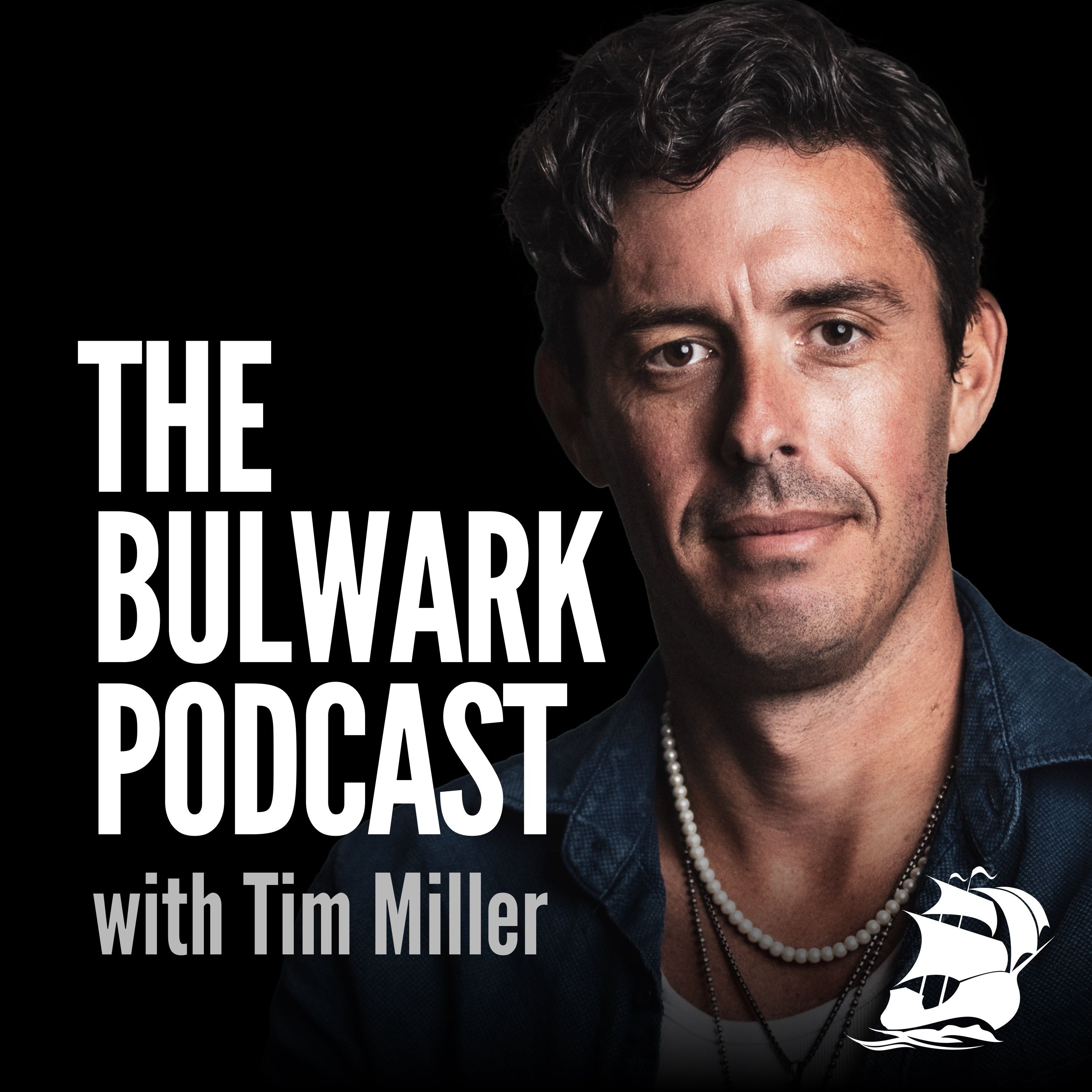
Overview of The Bulwark conversation with Isaac Saul
Tim Miller interviews Isaac Saul, founder and executive editor of Tangle News, about why his “best arguments from the right and left” format is resonating in a polarized media environment—and why Saul’s major new corruption piece on Donald Trump’s second term is, in his view, the most comprehensive account yet of Trump’s self-dealing in office. The discussion also touches on the Iran conflict, the limits of cable/news coverage, and why many Americans still aren’t hearing the full story about Trump-era corruption.
What Tangle News is trying to do
Isaac Saul explains that Tangle was built to serve readers who are trapped in political information silos.
Core format
- Each newsletter issue covers a major divisive topic.
- Saul’s team:
- presents the strongest arguments from the right,
- presents the strongest arguments from the left,
- then adds its own analysis/editorial take.
- The goal is not fake neutrality, but fair-minded, transparent analysis.
Why he started it
- He grew up in politically mixed Bucks County, Pennsylvania.
- He wanted a publication where Republicans and Democrats could read the same reporting and feel it was honest.
- He says the outlet has grown to:
- a team of about 12,
- more than 500,000 people on the mailing list,
- a large podcast and YouTube audience.
Trust-building example
- Saul says one of the most rewarding moments in Tangle’s history was helping convince a Trump-voting husband that the 2020 election was not stolen.
- He credits that with leveling with readers instead of talking down to them.
The challenge of covering Trump without distortion
Tim presses Saul on a central problem: what happens when Trump’s actions are so extreme that there may not be a credible “best argument” for them?
Saul’s approach
- He says Tangle tries to identify the strongest defensible version of the argument on each side.
- But he also uses the newsletter’s editorial section to call out:
- logical fallacies,
- bad faith claims,
- narrow arguments that ignore the larger context.
On Trump specifically
- Saul argues there are smart, honest conservatives who still prefer Trump to Democrats.
- But he also says Trump is so chaotic that it’s often unclear what is policy, what is bluff, and what is just rhetoric.
- His line: the argument is often not about whether something happened, but what it means.
Iran, war, and the “ambient conflict” problem
The conversation turns briefly to Iran and the confusion around the conflict and ceasefire claims.
Saul’s view
- He is skeptical of the administration’s claims that the conflict is “over.”
- He points out that U.S. officials were describing active military exchanges as if the situation had already been resolved.
- He argues this is part of a larger pattern of Orwellian reframing.
Bigger concern
- Saul worries the U.S. is drifting into an ambient war:
- not a full declared war the public focuses on,
- but a prolonged background conflict with occasional flare-ups,
- lots of money spent,
- little clarity or accountability.
Political implication
- He believes Trump is sensitive to gas prices and public opinion.
- So even if the administration is trying to declare victory, it may still need to keep managing the conflict because the economic fallout is real.
The main event: Trump corruption and self-dealing
Much of the podcast is devoted to Saul’s major essay on Trump corruption, which he describes as one of the strongest pieces written on the subject in Trump’s second term.
Saul’s core claim
- Trump is:
- profiting off the presidency,
- using the office to enrich his family,
- making foreign-policy decisions influenced by business interests,
- doing so on a scale that is historically unprecedented.
Why it’s not breaking through
Saul says the corruption stories are failing to fully penetrate because:
- there is simply too much happening every day,
- critics are overwhelmed and can’t focus public attention,
- Trump supporters often never hear about the stories at all,
- media audiences are still split into separate ecosystems.
What shocked Saul most
A few of the examples he found especially striking:
1. The family-wide crypto grift
- It wasn’t just Trump himself.
- Melania Trump was also involved in the meme-coin/crypto push.
- Saul says this felt like a fully coordinated “make as much money as possible before inauguration” operation.
2. The Justin Sun / World Liberty Financial saga
- Justin Sun, a crypto figure under scrutiny, invested in Trump-linked crypto ventures.
- Saul says the Trump administration then backed off regulatory pressure.
- When Sun later tried to cash out, he got tangled up in disputes with the Trump side.
- Saul sees it as a classic “deal with the devil” corruption story.
3. The UAE and the massive AI-chip deal
- A UAE-linked figure, Sheikh Tahnoun bin Zayed, reportedly made a major investment into Trump family crypto ventures.
- Saul points to a reported $187 million upfront payment tied to the arrangement.
- Soon after, the administration loosened restrictions that had blocked the UAE from accessing advanced Nvidia AI chips.
- Saul sees this as a direct example of money affecting policy.
4. Saudi Arabia and foreign policy
- Trump backed off certain military or strategic steps after Saudi pressure.
- Saul argues that the Trump family’s business ties to Saudi Arabia make these decisions look deeply compromised.
- He says Congress should be investigating how these decisions were made.
5. Pardons as personal favors
- Saul says the most outrageous pardon he reviewed was Trevor Milton’s.
- Milton, convicted of securities and wire fraud, had donated heavily to Trump.
- Trump pardoned him and wiped out a huge restitution obligation to victims.
- Saul sees that as blatant favoritism toward a major donor.
Why this feels different from earlier scandals
Tim and Isaac compare Trump corruption to past controversies like Hunter Biden and the Clinton Foundation.
Saul’s argument
- The Trump cases are much more blatant and much larger in scale.
- They are not about side activity at the edges of government.
- They involve:
- the president himself,
- his children,
- government contracts,
- pardons,
- foreign investments,
- and direct family enrichment.
The asymmetry problem
- During the Biden years, conservative media amplified Hunter Biden’s dealings nonstop.
- Saul argues that Trump-world media is far less willing to investigate corruption in its own camp.
- Even when Fox or other right-leaning outlets criticize Trump, it is usually on narrower issues like:
- Epstein-related files,
- Iran policy,
- not the broad self-dealing apparatus.
Why Republicans aren’t breaking with him
Saul and Miller discuss why Trump’s corruption does not seem to create sustained backlash among Republicans.
Saul’s read
- Trump has effectively forced the GOP to “bend the knee.”
- Many conservatives who once claimed to hate the swamp now ignore corruption if it benefits Trump.
- Some populist critics, like Steve Bannon, are only anti-establishment when it doesn’t threaten their own power or alliances.
Tim’s pushback
- Miller argues the deeper issue is that media ecosystems on the right are not exposing their audiences to the full picture.
- People who rely mainly on right-wing news may never hear about these scandals in a meaningful way.
The real risk: corruption only matters when people feel pain
Saul offers a cautiously hopeful theory:
His silver-lining thesis
- A lot of Trump supporters are willing to tolerate corruption as long as:
- the economy feels strong,
- their lives feel stable,
- and they think they are benefiting from the arrangement.
- If their economic situation worsens, the corruption may start to matter more.
Historical analogy
- He points to Hungary under Viktor Orbán:
- public frustration there eventually centered less on democracy abstractions,
- and more on corruption and economic stagnation.
- Saul thinks something similar could happen in the U.S. if Trump’s corruption becomes harder to shrug off.
Key takeaways
- Isaac Saul’s media project is about giving readers the strongest arguments from both sides while remaining honest about what he actually thinks.
- Trump corruption in the second term is, in Saul’s view, bigger and more blatant than almost anything covered during the first term.
- The biggest problem is information overload: the public is not absorbing the full scale of the stories.
- The media ecosystem is asymmetric: right-wing audiences are less likely to be exposed to criticism of Trump’s corruption.
- Pardons, crypto deals, foreign policy, and family business interests are all part of the same corruption system.
- The real test may be economic pain: corruption might only become politically toxic once Trump supporters feel its consequences personally.
Notable quotes and lines
- “We’re not arguing about whether it’s raining. We’re arguing about what the rain means.”
- “I’m not on your team.”
- “This is bullshit.”
- “The most corrupt, slimy, conservative politicians are getting free passes.”
- “They tried to separate the businesses during the first term and nobody cared.”
- “Pitchforks now.”
Bottom line
This episode is both a defense of Tangle News’s cross-partisan method and a sharp, detailed indictment of Trump’s second-term corruption. Saul argues that the self-dealing is no longer subtle, but the public still isn’t fully processing it because the news environment is fragmented, overloaded, and highly asymmetric.