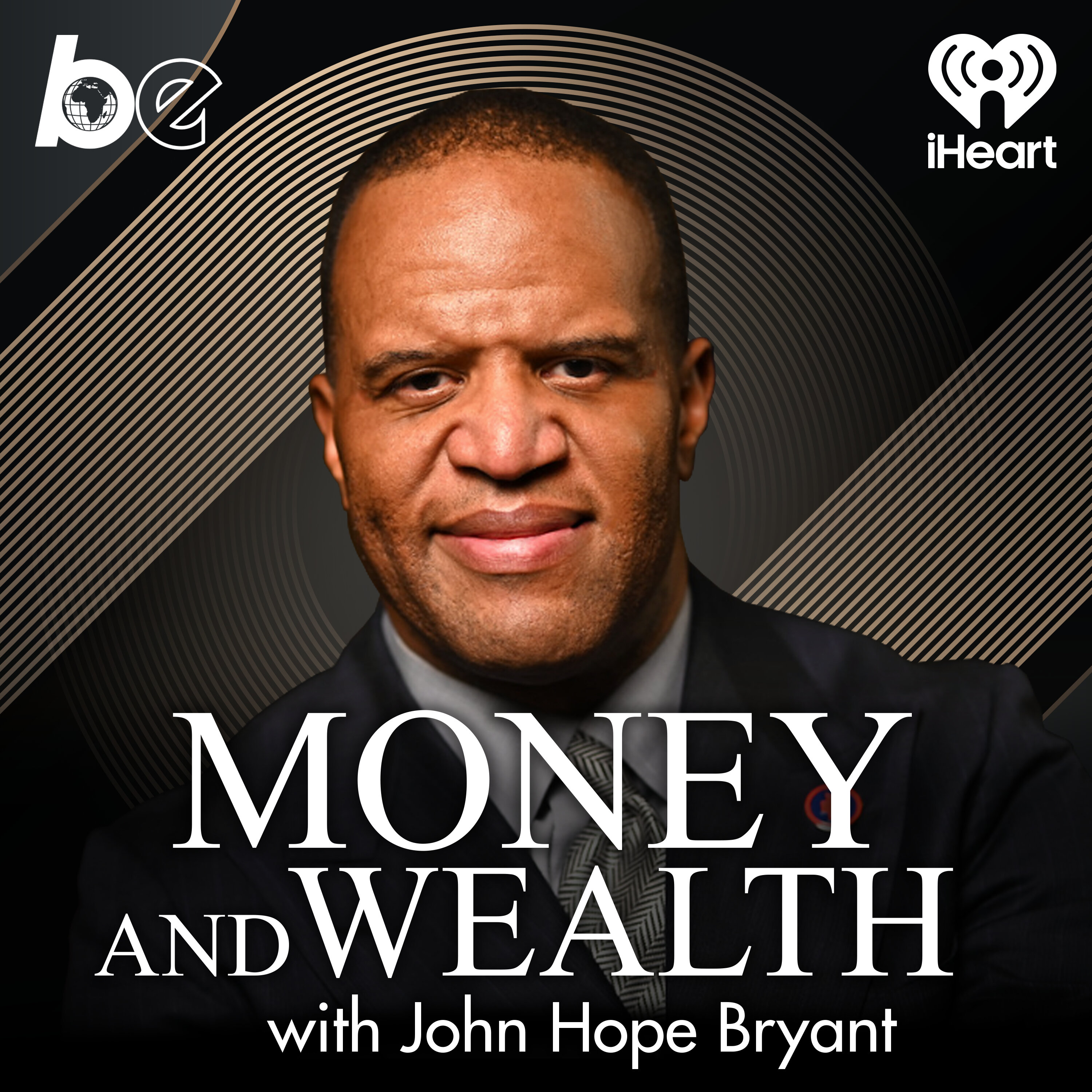
Overview of Money & Wealth: Midterm Elections 2026: Red States, Blue States, Broke States
In this episode, John Hope Bryant argues that the 2026 midterm elections were less a traditional red-vs-blue contest and more a referendum on affordability, household economics, and whether Americans feel they can still “afford America.” His core thesis is that voters responded to the cost of living—especially high interest rates, fuel costs, housing payments, and paycheck-to-paycheck stress—not just partisan messaging. He links political outcomes to everyday financial pressure and makes the case that real economic leadership must focus on ownership, financial resilience, and expanded access to wealth-building tools.
Main Thesis: It’s Not Red or Blue, It’s Green
- Bryant frames the election as a verdict on affordability rather than pure party loyalty.
- He argues that both parties often overread mandates:
- Republicans may mistake a win as proof of broad approval.
- Democrats may mistake Republican losses as a blank check for their own agenda.
- His central message: families care less about political theater than whether they can pay bills, buy homes, and build a stable future.
- He repeatedly stresses that the economy is experienced through:
- monthly payments,
- grocery bills,
- fuel prices,
- mortgage rates,
- and debt burdens.
Affordability as the Real Political Issue
High interest rates and rising costs
Bryant says the election was shaped by “7 and 7”:
- roughly 7% interest rates
- near $7 diesel/gas prices
He argues these conditions make the economy feel broken to ordinary people, especially:
- homeowners facing much larger mortgage payments,
- contractors and tradespeople running work trucks,
- and families watching their grocery bills rise.
The monthly payment economy
He emphasizes that voters do not experience GDP reports—they experience:
- the car note,
- the mortgage,
- the gas station,
- the grocery checkout.
His point: even when the macroeconomy is technically strong, households may still feel like they are falling behind.
Key Economic Arguments
GDP is not your bank account
Bryant draws a sharp distinction between:
- national economic performance
- and household financial security
A booming stock market or rising GDP does not automatically mean families are doing well. For many people, especially those living paycheck to paycheck, wealth is the real issue—not just income.
Income vs. wealth
He says the country needs both:
- good wages
- and ownership
He repeatedly returns to the idea that:
- income pays for today,
- assets pay for tomorrow.
Credit as infrastructure
Bryant describes credit not as wealth itself, but as a bridge to wealth:
- better credit can lower borrowing costs,
- expand options,
- and improve access to homes and businesses.
He also argues that community-level credit health matters, using cities like Detroit as examples of how weak credit conditions reflect broader economic distress.
Historical Context: Policy, Exclusion, and Ownership
Bryant places current inequality in a long historical arc, arguing that America has never fully corrected its ownership gaps.
Examples he discusses
- Homestead Act of 1862: helped many white settlers gain land while excluding many Black and Native people.
- Redlining: federal housing policy and lending discrimination created large wealth gaps by channeling capital away from Black and urban communities.
- Freedmen’s Bank: he uses it as a cautionary example of how financial institutions can fail vulnerable communities when trust and safeguards are absent.
- The New Deal: expanded opportunity for many, but discriminatory implementation limited its benefits for Black families.
Civil rights as economic rights
Bryant argues that the next phase of civil rights is not just access to the marketplace, but ownership within it:
- homes,
- businesses,
- investments,
- and financial power.
Personal Example: His Mother’s Financial Journey
A major emotional anchor of the episode is Bryant’s story about his mother, Juanita Smith:
- worked for low wages at McDonnell Douglas/Boeing,
- but still built about a $1 million net worth over her life.
He uses her story to show that:
- wealth is possible without a high salary,
- discipline and ownership matter,
- and financial literacy can change a family’s trajectory.
He presents her as proof that:
- “it’s not what you make, it’s what you keep and what you own.”
Policy and Practical Solutions
Bryant argues that leaders should be judged by outcomes, not slogans. He proposes a broad “green agenda” focused on economic participation.
What leaders should prioritize
- Affordable housing
- More housing supply
- Practical zoning and permitting
- Access to capital for small businesses
- Workforce training and AI literacy
- Financial education in schools
- Pathways to homeownership
- Community investment that lets existing residents benefit from rising property values
His warning about displacement
He says neighborhood growth is not truly successful if:
- existing residents are priced out,
- and the gains go only to outside investors or newcomers.
His solution is ownership and participation, not just development.
AI, Skills, and the Future of Work
Bryant briefly turns to artificial intelligence, arguing that:
- AI will not simply take jobs;
- people who know how to use AI may replace those who do not.
He promotes democratizing access to AI tools and training through initiatives like:
- Hope AI
- Juanita AI
He pairs that with a broader call for:
- practical skills,
- trades like plumbing and electrical work,
- and continuous learning.
Five “Votes” for Households
Bryant offers a practical checklist for families:
-
Know your numbers
- credit report
- monthly cash flow
- debt
- savings
- net worth
-
Vote for resilience
- build emergency savings
- reduce expensive debt
-
Vote for ownership
- invest when appropriate
- pursue home equity or business ownership
-
Vote for earning power
- learn a skill
- improve AI fluency
- earn credentials that raise opportunity
-
Vote for community
- mentor someone
- volunteer
- support local enterprises
- help others learn financial literacy
Five Tests for Elected Leaders
Bryant says voters should hold politicians accountable with measurable questions:
- Are inflation-adjusted household incomes improving?
- Are housing and borrowing costs becoming manageable?
- Are small businesses gaining access to capital and customers?
- Are more households building savings, retirement assets, and equity?
- Are excluded communities sharing in wealth creation?
His message: no political party deserves a blank check.
Final Takeaway
The episode closes with a forceful reminder that democracy and capitalism only work if more people can participate in them meaningfully. Bryant’s core conclusion is that America does not just need a wealthy nation—it needs more Americans with the wealth of a nation.
His central refrain:
- the future is not red or blue,
- it is green,
- and the real mission is broad-based ownership, dignity, and economic opportunity for ordinary families.