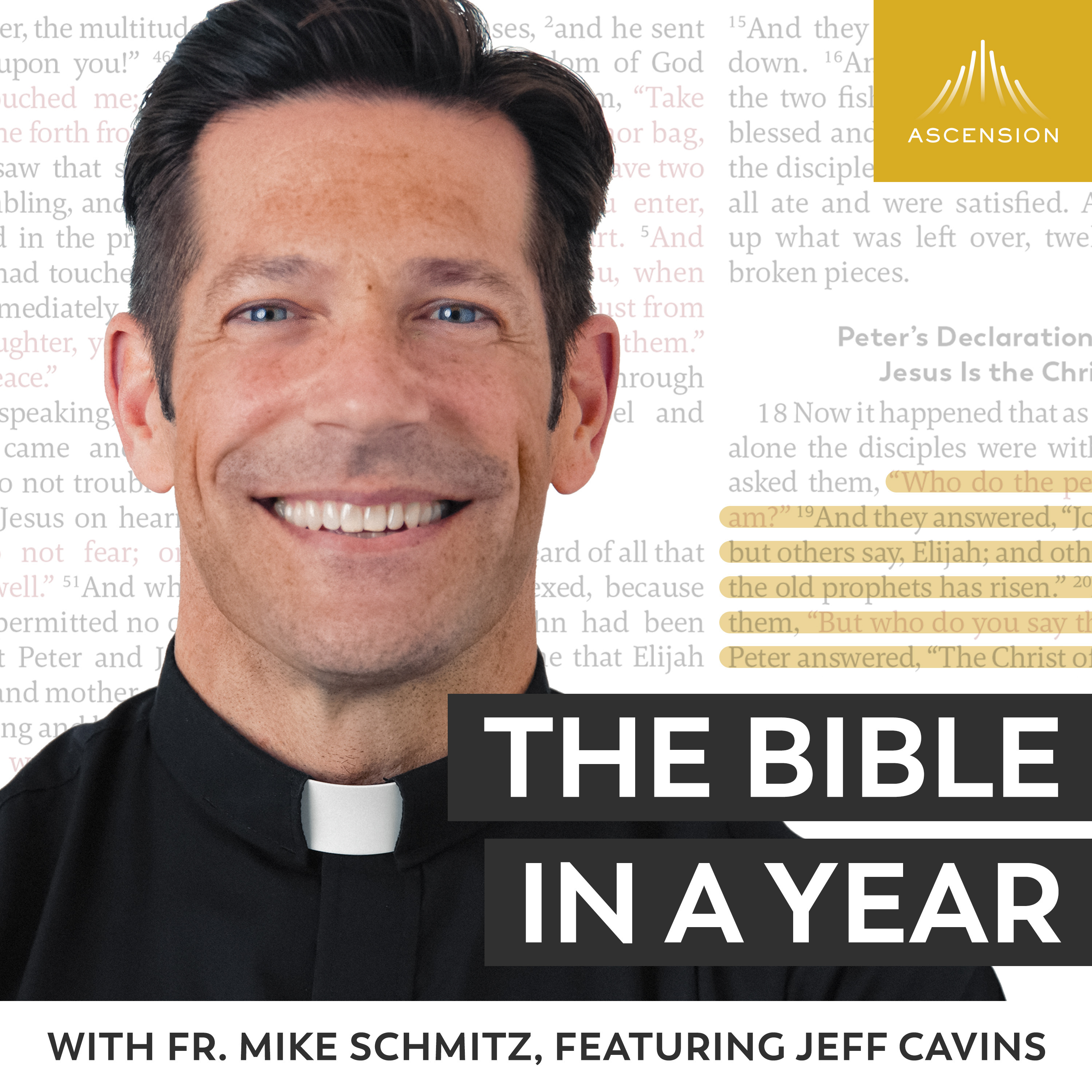
Overview of Day 83: The Gibeonite Trickery
Host Father Mike Schmitz (Bible in a Year, Ascension) reads and reflects on Joshua 8–9 and Psalm 126. The episode covers the military victory at Ai, the deceptive covenant made by the Gibeonites, and a prayerful meditation on God’s goodness and how we enter (and grow into) covenant/family with God.
Scripture passages covered
- Joshua 8 — The capture and destruction of Ai; Joshua’s ambush strategy and the destruction of the city.
- Joshua 9 — The Gibeonites’ ruse to secure a covenant with Israel and the resulting consequences (made servants to Israel).
- Psalm 126 — A Song of Ascents celebrating God’s restoration and joy.
Summary — Joshua 8: Capture of Ai
- God instructs Joshua not to fear and to take fighting men to Ai.
- Joshua sets a tactical ambush: a small force appears to be defeated and flees, luring Ai’s defenders out of the city while an ambush seizes and burns Ai.
- Israel utterly defeats the inhabitants; the king of Ai is captured, executed, and his body displayed as a warning.
- Joshua then builds an altar on Mount Ebal, writes the law on stones, and publicly reads the blessings and curses of the law to the whole assembly.
Summary — Joshua 9: The Gibeonites’ stratagem
- Regional kings unite against Israel, but the Gibeonites choose deception instead of open warfare.
- The Gibeonites pretend to come from far away—wearing patched clothes and bringing stale provisions—to win a covenant with Israel.
- Israel accepts their story without asking the Lord (v.14), swears an oath, and makes peace with them.
- When the deception is discovered, Israel honors the oath but punishes them by making them hewers of wood and drawers of water for the community and the sanctuary.
Psalm 126 — A Harvest of Joy
- A brief sung prayer praising God for restoring Zion: images of laughter, shouts of joy, nations recognizing God’s deeds, and the hope that those who sow in tears will reap with joy.
Father Mike’s reflections and applications
- Military strategy: Joshua’s ambush at Ai highlights careful planning and divine guidance in achieving God’s purposes.
- Covenant as family bond: Father Mike stresses that covenant is not a mere contract but a permanent family relationship — “I am yours and you are mine.”
- Failure to seek the Lord: Israel’s decision to accept the Gibeonites’ story “and did not ask direction from the Lord” is highlighted as a serious lapse. Big decisions require asking God.
- Ambiguous motives and welcome into the family:
- The Gibeonites sought life rather than destruction; Israel honors the covenant despite deceit.
- Parallels drawn to Rahab: unlikely people can be incorporated into God’s story and even produce prophets and leaders later.
- Many people (and sometimes believers) say “yes” to God for self-preservation (fear of punishment, “better than hell”) rather than a desire to belong — but God still invites growth into true familial relationship.
- Pastoral encouragement: Whether someone entered faith for pragmatic reasons or out of fear, God’s desire is that they grow into full sons and daughters. Belonging to God invites deeper commitment, mutual prayer, and transformation.
Notable quotes
- “Covenant is establishing a family bond. You're saying, I am yours and you are mine.”
- “The men partook of their provisions and did not ask direction from the Lord.” (Joshua 9:14 — highlighted as a caution)
- “We might have said yes to the Lord out of a mercenary heart... but the more we get to know his heart, the more we’re drawn to live as full members of his family.”
Practical takeaways / action items
- Before making major decisions, ask the Lord for direction — don’t rely solely on appearances or human persuasion.
- Examine your motives for faith and commitments: are they driven by fear/comfort or by desire to belong to God’s family?
- If you entered faith for pragmatic reasons, allow yourself to grow deeper: learn Scripture, pray, participate in community, and seek transformation.
- Pray for others and accept others into the community — God often works through imperfect beginnings.
- Remember and celebrate God’s goodness (Psalm 126): anticipate restoration and joy even after seasons of struggle.
Final pastoral note
Father Mike closes with a prayer of thanksgiving for God’s goodness, a reminder to seek and live in God’s will, and an invitation to keep praying for one another. He signs off asking listeners to pray for him as well.