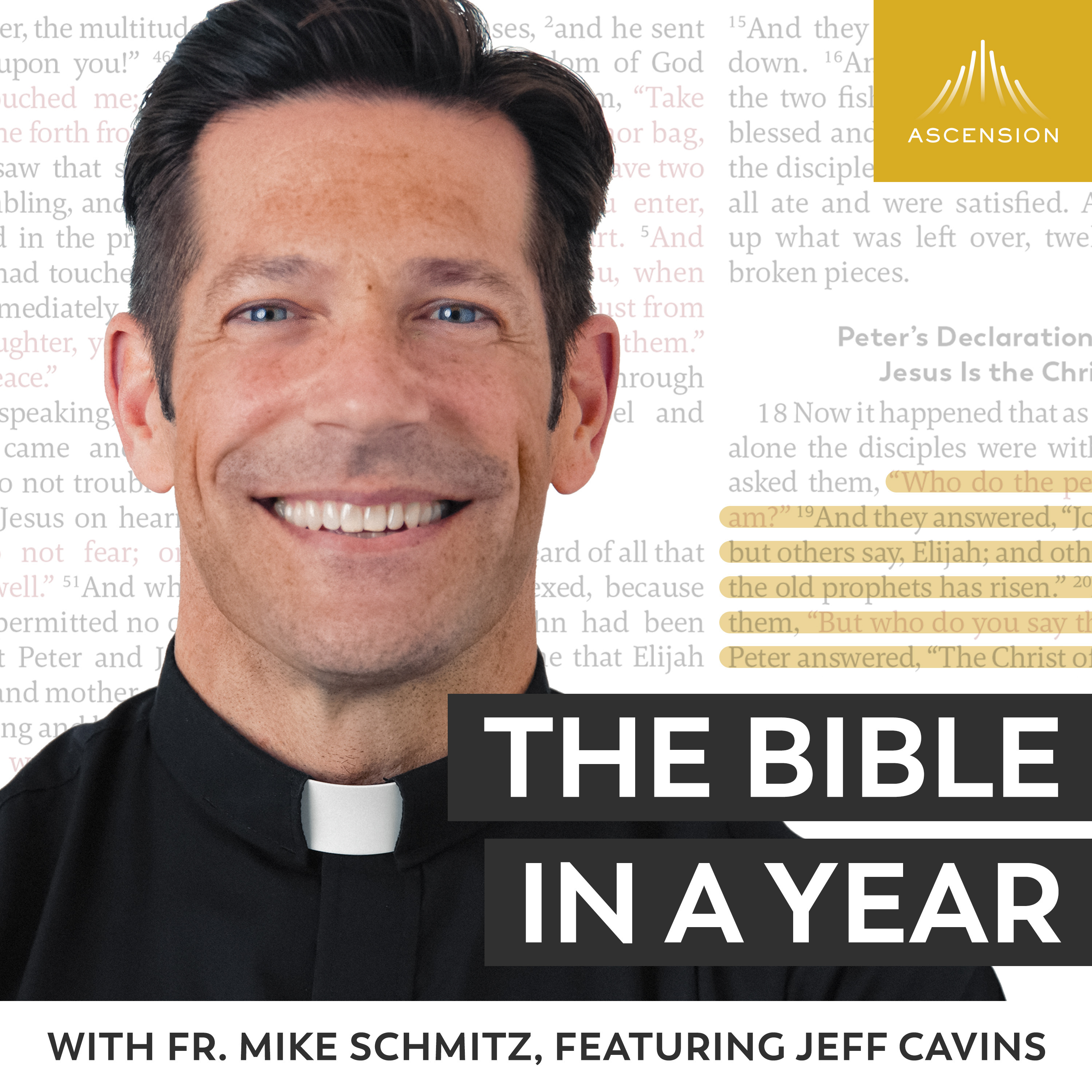
Overview of Bible in a Year — Day 78: The Song of Moses (Ascension / Father Mike Schmitz)
Father Mike reads Numbers 33, Deuteronomy 32 (the Song of Moses), and Psalm 118, reflects on their narrative and theological meaning, and prays with listeners. He frames the reading near the end of Israel’s desert wanderings (three days left in Numbers/Deuteronomy) and points ahead to Joshua. His main pastoral point: God allows the consequences of human unfaithfulness so people can learn they truly want him — yet he never finally abandons his people.
Passages read
- Numbers 33 — A stage-by-stage recap of Israel’s journey from Egypt to the plains of Moab (useful for mapping the wilderness route). Includes the death of Aaron on Mount Hor.
- Deuteronomy 32 — The Song of Moses: God’s praise and perfection; Israel’s ingratitude and idolatry; the consequences of turning from God; God’s judgment and eventual vindication of his people; Moses recites the song and exhorts Israel to keep the law; God tells Moses he will see the land but not enter it (Moses’ death foretold on Mount Nebo).
- Psalm 118 — A thanksgiving/victory psalm: “His mercy endures forever,” deliverance from distress, trust in the Lord, the rejected stone becoming the cornerstone, and joy in God’s saving acts.
Key themes and takeaways
-
God’s faithfulness vs. Israel’s faithlessness
- Deuteronomy 32 portrays God as the perfect Rock who provides and cares, contrasted with Israel’s turning to “strange gods” and idolatry.
- God’s response: righteous anger, allowing the people to suffer consequences, but with the aim of bringing them back (discipline but not total abandonment).
-
The hard-but-loving pedagogy of God
- Father Mike summarizes the core pastoral insight: “When you are faithless, I will let you have what you’ve chosen.” God permits the consequences of idolatry or misplaced trust so people can discover their true need for him.
- This is not vindictiveness but corrective love — chastening that aims at restoration.
-
Prayerful trust and confidence (Psalm 118)
- Psalm 118 supplies the complementary posture: rejoicing in God’s enduring mercy, trusting that with the Lord on one’s side there is no need to fear, and witnessing God’s deliverance.
- Key images used as interpretive keys: “The Lord has chastened me sorely, but he has not given me over to death” and “The stone which the builders rejected has become the cornerstone.”
-
Pastoral application
- Recognize personal and communal tendencies toward fickleness and idolatry.
- Allow God’s corrective work to form longing for him.
- Trust in God’s mercy and deliverance; pray for renewal and fidelity.
Notable quotes / memorable lines
- Paraphrase used repeatedly by the host: “When you are faithless, he remains faithful.”
- “I will let you have what you’ve chosen” — summary of God’s allowing consequences so people learn their need for him.
- From Psalm 118 (echoed in the reflection): “Out of my distress I called on the Lord; the Lord answered me and set me free.” / “The stone which the builders rejected has become the cornerstone.”
- Deuteronomy 32: “See now that I, even I, am he, and there is no God beside me.”
Practical suggestions / action items
- Read or listen to: Numbers 33 (trace Israel’s journey on a map), Deuteronomy 32 (read slowly, aloud if possible), and Psalm 118.
- Reflect questions:
- In what ways am I tempted to “choose” other gods (comforts, idols, patterns) rather than God?
- How have consequences or “chastening” led me back to God?
- Spiritual practices:
- Pray Psalm 118 as a daily reminder of God’s mercy and deliverance.
- Memorize a short interpretive line: “When you are faithless, he remains faithful.”
- Use Numbers 33 to visualize the Israelites’ journey and remember the long shape of God’s providence.
Context & closing
- Framing: This episode closes the desert-wandering section of the Bible-in-a-Year plan; Joshua (entry into the Promised Land) begins next.
- Pastoral tone: Father Mike balances the severity of divine judgment in Deuteronomy 32 with the hope and assurance of Psalm 118 and the promise that God’s discipline aims at restoration.
- Final exhortation: Ask God to make us true sons and daughters, to renew our hearts, and to bring us home. Father Mike requests prayers for himself and offers a blessing and sign of the cross.
For someone who wants the substance without listening to the full episode: focus on Deuteronomy 32’s sober diagnosis of faithlessness, Psalm 118’s confident praise, and Father Mike’s pastoral synthesis that God permits the consequences of our choices so we may ultimately turn back to him.