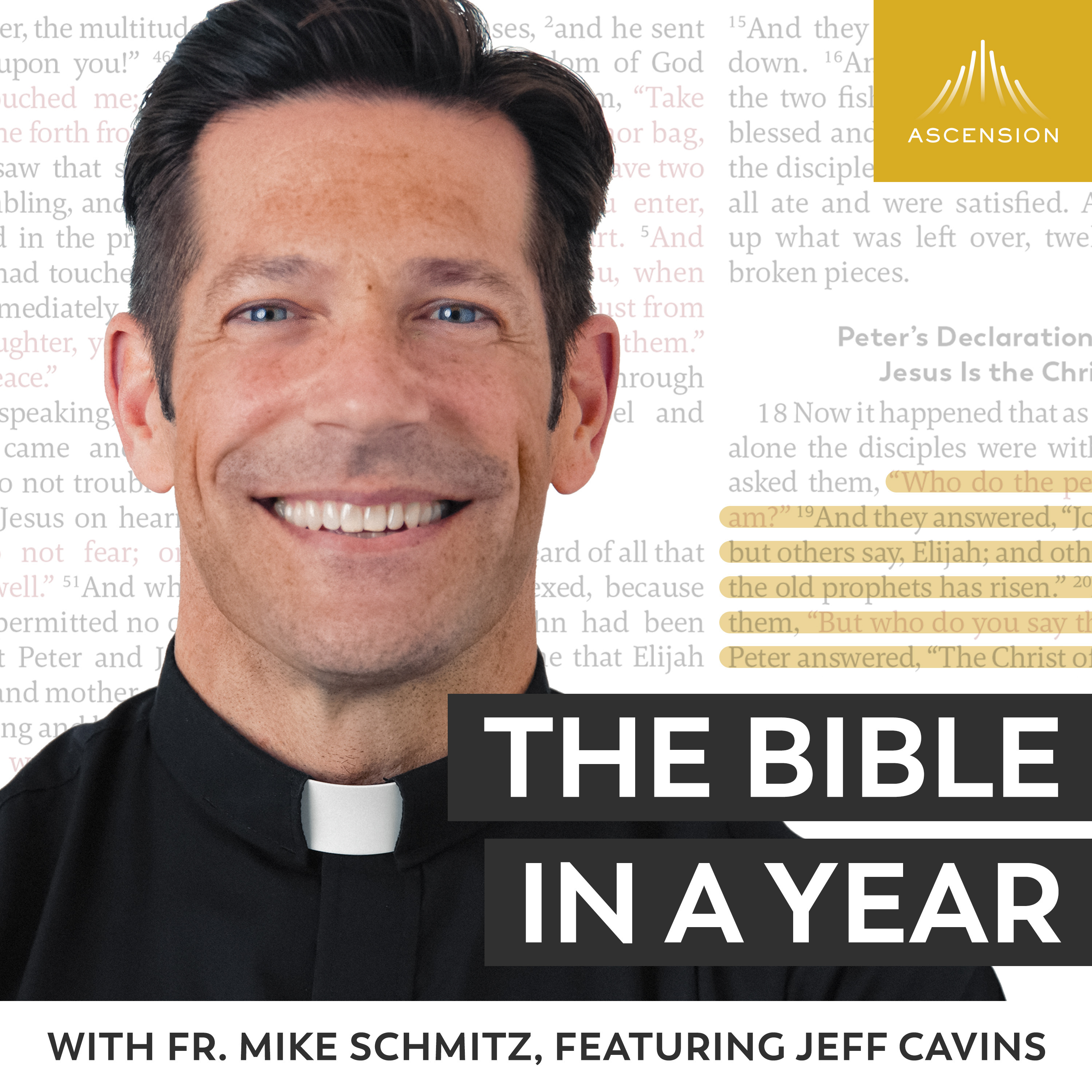
Overview of Bible in a Year — Day 39: "Slavery in the Old Testament" (Ascension, Father Mike Schmitz)
Father Mike reads Exodus 21, Leviticus 14, and Psalm 75 (Revised Standard Version, Catholic Edition) and offers pastoral commentary. The episode frames difficult Old Testament laws (especially those about slavery and ritual purity) in their historical context, explaining how God progressively reveals justice to a people unfamiliar with his ways. Father Mike emphasizes that these laws are a starting point—teaching justice before mercy—and that God “stoops down” to raise people up.
Readings covered (brief summary)
- Exodus 21
- Laws about Hebrew slaves (six years of service, freedom in the seventh; conditions if a slave stays willingly; protections for female slaves).
- Serious criminal penalties (murder, kidnapping, cursing parents).
- Personal-injury rules (compensation for non-lethal injury; lex talionis—“life for life, eye for eye…”).
- Rules about harming slaves (if a slave dies under a master’s rod, punishment; if survives, no punishment).
- Civil laws about animal attacks and property negligence (goring ox, open pits, dividing damages).
- Leviticus 14
- Rituals for cleansing a leper (examinations, two birds, cedar, hyssop, scarlet, washing, shaving).
- Procedures and offerings for poor persons (reduced offerings).
- Cleansing of houses with suspected mildew/leprous disease (inspection, quarantine, removal of infected stones, scrapping, or demolition if persistent).
- Summary: laws for skin disease, clothing, houses, and related purity questions.
- Psalm 75
- Thanksgiving and trust in God’s just judgment.
- God humbles the proud and exalts the righteous; image of God holding a cup of judgment.
Main themes & takeaways
- Historical context matters: These laws address a society where slavery and harsh, arbitrary power were normal. God’s law introduces limits and protections within that reality.
- Progressive revelation: God begins teaching the Israelites basic, enforceable rules of justice (the “starting place”) so they can be elevated later toward fuller moral demands (e.g., mercy, the dignity of the person).
- Slavery in Exodus 21 is presented as a regulated social institution (often closer to indentured servitude or social care in crisis) — not an endorsement of all forms of later chattel slavery. The law places constraints on masters and provides remedies for injured/slaves.
- Lex talionis (“eye for an eye”) is portrayed as proportional justice, not vindictiveness; it limits escalation of revenge.
- Levitical rituals (Leviticus 14) emphasize purification, reintegration, priestly mediation, and symbolic acts (blood, water, oil, hyssop) that restore a person or place to the community.
- Psalm 75 reinforces that ultimate justice and vindication belong to God, who humbles the arrogant and sustains the righteous.
Notable quotes / pastoral insights (Father Mike)
- “God stoops down to us not to leave us there but… to raise us up.”
- “God is teaching them a new way to be.”
- Analogy: teaching justice to a people is like teaching the basics of math before calculus — you must start at the lowest level they can accept.
- Practical interpretive principle: begin with what the text was trying to do for its original audience (introduce constraints and justice), then trace how God’s revelation leads to higher moral demands.
Practical applications & reflection questions
- Application
- Remember historical context when reading difficult Old Testament laws—ask what the law aimed to prevent or correct in its time.
- Allow Scripture’s progressive revelation to shape moral discernment: know what is foundational (justice, human dignity) and how Jesus fulfills and elevates those principles.
- Treat others with dignity and pursue justice proportionally; advocate for victims and against modern forms of slavery and exploitation.
- Reflection questions
- How does understanding the social context of ancient Israel change my reading of Exodus 21?
- In what ways do modern Christian ethics draw on these Old Testament foundations for justice and mercy?
- Where does God’s “stooping down” show up in my life—how has he met me where I am to lead me higher?
Recommended next steps / resources
- Continue with the Bible in a Year readings (Father Mike notes upcoming challenging passages will be further explained).
- Read the Great Adventure Bible (Ascension) for the Great Adventure timeline and study notes.
- Use ascensionpress.com/bible-in-a-year to download the reading plan and related commentary.
- For study: consult reputable commentaries on Exodus and Leviticus that address ancient Near Eastern context and the development of biblical law.
God willing, this episode helps listeners hold together fidelity to the text, sensitivity to history, and openness to how God’s revelation grows from justice toward mercy.