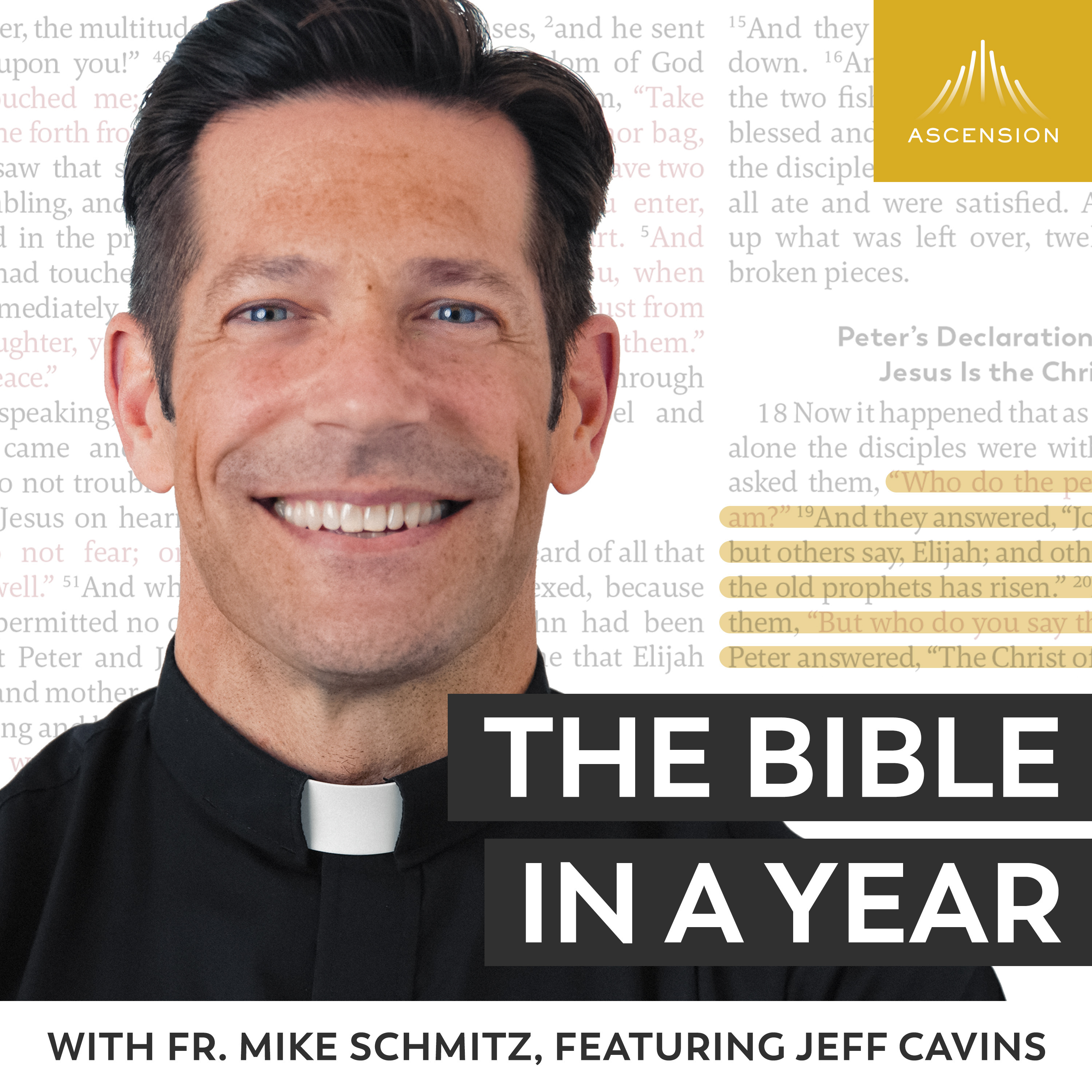
Overview of Bible in a Year — Day 38: The Ten Commandments (2026)
Host Father Mike Schmitz leads Day 38 of the Bible in a Year podcast, guiding listeners through readings from Exodus 19–20, Leviticus 13, and Psalm 74 (RSV-CE). The episode focuses on God’s covenant with Israel at Mount Sinai, the giving of the Ten Commandments, the ritual laws about leprosy and purity in Leviticus, and a psalmic lament pleading for God’s help. Father Mike emphasizes covenantal love as the context for the commandments and connects Sinai’s covenant to the new and eternal covenant fulfilled in Christ and the Eucharist.
Readings covered
- Exodus 19–20: Israel at Sinai; God’s covenant proposal; manifestations (thunder, lightning, cloud); limits set around the mountain; the proclamation of the Ten Commandments and instructions for altars.
- Leviticus 13: Detailed priestly procedures for diagnosing and handling skin disease (commonly translated “leprosy”), rules about quarantine, garment contamination, and ritual purification.
- Psalm 74: A communal lament asking God to remember His people, recounting the destruction of the sanctuary and pleading for deliverance and vindication.
Summary of the episode
- Setting: The Israelites camp at Mount Sinai shortly after the Exodus. God calls Moses and declares His intention to be Israel’s God if they will keep His covenant.
- Covenant before commands: God establishes relationship first—“I will be your God; you shall be my people”—then gives the commandments that protect and nourish that relationship.
- Theophany: Dramatic signs (smoke, thunder, trumpet) accompany God’s descent on Sinai; people are terrified and ask Moses to speak with God on their behalf.
- The Ten Commandments: Primary moral directives given as part of the covenant (no other gods; no idols; don’t take God’s name in vain; keep the Sabbath holy; honor parents; don’t kill; don’t commit adultery; don’t steal; don’t bear false witness; don’t covet).
- Leviticus 13 overview: Practical, detailed ritual instructions for priests to diagnose skin disease, determine uncleanness/cleanness, quarantine procedures, regulations for contaminated garments and what to do (wash, tear out, or burn).
- Psalm 74: Lament over the ruined sanctuary and enemies’ mocking; appeal to God’s saving acts in history and plea to remember the covenant and defend the poor and humble.
- Father Mike’s reflection: Emphasizes that a covenant is an exchange of persons (not a conditional contract); commandments are not arbitrary rules but life-giving structures within relationship; fulfillment in the new covenant (Jesus’ self-giving in the Eucharist); pastoral encouragement to pray for one another and live the covenantal call to holiness.
Key theological insights
- Covenant vs. contract: A contract exchanges goods/services on conditions; a covenant exchanges persons—God gives Himself to Israel and calls them to belong to Him.
- Relationship precedes law: God establishes identity and relationship with His people before giving rules; commandments are meant to safeguard and deepen the covenant.
- Fulfillment in Christ: The Sinai covenant is part of a covenantal trajectory culminating in the new and eternal covenant in Christ—His self-gift is the ultimate exchange of persons (Eucharist as the covenant’s sign).
- Ritual purity and communal health: Leviticus shows how ancient Israel’s laws addressed holiness, social order, and community health through priestly discernment and ritual processes.
- Prayerful lament as theology: Psalm 74 models honest pleading when the community’s sanctuary and identity are threatened—calling God back to remember the covenant.
Notable quotes
- “A covenant is an exchange of persons.”
- “If there were commandments without a covenant, it would be rules without a relationship.”
- “I will be your God and you shall be my people.”
Practical takeaways / action items
- Read Exodus 19–20 slowly and meditate on how God initiates relationship before giving the law.
- Re-read the Ten Commandments and reflect on how each commandment protects relationship (with God and neighbor).
- Consider the Leviticus passages as a window into how ancient law sought communal and ritual wholeness—reflect on modern analogs of care, quarantine, and responsibility.
- Use Psalm 74 as a model for honest prayer in times of communal suffering: recount God’s past deeds and plead for help.
- Participate in the Eucharist as the ongoing, covenantal exchange (receive and give yourself to Christ).
- Pray for the podcast community and for the personal grace to live the covenant more fully; Father Mike asks listeners to pray for him as he prays for them.
Suggested reflection questions
- How does understanding the Ten Commandments as part of a covenant change the way you hear them?
- In what ways do the commandments protect relationships in your life?
- How do the Levitical purity rules challenge or inform your view of communal responsibility and care?
- When have you used lament (like Psalm 74) to bring grief or fear before God?
Episode context and host
- Host: Father Mike Schmitz (Ascension) — pastoral reflections that connect Scripture to Christian life, prayer, and the Eucharist.
- Translation used: Revised Standard Version, Catholic Edition (RSV-CE).
- Series: Bible in a Year podcast, which reads through Scripture using the Great Adventure Bible timeline.
This summary should help you grasp the readings and Father Mike’s key reflections without listening to the full episode.