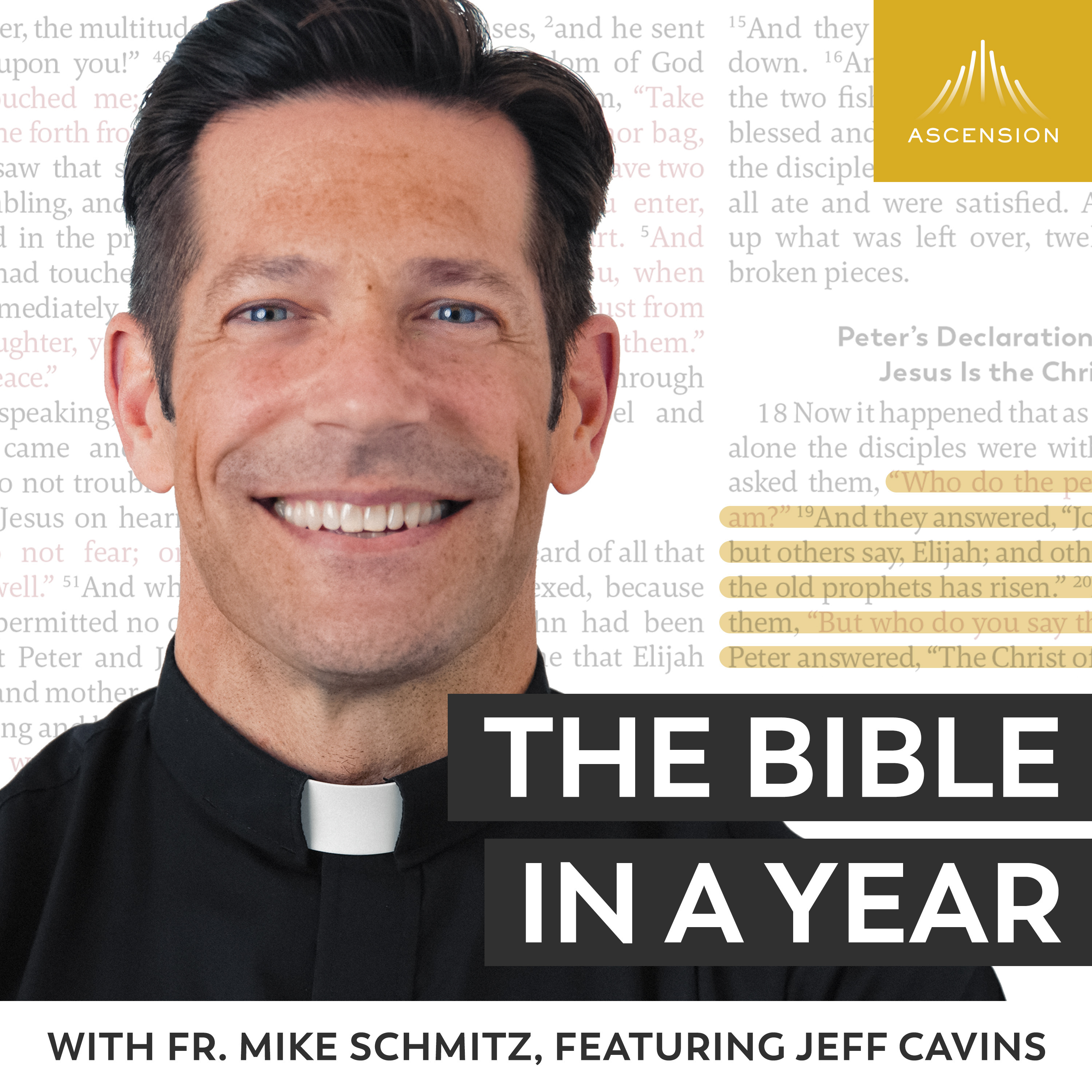
Overview of Bible in a Year — Day 33: Locusts, Darkness, and Death of the Firstborn (2026)
Father Mike Schmitz (Ascension) reads and reflects on Exodus 10–11, Leviticus 8, and Psalm 50. He narrates the eighth and ninth plagues (locusts, darkness), the warning of the final plague (death of the firstborn), the rite of Aaron’s ordination (Leviticus 8), and Psalm 50’s call to true worship. His brief commentary pulls two notes on Exodus (the plagues as demonstrations against Egyptian gods; the purpose of Israel’s release as worship) and one note on Leviticus (the origin and rite of the Levitical priesthood), tying them to Christian worship, priesthood, and the Eucharist.
Key readings covered
- Exodus 10: The eighth plague (locusts); plea and partial refusals from Pharaoh; Moses insists all—men, women, children, cattle—must go to worship God.
- Exodus 11: Warning of the final plague — death of the firstborn; Israelites to ask Egyptians for jewelry; God hardens Pharaoh’s heart.
- Leviticus 8: The detailed rite of ordination for Aaron and his sons — washing, vesting, sacrifices, anointing, and seven-day ordination period.
- Psalm 50: God’s rebuke of empty sacrifice; call to thanksgiving, right living, and faithful worship.
Scripture summary — essentials
Exodus 10–11
- God warns Pharaoh through Moses: a locust plague will consume what the hail left; locusts darken the land and devour all vegetation.
- Pharaoh repents briefly; God sends a wind that drives the locusts into the Red Sea.
- Pharaoh again refuses to let the Israelites go. God announces one final plague: at midnight all Egyptian firstborn (human and animal) will die.
- Israelites receive favor in Egypt and are told to ask neighbors for silver and gold before leaving.
Leviticus 8
- Moses carries out God’s instructions: assembles the congregation, washes and clothes Aaron and his sons, anoints the tabernacle and its furnishings.
- Detailed sacrificial actions: sin offering, burnt offering, ordination ram, waving offerings; sprinkling of blood and anointing oil to consecrate.
- Aaron and sons must remain at the tent of meeting for seven days to complete ordination; they eat portions specified by the rite.
Psalm 50
- God declares sovereignty and judges Israel: sacrifices alone are not enough.
- God rejects empty ritual divorced from obedience and right living.
- True sacrifice: thanksgiving, fulfilling vows, calling on God in trouble; God will show salvation to those who order their way rightly.
Host commentary — main insights
- The ten plagues are not random demonstrations of power; each targets or overturns an Egyptian deity or element of their religious order. The plagues reveal Yahweh’s supremacy over Egyptian gods (example: Nile/ Hapi; frogs/ Heket; darkness/ Ra).
- The plagues also aim to free Israel from spiritual captivity—Egyptian influence and idolatry had invaded Israel’s heart and culture (prefiguring the golden calf incident).
- Moses’ insistence “not a hoof shall be left behind” underscores that the Exodus is fundamentally about worship. Israel must be able to offer God the worship He requests, not whatever they choose. Pope Benedict is cited to emphasize that freedom was given so people could worship God properly.
- Leviticus 8 explains the institutionalization of the Levitical priesthood: after the golden calf incident, Levites were set apart; the ordination rites show how priestly service is consecrated and foreshadow Christ’s one perfect priesthood.
- The sacrificial system prefigures Christ’s sacrifice; the New Covenant (as Jesus commands at the Last Supper) is the worship God desires — participate according to the form He gave (Eucharist).
Notable quotes / memorable lines
- “Every one of the 10 plagues is associated with one of the 10 false gods of Egypt.”
- “We will receive freedom from his hand so that we can worship him how he wants.”
- On Psalm 50: “Offer to God a sacrifice of thanksgiving… To him who orders his way aright, I will show the salvation of God.”
Main takeaways / theological application
- The Exodus plagues demonstrate God’s sovereignty over false powers and aim to break Israel’s attachment to Egyptian idolatry.
- True freedom from slavery has a purpose: to worship God according to His will, not our preferences.
- The Levitical rites formalize priesthood and point forward to the definitive priesthood and sacrifice of Christ.
- Psalm 50 challenges ritual religion without justice and right conduct—God desires gratitude and moral integrity, not empty offerings.
Practical action items / reflection prompts
- Read Exodus 10–11, Leviticus 8, and Psalm 50 to see details Father Mike highlights.
- Examine your own worship: do you give God what you want to give Him, or what He asks for?
- Reflect on modern “idols” (things that displace God in your heart) and ask God for freedom from them.
- Consider the link between liturgy/sacrament (Eucharist) and true worship: participate with understanding and gratitude.
- Keep the habit: Father Mike encourages continuing the daily reading and praying habit.
Closing encouragement
Father Mike closes with prayer and an encouragement to keep going in the reading plan (passing the 30-day habit threshold), to pray for one another, and to seek interior freedom so we can worship God as He desires.