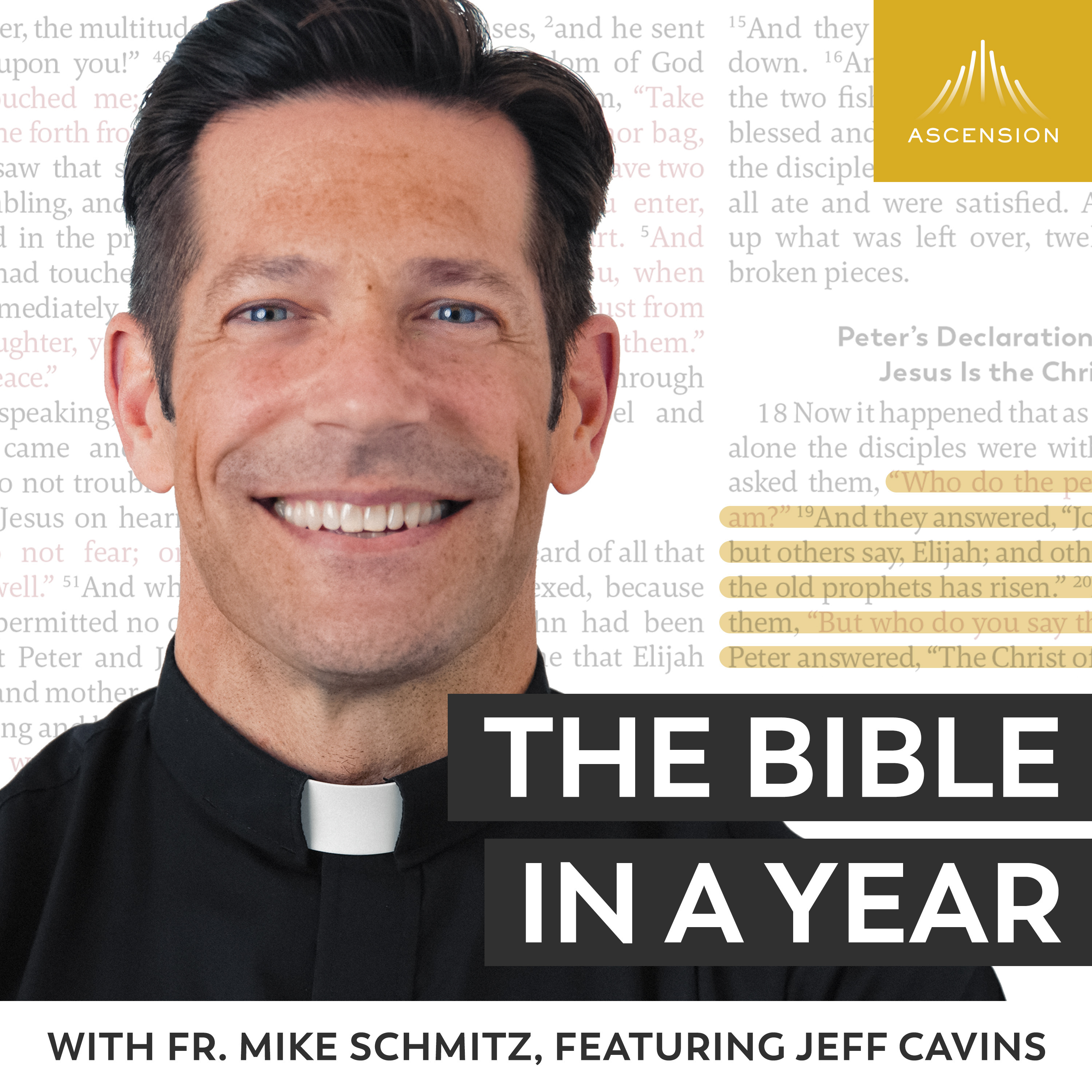
Overview of Day 324: The Name of Jesus (2025)
This episode (Day 324) of the Bible in a Year podcast with Father Mike Schmitz (Ascension) walks through the day’s Scripture readings—Acts 3; Romans 4–5; Proverbs 27:1–3—then offers pastoral commentary tying them together around the themes of faith, healing, justification, grace, and God’s relentless love. Father Mike emphasizes how miracles point to Jesus, how faith (not ritual works) justifies us, and how Christ’s death reconciles sinners to God.
Readings covered
Acts 3
- Peter and John meet a man lame from birth at the Beautiful Gate.
- Peter heals him “in the name of Jesus Christ of Nazareth,” and the man immediately walks, leaps, and praises God.
- Peter addresses the crowd: the miracle was by God’s power through Jesus—whom they had denied and handed over to Pilate; he calls them to repentance and points to fulfillment of prophecy in Jesus.
Romans 4
- Paul uses Abraham as the example: Abraham was justified by faith, not by works or circumcision.
- Circumcision was a sign that followed Abraham’s faith; righteousness is reckoned by faith.
- The promise to inherit the world comes through faith and grace, not the law—Abraham is “father of us all” who believe.
Romans 5
- Justification by faith brings peace with God through Jesus Christ.
- Suffering produces endurance → character → hope; hope does not disappoint because God’s love is poured into our hearts by the Spirit.
- The great proclamation: “While we were yet sinners, Christ died for us.” Reconciliation precedes and secures salvation by Christ’s life.
- Adam (disobedience → death) is contrasted with Christ (obedience → life); where sin increased, grace abounded even more.
Proverbs 27:1–3
- Don’t boast about tomorrow; let others praise you; a fool’s provocation is heavier than a stone or sand—wisdom about humility and restraint.
Key themes & takeaways
- Miracles point to Jesus and accompany the proclamation of the Gospel; healings are meant to reveal God and prompt faith and repentance.
- Faith, not ritual observance or works, is the basis of righteousness (Abraham’s faith preceded circumcision).
- Justification by faith brings peace with God and access to grace; suffering is not wasted—God refines character and hope through it.
- God’s love is proactive and unconditional: Christ died for sinners—while we were still enemies—demonstrating divine initiative in reconciliation.
- The Old Testament is fulfilled, not abolished; worship practices (e.g., prayer at the temple) continued in continuity with fulfillment in Christ.
- Practical humility: don’t boast about tomorrow; accept praise with restraint; avoid provocation.
Notable quotes
- Biblical: “In the name of Jesus Christ of Nazareth, rise and walk.” (Acts 3)
- Biblical: “Abraham believed God, and it was reckoned to him as righteousness.” (Romans 4)
- Biblical: “While we were yet sinners, Christ died for us.” (Romans 5)
- Father Mike: “Never believe the lie that you’re not wanted. Never believe the lie that your life doesn’t matter. You are loved. You’re wanted and he will never stop loving you.”
Context & commentary (Father Mike’s pastoral points)
- The apostles continued Jewish practices (e.g., temple prayer) even as Christianity fulfilled the Old Covenant.
- Miracles serve evangelization: they show God’s power and validate the proclamation of Jesus as Savior.
- Paul’s argument in Romans addresses tensions between Jewish and Gentile Christians (e.g., circumcision). Paul roots justification in faith so the Gospel is accessible to all.
- The cross is the decisive demonstration of God’s love: reconciliation happens while we are still estranged.
- Father Mike stresses pastoral assurance—God’s relentless, undeserved love—and encourages listeners to receive and live from that truth.
Practical reflections / action items
- Reflect on gifts God has given you: are you using them to glorify God and serve others?
- Meditate on Romans 5:1–11—especially the reality that reconciliation comes while we were still sinners.
- Practice humility from Proverbs 27:1–3: avoid boasting about the future and let others give honest praise.
- Pray for the courage to live out your faith publicly (like Peter and John) and to proclaim Jesus when blessings or miracles reveal God’s action.
Why this matters
These passages together summarize the heart of the Christian message: God’s promises fulfilled in Christ, justification by faith, the transforming and purposeful nature of suffering, and the invitation to repent and live in reconciled relationship with God. Father Mike frames all of this as both doctrinal truth and immediate pastoral comfort: you are deeply loved and invited into God’s family.