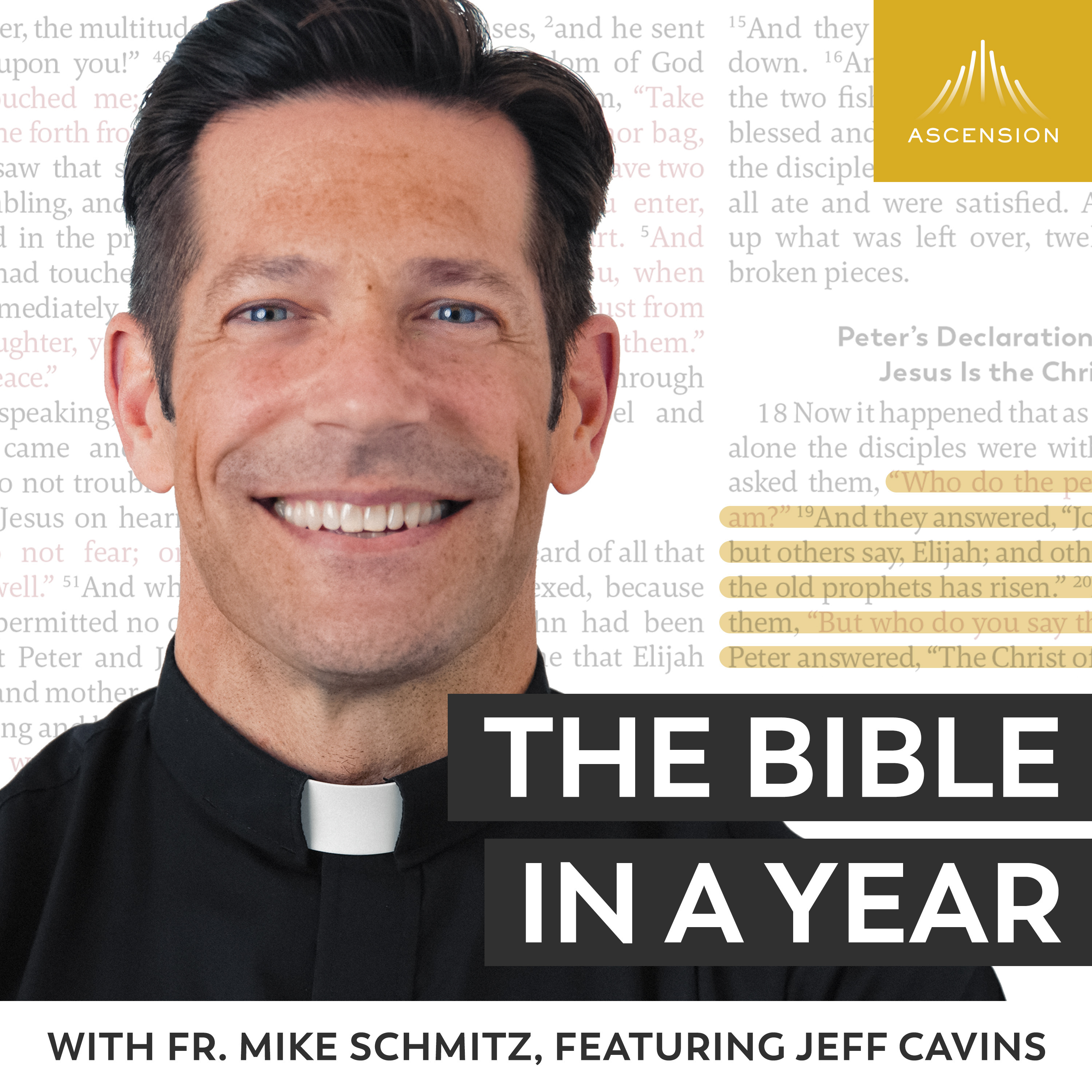
Overview of Bible in a Year podcast — Day 32: Cattle, Boils, and Hail (2026)
Father Mike Schmitz (Ascension) reads and reflects on Exodus 9, Leviticus 7, and Psalm 49 as part of the Great Adventure Bible Timeline plan. The episode covers the continuing plagues in Exodus, detailed sacrificial laws in Leviticus, and a psalm about the futility of trusting riches. Father Mike closes with a pastoral reflection on what it means that “God hardened Pharaoh’s heart” and how that applies to our spiritual lives.
Readings — what happens in each chapter
-
Exodus 9
- God warns Pharaoh through Moses: a deadly plague on Egyptian livestock will come, sparing Israel’s animals.
- A plague of boils afflicts Egyptians, including Pharaoh’s magicians.
- God announces an unprecedented hailstorm; those who fear God bring their livestock inside, others lose theirs.
- Hail (with thunder and fire) devastates Egypt’s crops and trees, except in Goshen (Israelite land).
- Pharaoh admits sin and pleads; Moses prays and the storm stops, but Pharaoh hardens his heart again.
-
Leviticus 7
- Laws about the guilt (trespass) offering, sin offering, burnt offering, cereal offering, consecration, and peace offerings.
- Specific portions of sacrificial animals and grain belong to priests (breast, right thigh, skins, certain baked goods).
- Rules for eating sacrificial meat: timing (day or next day, not third day), cleanliness requirements, handling of unclean meat.
- Prohibitions: do not eat fat that is offered to the Lord; do not eat blood (punishable by being “cut off”).
- These instructions are framed as perpetual obligations given at Sinai.
-
Psalm 49
- A wisdom psalm warning against trusting riches; wealth cannot ransom the soul or prevent death.
- The rich and proud will die like animals and leave their wealth to others; true hope rests in God, who can redeem from Sheol.
- Encourages not to fear wealth’s outward trappings because they cannot deliver in death.
Key themes & takeaways
- Divine judgment and mercy
- Exodus shows God’s power over Egypt and his special protection of Israel; judgments aim to reveal God’s sovereignty and name.
- Holiness, worship, and priestly provision
- Leviticus emphasizes ritual order, what belongs to God, and the priests’ material share—linking worship practice to community structure.
- Mortality vs. lasting value
- Psalm 49 contrasts temporary earthly riches with the eternal value of God’s ransom/redeeming power.
- Freedom and responsibility of the human heart
- Father Mike stresses that “God hardens Pharaoh’s heart” does not negate free will; people respond differently to God’s presence.
Notable insight — “God hardens Pharaoh’s heart” explained
- Analogy: God is like the sun; his presence reveals and intensifies what a heart already is:
- Hearts like wax soften in God’s presence (open to repentance).
- Hearts like clay harden further in God’s presence (stubborn refusal).
- Father Mike’s pastoral point: God’s activity of hardening in Scripture should be understood relationally — God works with human freedom; people can become more obstinate when confronted by God’s truth.
- Practical implication: spiritual dryness, unanswered prayers, or trials can lead us to harden our hearts if we’re not careful.
Practical application & action items
- Examine your heart: look for signs of hardening (resistance, bitterness, avoidance of God) and invite God to soften you.
- Stay in community: pray for and with others; mutual prayer helps prevent isolation and hardening.
- Practice sacramental/ritual attention: the Levitical details remind believers that worship actions and reverence matter (cleanliness, proper offerings).
- Reorient trust: Psalm 49 calls for trusting God’s redemption rather than wealth or status.
Notable quotes
- “God is always good... the only thing he emits essentially are those things — truth and goodness and mercy and life and love and joy.”
- Sun/wax/clay analogy to explain how people respond differently to God’s presence.
- “God never overwhelms someone’s free will. He always works with our free will.”
Resources & next steps
- Reading plan: ascensionpress.com/bible-in-a-year (free Great Adventure Bible Timeline plan).
- Father Mike invites listeners to pray for one another and to return for the next day’s reading/reflection.
Short, pastoral, and reflective — this episode ties dramatic Old Testament events to personal spiritual formation and encourages listeners to keep their hearts soft before God.