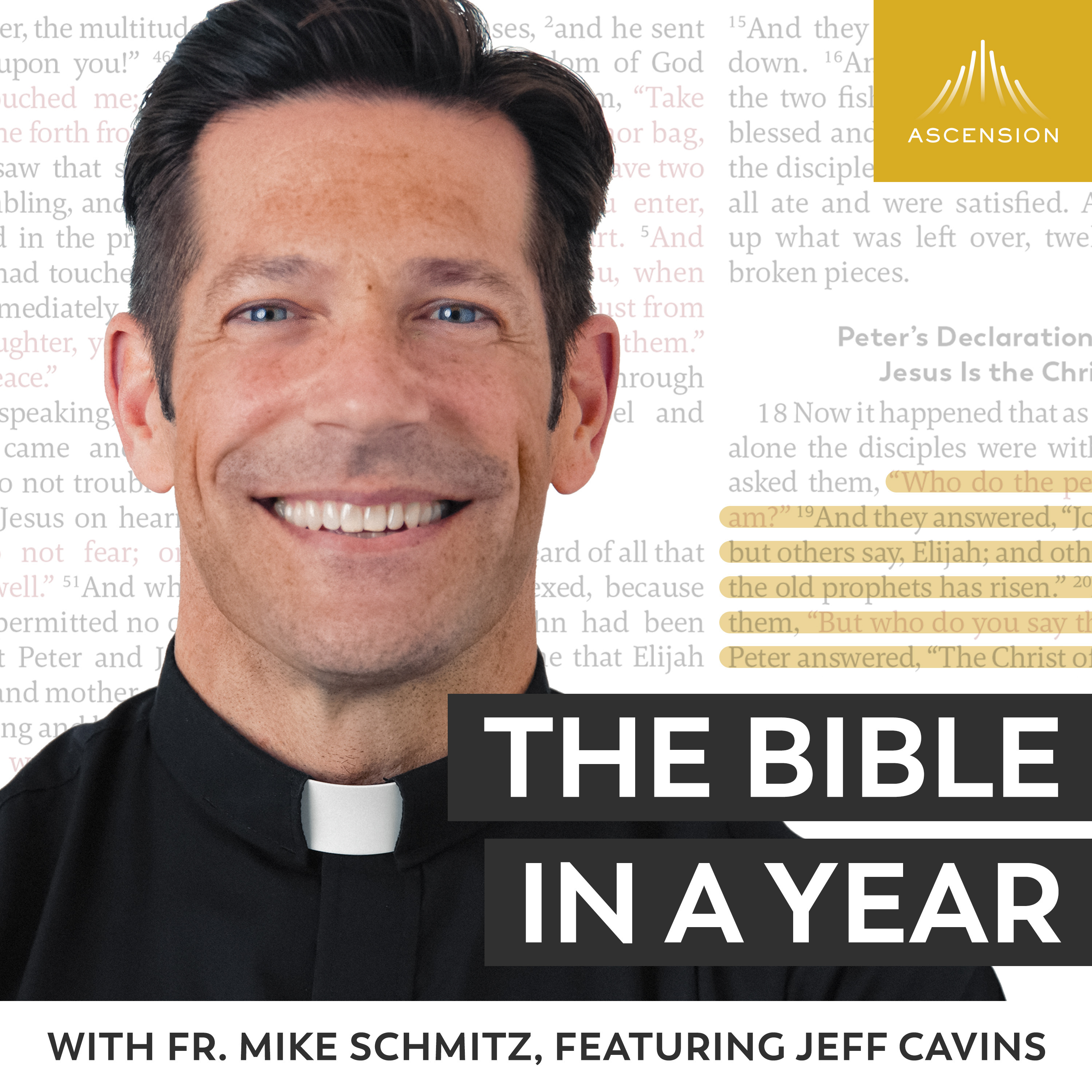
Overview of Bible in a Year — Day 27: "The Birth of Moses" (Ascension / Fr. Mike Schmitz)
Fr. Mike reads and reflects on Exodus 1–2, Leviticus 1, and Psalm 44 (RSV‑CE; using the Great Adventure Bible). The episode launches the Exodus section of the year‑long plan (period color: red) and ties the narrative of Israel in Egypt to Levitical worship instructions and a psalmic lament. Major themes are God’s fidelity in suffering, the origin of Moses, the Levitical sacrificial system, and how Old Testament worship points forward to the Mass.
Readings — what happens (concise)
-
Exodus 1–2
- The Israelites multiply in Egypt; a new Pharaoh (who “did not know Joseph”) enslaves them and orders the killing of Hebrew male infants.
- Hebrew midwives (Shiphrah and Puah) fear God and spare the boys; Pharaoh then commands all Egyptians to throw Hebrew males into the Nile.
- A Levite woman hides her son for three months, sets him afloat in a duck‑basket; Pharaoh’s daughter rescues him, names him Moses, and raises him in the palace.
- As an adult Moses kills an Egyptian who was abusing a Hebrew, flees to Midian, helps Reuel’s (Jethro’s) daughters at a well, marries Zipporah, and fathers Gershom.
- Meanwhile, the Israelites groan in bondage; God hears their cry and remembers the covenant with Abraham, Isaac, and Jacob.
-
Leviticus 1
- Instructions for the burnt offering: acceptable animals (unblemished males of herd/flock or certain birds), laying on of hands, slaughter, priestly handling of blood and parts, burning on the altar — described as a pleasing odor to the Lord.
-
Psalm 44
- A communal lament/plea: the psalm recounts past divine victories but laments present defeat and humiliation; the people assert their fidelity and beg God to awaken, remember them, and deliver them.
Key reflections & theological takeaways
-
God’s presence in suffering
- Fr. Mike emphasizes that Israel’s growth in Egypt (fruitfulness despite oppression) demonstrates God’s ongoing care—even when God seems hidden. “You may be hidden, but you are not absent. You may be unseen, but you are not inactive.”
-
Children as blessing
- The multiplication of Israel highlights children as a gift from God. Fr. Mike prays for pregnant mothers, couples desiring children, and those grieving miscarriage or stillbirth.
-
Priesthood and sacrifice: continuity between Old and New Covenants
- Leviticus shows ritual structure: the one who brings the offering participates (laying on of hands) while Levite priests handle blood/altar — a shift from the household father as family priest toward an organized Levitical priesthood.
- Blood as life and sacrificial offering: Fr. Mike draws typological parallels between the burnt offering and the Eucharist — the pouring out of blood on the altar as a foreshadowing of Christ’s sacrificial offering and the Mass’s consecratory/oblationary moment (“this is my body… this is my blood… offering the sacrifice to the Father”).
-
Psalm 44 models prayer in suffering
- The psalm gives vocabulary for faithful lament: recall God’s past deeds, honestly voice pain and humiliation, affirm ongoing faithfulness, then plead for rescue.
Notable quotes / phrases
- “The life is in the blood.” (scriptural motif emphasized in the Levitical reading)
- “You may be hidden, but you are not absent. You may be unseen, but you are not inactive.”
- “Children are a blessing.”
Practical takeaways / action items
-
Spiritual
- Use Psalm 44 as a template for honest prayer in times of communal or personal suffering.
- Reflect on how Old Testament worship anticipates the Mass — especially the themes of offering, blood/life, and priestly mediation.
- Pray for those longing for or grieving the loss of children (Fr. Mike leads a brief pastoral prayer in the episode).
-
Study / resources
- To follow the reading plan or get the Great Adventure Bible and timeline: ascensionpress.com/bibleinayear
- Recommended: keep reading Exodus and Leviticus to understand Israel’s formation, worship laws, and their fulfillment in Christ.
Who should listen / why
- Anyone following the Bible in a Year plan (Day 27) who wants a concise teaching linking biblical narrative, Levitical law, and Christian worship.
- Listeners seeking pastoral consolation around fertility and pregnancy loss.
- Those interested in the theological continuity between Old Testament sacrifices and the Eucharist.
Fr. Mike closes by encouraging communal prayer, reminding listeners they’re not alone in the Scripture journey, and inviting them to return tomorrow for the next day’s readings.