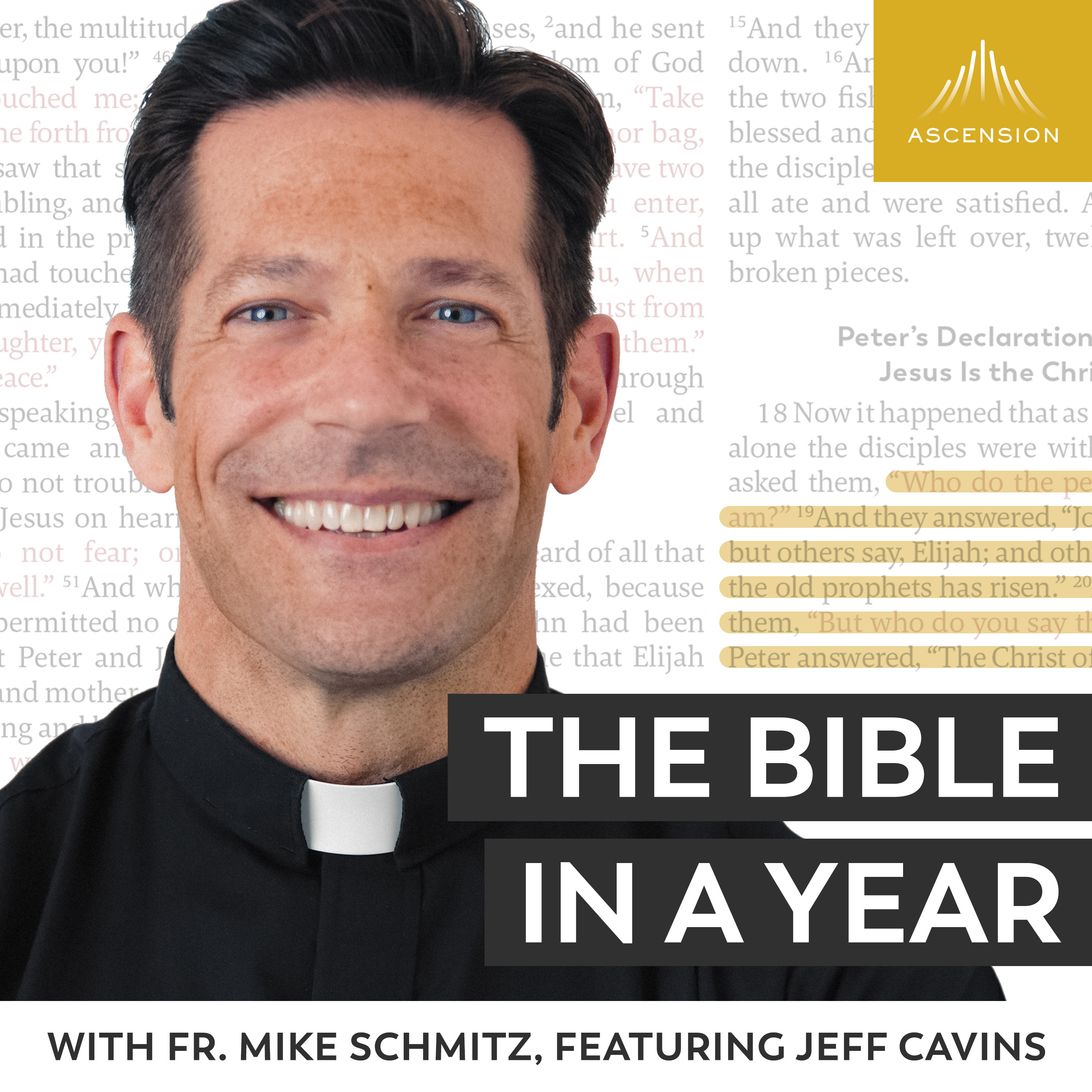
Overview of The Bible in a Year: Day 315 — The Virtue of Mercy
Father Mike Schmitz reflects on Luke 6–8 and Proverbs 26:1–3, focusing on Jesus’ call to show mercy. Through healings, parables, and teachings, the readings reveal compassion for people in need and challenge listeners to love even their enemies.
Jesus’ Teaching on Mercy
In the Sermon on the Plain, Jesus blesses the poor, hungry, grieving, and persecuted, and warns those who are comfortable and praised. He calls his followers to love their enemies, pray for those who mistreat them, forgive, give generously, and treat others as they wish to be treated. His instruction, “Be merciful, even as your Father is merciful,” is the episode’s central theme.
Jesus also warns against hypocrisy: examine your own faults before correcting someone else’s. A person’s actions reveal what is in their heart, and hearing Jesus’ words must lead to acting on them—like building a house on a firm foundation.
Healings and Encounters in Luke
Jesus heals a centurion’s servant, praising the centurion’s faith, and raises a widow’s only son, moved by compassion for her. When John the Baptist’s disciples ask whether Jesus is the one to come, Jesus points to the works they have witnessed: the sick are healed, the dead raised, and good news preached to the poor.
At a Pharisee’s house, a sinful woman weeps over Jesus’ feet and anoints them. Jesus contrasts her loving gratitude with the host’s lack of hospitality, forgives her sins, and tells her that her faith has saved her.
Faith Amid Challenges
The parable of the sower describes different responses to God’s word: some hearers lose it, some fall away under pressure, and others are distracted by life’s concerns. Those who hold fast to the word with good hearts bear fruit.
Jesus’ authority is also shown when he calms a storm, frees a man tormented by demons, heals a woman who has suffered for twelve years, and raises Jairus’s daughter. In each account, faith and Jesus’ power bring healing, restoration, and hope.
Father Mike’s Reflection
Father Mike describes mercy as love meeting a person in their misery and need—even when that love is undeserved. Justice matters, but Jesus calls his followers to a higher response: the mercy God showed humanity, even when people had turned away from him.
He also emphasizes holding two truths together: people have dignity because they are made in God’s image, yet they still need forgiveness and grace. He offers his interpretation that the least in God’s kingdom are greater than John the Baptist because baptism brings adoption as God’s children and the indwelling of the Holy Spirit—not because they are more virtuous.
Proverbs and Takeaway
Proverbs 26:1–3 uses images of misplaced honor, a baseless curse, and discipline to describe the folly of honoring or leaving fools unchecked.
The readings invite listeners to receive God’s mercy with humility and extend it to others through forgiveness, compassion, and faithful action.