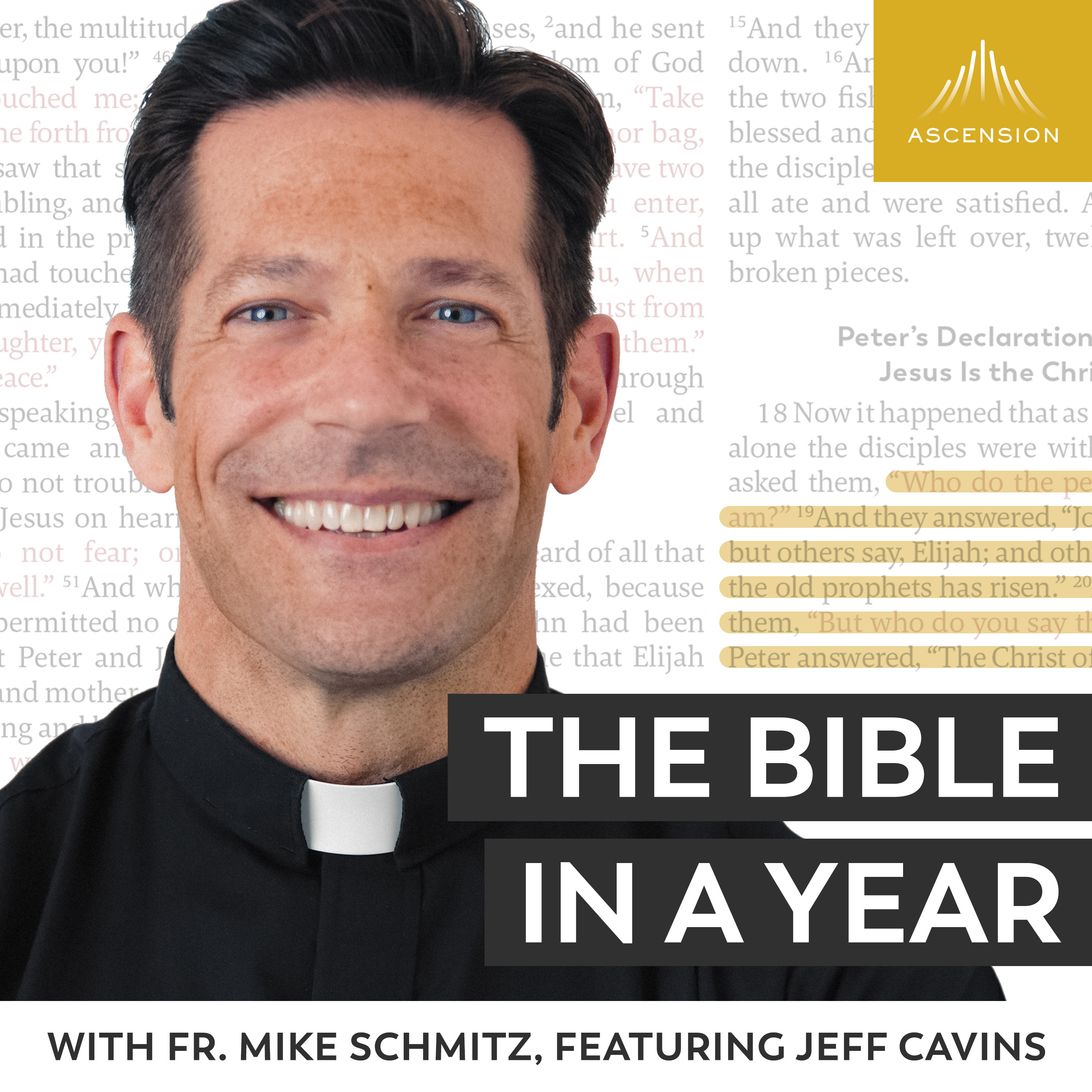
Overview of Day 312: Conclusion to the Old Testament (2026)
In this episode of Bible in a Year, Father Mike Schmitz marks the end of the Old Testament reading plan with the final chapter of 2 Maccabees, the closing chapter of Wisdom of Solomon, and Proverbs 25:21–23. He reflects on God’s faithfulness to His people, the courage of the Maccabees, and the call to love enemies and live with mercy. The episode ends with a preview of tomorrow’s transition into the Gospel of Luke and the New Testament.
Scripture Readings Covered
2 Maccabees 15
- Nicanor arrogantly prepares to attack Judas and the Jews, even intending to do so on the Sabbath.
- Judas encourages the people not to rely on weapons alone, but on God’s help and past deliverance.
- A dream/vision of Onias and Jeremiah strengthens Judas and his men, symbolizing divine support.
- Judas prays for God to send terror against the enemy, and the Jews defeat Nicanor’s forces.
- Nicanor is killed, and his head and arm are brought to Jerusalem as a sign of God’s victory.
- The Jews establish a yearly observance of the day of deliverance.
- The book concludes with the author’s brief epilogue, emphasizing that he has done his best to tell the story well.
Wisdom of Solomon 19
- The chapter recalls God’s continuing protection of Israel during the Exodus.
- The text emphasizes how creation itself obeyed God’s command to save His people.
- It contrasts the Egyptians’ cruelty and hardened hearts with God’s care for Israel.
- The passage highlights the dramatic reversals of the plagues and the crossing of the Red Sea.
- The chapter ends with praise that God has exalted and glorified His people and has always helped them.
Proverbs 25:21–23
- “If your enemy is hungry, give him bread to eat; and if he is thirsty, give him water to drink.”
- This teaching emphasizes mercy toward enemies.
- The passage also notes that a backbiting tongue and harmful speech stir up anger and conflict.
Key Themes and Takeaways
God, Not Human Strength, Gives Victory
Father Mike emphasizes that the Maccabees were not relying primarily on swords or military power, but on the Lord. Judas’ leadership shows that true courage comes from trust in God.
The Sanctity of Worship Matters Most
One of Father Mike’s main reflections comes from 2 Maccabees 15:18:
- The Jews cared deeply for their families and country,
- but their greatest concern was the consecrated sanctuary.
He reflects on how challenging it is to imagine prioritizing God’s worship, the Temple, and the Eucharist above everything else — even above personal attachments and comforts.
God Remains Faithful Through History
From Wisdom 19, Father Mike draws attention to the reminder that:
- God did not abandon His people,
- even when their journey was painful, messy, or marked by suffering.
His point: God’s help is real even when life is not neat or beautiful.
Love of Enemy Is Central to Christian Life
The Proverbs reading becomes a launching point for prayer about mercy, forgiveness, and doing good to those who oppose us. Father Mike highlights how difficult this command is, but also how essential it is to Christian discipleship.
Father Mike’s Reflections
On the End of the Old Testament
He celebrates that the reading plan has reached the end of the Old Testament and teases the transition into the New Testament with the Gospel of Luke beginning the next day.
On the Maccabees’ Motivation
He reflects on the line that says their greatest fear was for the sanctuary, noting that this reveals their priorities:
- God’s honor came before self-preservation,
- worship came before comfort,
- holiness came before everything else.
On God’s Presence in Suffering
He reminds listeners that many in the audience may be having “the worst day of their life” and assures them they are not alone. The community is invited to pray for one another and trust that God is present in brokenness.
Closing Prayer and Sendoff
Father Mike closes by praying:
- for gratitude for God’s justice and mercy,
- for the grace to love enemies,
- for help loving neighbors and friends well,
- and for the strength to live in the way we were made to live: in love.
He ends with encouragement and a preview:
- Tomorrow: a “twofer” intro and the beginning of Luke
- A new stage in the salvation story is about to begin.