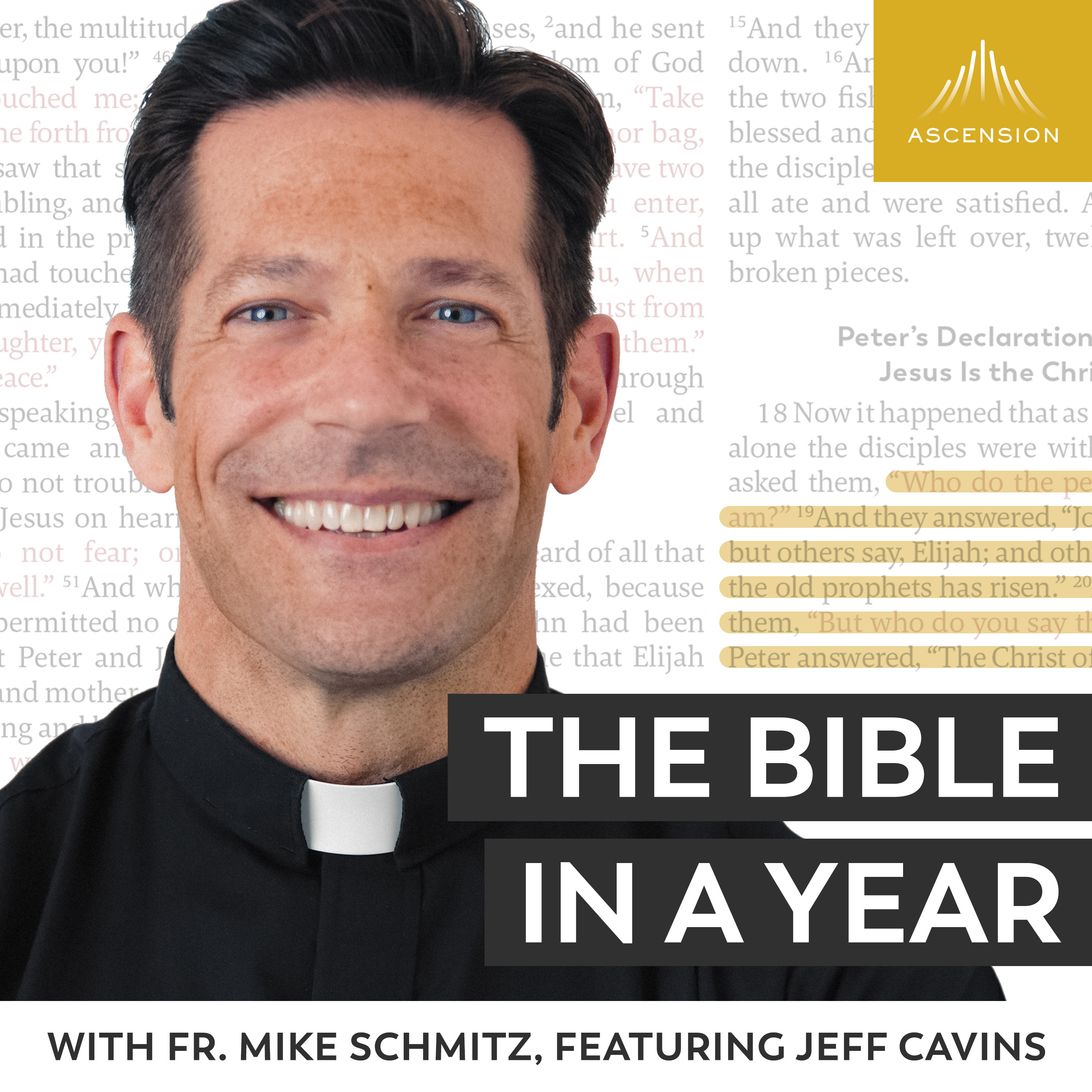
Overview of Day 309: Praying for the Dead (2026)
In this episode of Bible in a Year, Father Mike Schmitz reads 2 Maccabees 12, Wisdom 13–14, and Proverbs 25:11–14, then reflects on two major themes: the danger of idolatry and the practice of praying for the dead. The readings highlight Judas Maccabeus’ military victories, the belief that sin can have consequences even after death, and Wisdom’s sharp critique of false gods made by human hands. Father Mike uses these texts to explain the Catholic doctrine of purgatory as a process of purification that prepares a soul to love God fully.
Scripture Readings Summary
2 Maccabees 12
- Judas Maccabeus responds to violence against the Jews in Joppa and Jamnia with retaliatory strikes.
- He defeats multiple enemies in battle, including Timothy’s forces and other hostile cities.
- After a battle, the fallen soldiers are found to have idols/amuleths under their garments, revealing why they died.
- Judas collects money and sends it to Jerusalem for a sin offering on behalf of the dead.
- The passage explicitly says this was honorable because Judas believed in the resurrection and acted in hope that the dead could be helped.
Wisdom 13–14
- Wisdom condemns idolatry as foolishness:
- People should be able to recognize the Creator through the beauty and power of creation.
- Instead, they worship created things like the sun, stars, wood, stone, and crafted images.
- The text mocks the absurdity of praying to an object that cannot move, speak, help, or save.
- Chapter 14 traces how idolatry spread through grief, political power, artistic vanity, and social corruption.
- Idolatry is linked to moral disorder, injustice, and spiritual deception.
Proverbs 25:11–14
- Short wisdom sayings compare:
- a well-timed word to apples of gold in silver settings,
- a wise rebuke to valuable jewelry,
- a faithful messenger to snow in harvest time,
- and empty promises to clouds without rain.
Key Themes and Takeaways
1. Idolatry is often the distortion of good things
Father Mike emphasizes that idolatry usually does not begin with obviously evil things. More often, people take good things and make them ultimate things:
- success,
- relationships,
- possessions,
- comfort,
- even good desires.
The problem is not loving good things; it’s loving them more than God.
2. Creation points to the Creator
Wisdom teaches that beauty, order, and power in creation should lead people to worship God, not creation itself. Father Mike notes that if God’s works are beautiful and powerful, then the Creator must be even more so.
3. 2 Maccabees supports praying for the dead
Father Mike highlights this passage as a key biblical basis for the Catholic and Orthodox practice of praying for the dead:
- If the dead were already in heaven, prayer would be unnecessary.
- If they were in hell, prayer would be useless.
- Therefore, the passage implies a state of purification for those who die in friendship with God.
4. Purgatory as purification, not punishment
He explains purgatory as the reality that:
- we may die in God’s grace,
- but still need to be purified from attachment to sin,
- so that we can love God fully and enter heaven ready for communion with Him.
He frames it as a merciful transformation of the heart, not a contradiction of salvation.
Father Mike’s Main Reflection
Father Mike’s central pastoral point is that heaven is God Himself, not merely the things we might associate with happiness on earth. Since most people still love God mixed with self-love, sin, and worldly attachments, the heart must be changed before it can fully delight in heaven.
His takeaway is simple:
- we are not yet the kind of people who naturally love God above all else,
- so we need God’s grace to purify us,
- and the biblical witness supports that process.
Notable Insight
“We rarely make idols out of bad things. We almost always make idols out of good things.”
This is one of the episode’s clearest and most practical insights.
Prayer and Closing
The episode ends with Father Mike praying for:
- faithfulness,
- strength in weakness,
- and deeper trust in Jesus Christ, the one true God.
He closes with encouragement to keep going on the journey and asks listeners to pray for him as he prays for them.