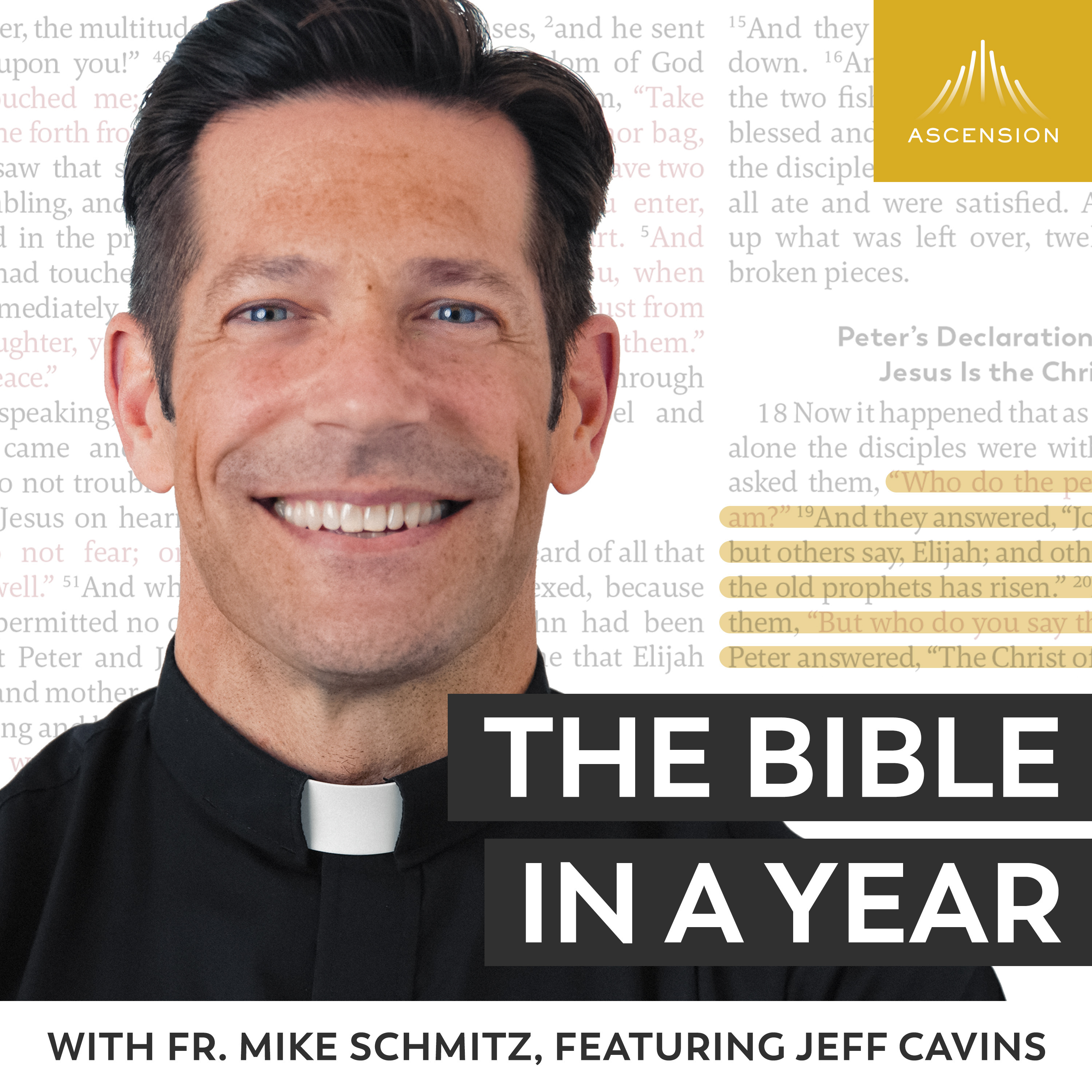
Overview of Day 263: The Father's Generosity
In this episode of Bible in a Year, Father Mike Schmitz walks through Matthew 18–21 and Proverbs 19:13–16, highlighting Jesus’ teachings on humility, forgiveness, repentance, and God’s generous mercy. The central thread of the episode is the contrast between how humans often measure worth and fairness versus how the Father gives, forgives, and seeks out the lost.
Scripture Readings Covered
Matthew 18–21
-
Matthew 18
- True greatness comes through humility like a child.
- Jesus warns strongly against causing others to sin.
- The lost sheep parable shows God’s desire to recover even one who strays.
- Jesus teaches a process for addressing sin within the community.
- Peter asks about forgiveness, and Jesus responds with “seventy times seven.”
- The unmerciful servant parable emphasizes that those forgiven by God must also forgive others.
-
Matthew 19
- Jesus teaches on marriage and divorce, stressing that what God joins together should not be separated.
- He blesses the children and affirms that the kingdom belongs to such as these.
- The rich young man is invited to sell his possessions and follow Jesus, but he walks away sorrowful.
- Jesus teaches that salvation is impossible by human effort alone, but with God all things are possible.
- Those who leave everything for Christ will receive a hundredfold and eternal life.
-
Matthew 20
- The laborers in the vineyard receive equal pay, revealing the Father’s generosity.
- James and John’s mother asks for positions of honor for her sons, and Jesus teaches that greatness in the kingdom means being a servant.
- Jesus states clearly that the Son of Man came “not to be served but to serve.”
- Two blind men cry out for mercy, and Jesus heals them.
-
Matthew 21
- Jesus enters Jerusalem on a donkey, fulfilling prophecy.
- He cleanses the temple, condemning corruption in worship.
- The fig tree withers, and Jesus uses it to teach about faith and prayer.
- Jesus’ authority is challenged by the religious leaders.
- The parable of the two sons shows that repentance matters more than mere words.
- The parable of the wicked tenants warns that rejecting God’s messengers and Son brings judgment.
Proverbs 19:13–16
- A foolish son brings grief to a father.
- Quarreling in marriage is compared to constant dripping rain.
- Prudence, diligence, and obedience are praised.
- Despising the word leads to death.
Main Themes and Takeaways
1. Humility Is the Path to Greatness
Jesus repeatedly overturns worldly ideas of status:
- greatness = becoming like a child
- authority = service
- first place = last place
Father Mike emphasizes that Jesus’ kingdom works by a completely different logic than the world’s.
2. Sin Must Be Taken Seriously
Jesus’ language about cutting off a hand or plucking out an eye is not literal self-harm instruction, but a call to remove whatever leads us into sin.
Father Mike applies this especially to:
- digital temptation
- destructive habits
- anything we “tolerate” that pulls us away from God
3. God Actively Pursues the Lost
The lost sheep parable is presented as a picture of divine pursuit:
- God does not wait passively
- He goes after the one who wandered
- He rejoices when the lost are brought home
4. Forgiveness Must Flow Through Us
The unmerciful servant parable is one of the episode’s strongest points:
- We are forgiven an unpayable debt.
- Therefore, we must forgive others.
- If forgiveness stops with us, we block the mercy we ourselves have received.
Father Mike notes that some wounds are so deep they feel impossible to forgive, and that is precisely why we need God’s help to forgive.
5. God’s Generosity Can Trigger Envy
The laborers in the vineyard show that God is not “fair” by human envy standards—He is generous.
Father Mike reflects that:
- people who have labored in the faith for years can feel resentful when others receive grace quickly
- but the right response is not comparison
- the right response is gratitude that the Father gives freely
6. Salvation Is a Gift, Not a Human Achievement
The rich young man and the laborers in the vineyard both point to the same truth:
- no one earns eternal life
- God’s mercy is the basis of salvation
- even our ability to accept grace is itself grace
Notable Reflections from Father Mike
- On sin and habits: some things in our lives need to be removed, not merely managed.
- On the lost sheep: God rejoices when the wanderer returns.
- On forgiveness: we cannot receive God’s mercy while refusing to extend it.
- On generosity: “Are you envious because I am generous?” is the question behind the vineyard parable.
- On grace: we need God’s grace even to accept God’s grace.
Practical Application
Examine what leads you into sin
Ask:
- What am I tolerating that I should remove?
- What habits, devices, or environments pull me away from God?
Practice radical forgiveness
Ask:
- Who have I not forgiven?
- Where do I need God’s help to soften resentment?
Reject comparison
Ask:
- Am I upset when God blesses others?
- Do I trust that His generosity toward them does not diminish His love for me?
Follow Jesus in humility
Ask:
- Am I seeking status, or am I choosing service?
- Am I willing to let the last be first?
Closing Prayer Emphasis
Father Mike closes by thanking God for Jesus, His grace, and His relentless pursuit of us—describing God as the One who runs after us when we run away. The prayer asks God never to stop seeking, lifting, and restoring His children.