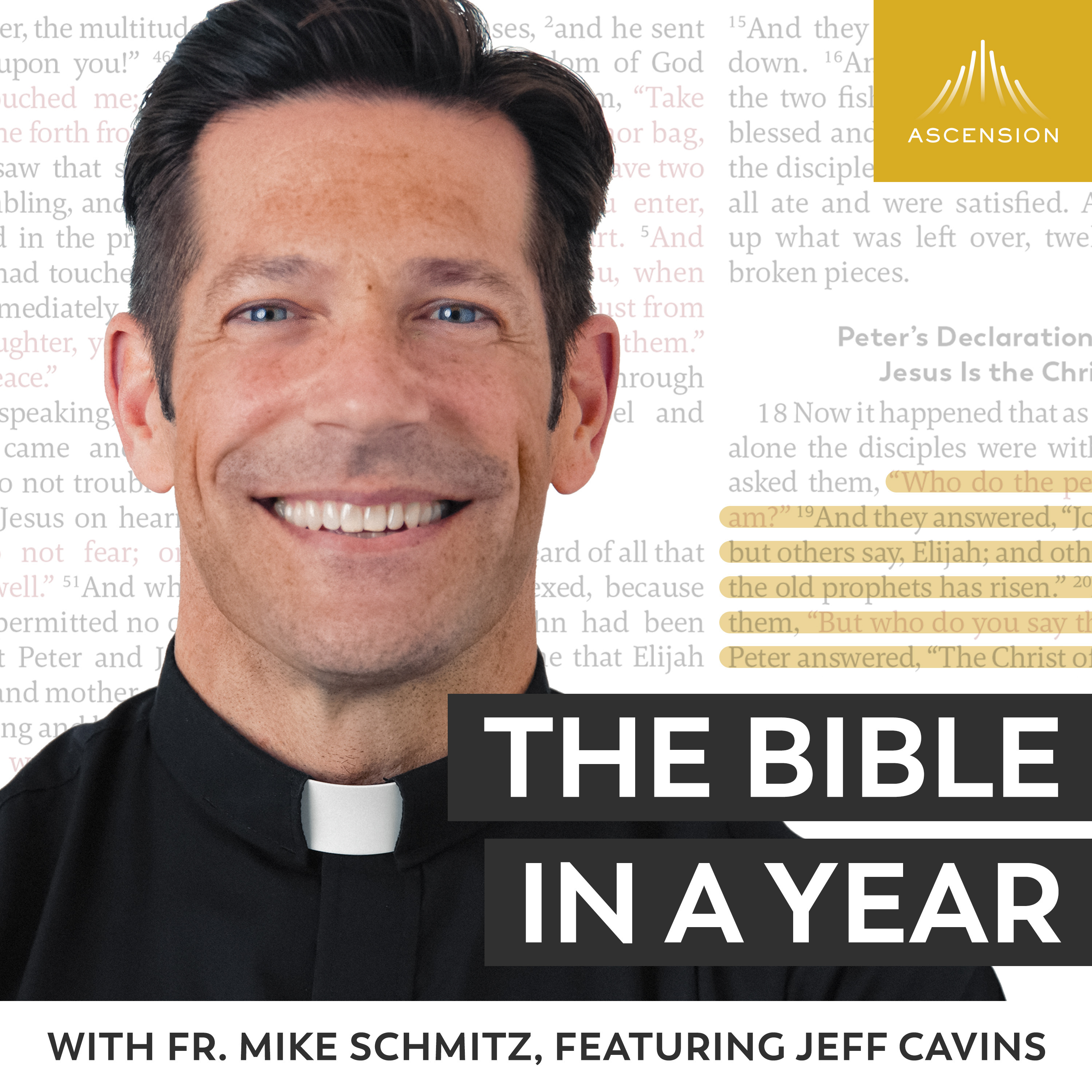
Overview of Day 213: The Redeemer (2026)
In this episode of Bible in a Year with Father Mike Schmitz, the readings move between God’s judgment and mercy: Babylon is humbled, Israel is confronted for its unfaithfulness, Ezekiel is shown the shocking abominations in Jerusalem’s temple, and Proverbs offers wisdom about speech, humility, and prudence. Father Mike emphasizes that God is both just and redeeming, and he highlights how Ezekiel 9 foreshadows the sign of the cross used in baptism and Ash Wednesday.
Scripture Readings Covered
Isaiah 47–48
- Isaiah 47: A prophecy of Babylon’s humiliation and downfall.
- Isaiah 48: A rebuke of Israel for covenant unfaithfulness, but also a reminder that God is still their Redeemer.
Ezekiel 8–9
- Ezekiel is brought in a vision to Jerusalem and shown:
- idolatry inside the temple,
- secret corruption among the elders,
- women weeping for Tammuz,
- men worshiping the sun.
- In chapter 9, judgment begins in Jerusalem, but those who mourn the city’s sin are marked and spared.
Proverbs 12:13–16
- Wise and righteous speech leads to good outcomes.
- A fool ignores advice and reacts instantly to insult.
- Prudence includes restraint and self-control.
Main Takeaways
God judges pride and false security
- Babylon’s downfall is tied to its arrogance and self-exaltation.
- Israel is also warned: being God’s people does not exempt them from accountability.
God remains the Redeemer
- Even while pronouncing judgment, God identifies himself as the one who teaches, leads, and restores.
- Father Mike stresses that Israel’s hope is not in itself but in the Lord’s mercy and faithfulness.
Corruption in worship is especially serious
- Ezekiel’s vision shows that idolatry had penetrated the very place meant for true worship.
- The repeated phrase “you will see still greater abominations” underscores the depth of Judah’s spiritual collapse.
Notable Insights and Typology
“Son of man”
- Father Mike explains that in Ezekiel, “son of man” simply means a human being.
- In Daniel 7, however, the phrase takes on a greater meaning: the one given authority, dominion, and kingship.
- Jesus’ use of “Son of Man” therefore points not only to his humanity, but also to his divine authority.
The marked foreheads in Ezekiel 9
- The man in linen marks the foreheads of those who grieve over Jerusalem’s sins.
- Father Mike notes that the Hebrew mark, tau, resembles a T or cross.
- He connects this to:
- the sign of the cross in baptism,
- the sign of ashes on Ash Wednesday,
- and ultimately Christ’s saving death on the cross.
Prayer and Reflection
- Father Mike prays for God to be made known even in weakness, brokenness, and aging.
- He closes by encouraging listeners to let Scripture transform how they see, love, and live.
- The episode’s central spiritual theme is that God’s word is not merely to be read, but allowed to penetrate and change the heart.