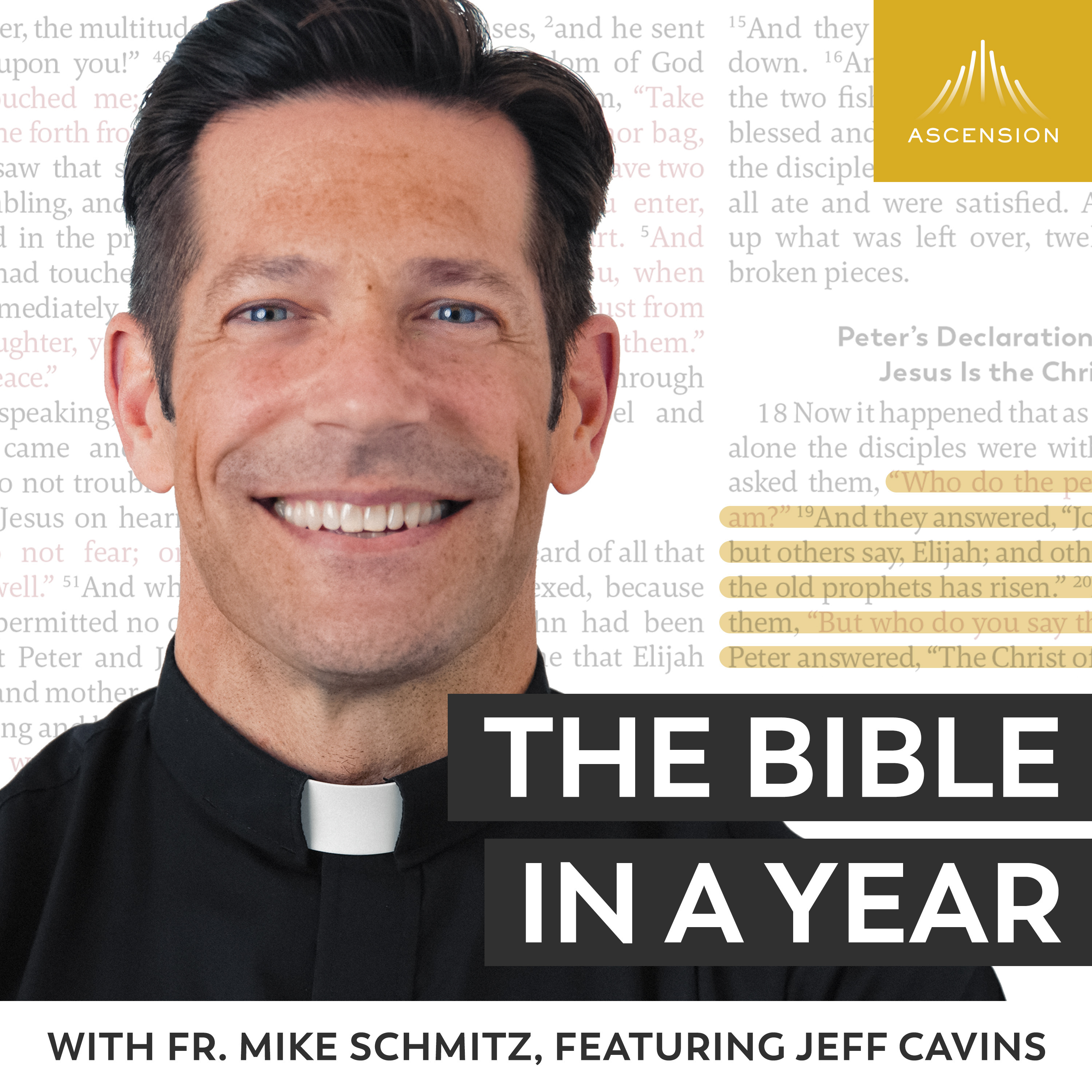
Overview of Day 212: God’s Instrument (2026)
In this episode of The Bible in a Year, Fr. Mike Schmitz reads Isaiah 45–46, Ezekiel 6–7, and Proverbs 12:9–12, then reflects on God’s sovereignty, the emptiness of idolatry, and the way suffering can become a means of recognizing the Lord. The central theme is that God is in control of history and can even use unexpected people—like Cyrus of Persia—as instruments of his plan. The episode also emphasizes that judgment in Ezekiel is meant to bring Israel to the knowledge that “I am the Lord,” while Proverbs highlights humble, steady, and righteous living.
Scripture Highlights
Isaiah 45–46: God Uses Cyrus as His Instrument
- God names Cyrus before he appears on the scene and calls him his “anointed.”
- Cyrus is used to:
- subdue nations,
- open doors for Israel,
- and ultimately help restore Jerusalem and the temple.
- Isaiah repeatedly stresses:
- “I am the Lord, and there is no other.”
- God alone forms light and darkness, peace and calamity, and directs history.
- The passage ends with a sweeping call:
- “Turn to me and be saved, all the ends of the earth.”
- Chapter 46 contrasts God’s faithfulness with the weakness of idols:
- idols must be carried,
- but God carries his people from birth to old age.
- God declares the end from the beginning and accomplishes his purpose.
Ezekiel 6–7: Judgment Against Idolatry and Violence
- Ezekiel announces judgment against Israel’s idolatry, especially the high places, altars, and false worship.
- The repeated refrain is that after judgment and desolation:
- “Then you will know that I am the Lord.”
- The consequences described include:
- sword,
- famine,
- pestilence,
- scattering among the nations,
- and the profaning of the temple.
- Ezekiel 7 intensifies the message:
- “Disaster after disaster”
- “The end has come”
- Wealth, silver, and gold cannot save anyone in the day of wrath.
- The chapter closes with the collapse of social order:
- no peace,
- no counsel,
- no security.
Proverbs 12:9–12: Practical Wisdom
- Better to live humbly and honestly than to pretend at greatness while lacking bread.
- A righteous person cares for the life of animals, while the wicked can be cruel.
- Hard work yields plenty, while chasing worthless pursuits shows no sense.
- The wicked’s apparent strength is temporary; the root of the righteous endures.
Fr. Mike’s Main Reflections
God Writes Straight with Crooked Lines
- Fr. Mike highlights how shocking it is that God names Cyrus long before Cyrus exists.
- Even a pagan ruler can become part of God’s saving plan.
- The big takeaway:
- God can use anyone and anything to accomplish his purposes.
The Two Forms of Idolatry
Fr. Mike points out two ways idolatry shows up in Isaiah:
- Making a false god out of created things.
- Treating the true God like an idol—something to control, question, or manipulate.
He notes how human beings often say to God, in effect:
- “What are you doing?”
- “This should be different.”
- “You should work according to my plan.”
Ezekiel and the Priesthood of Suffering
- Fr. Mike reflects on Ezekiel’s identity as a priest who was exiled before he could serve in the temple.
- Even so, Ezekiel still fulfills a priestly role by bearing the sins and grief of the people.
- This points ahead to Jesus, the true High Priest, who bears the burden of humanity’s sin completely.
- Fr. Mike encourages listeners to remember that even in suffering or limitation, God can still use them in their vocation.
Key Takeaways
- God is sovereign over history.
- He directs nations, rulers, and events for his purposes.
- Idolatry is foolish and destructive.
- False gods cannot save.
- Neither can wealth, status, or human security.
- Judgment is meant to reveal the truth.
- In Ezekiel, suffering is repeatedly tied to the goal that Israel will know the Lord.
- God does not abandon his people.
- He carries them, calls them back, and offers salvation.
- Faithfulness matters in ordinary life.
- Proverbs reminds listeners that humble work, righteousness, and practical care are wiser than appearances or empty ambition.
Closing Prayer Emphasis
Fr. Mike closes by thanking God for his word, asking for the grace to:
- hear God’s voice,
- say yes with heart, mind, soul, and strength,
- and persevere in faith even when life is difficult.
He ends with encouragement to pray for one another and a reminder that listeners, like Ezekiel, can still live out their calling as priest, prophet, and king in every season of life.