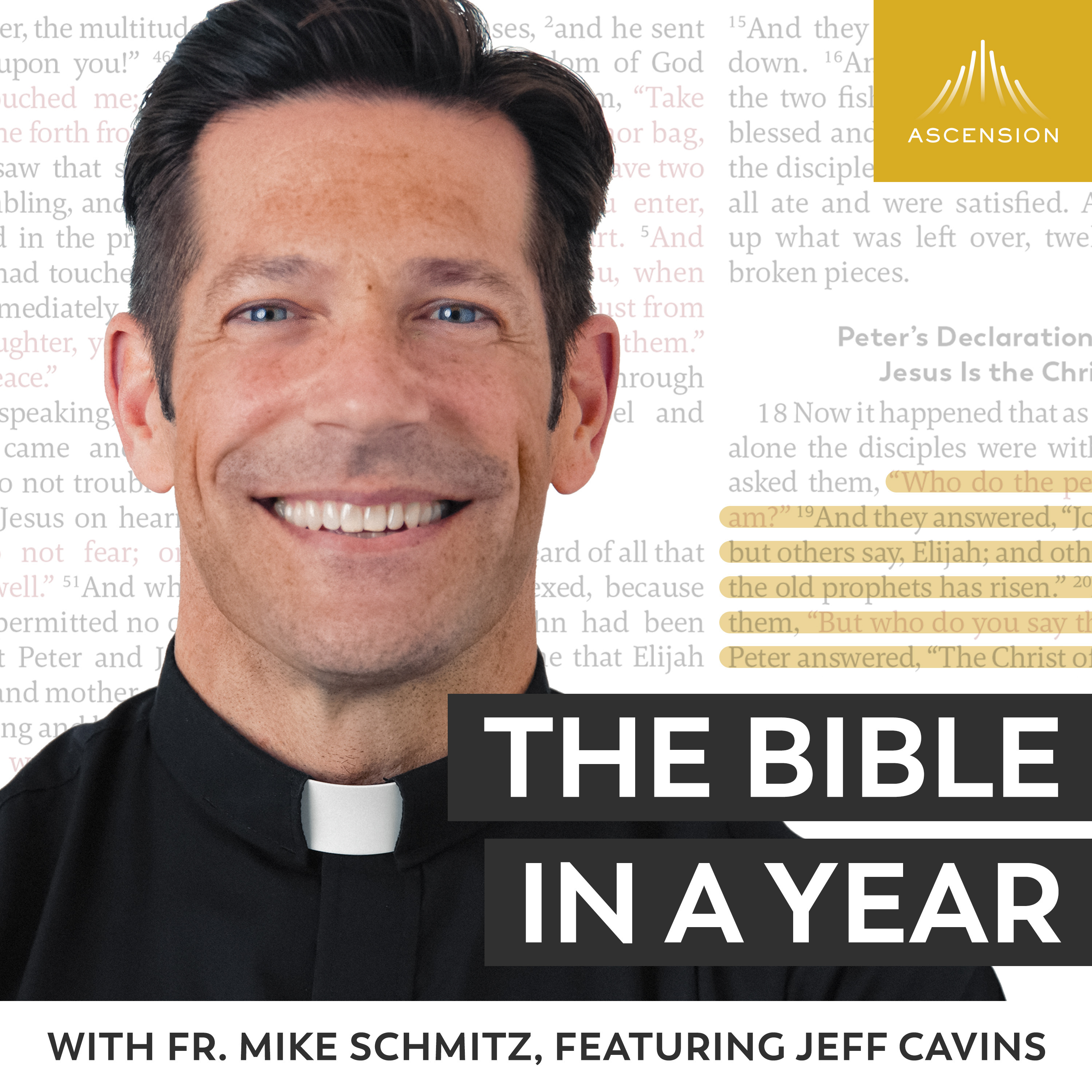
Overview of Day 203: Rejoice in the Lord (2026)
In Day 203 of Bible in a Year, Father Mike Schmitz reflects on Isaiah 25–27, Habakkuk 3, and Proverbs 11:5–8, highlighting a powerful theme of hope, judgment, restoration, and steadfast joy. The readings move from God’s promise to destroy death and wipe away tears, to Habakkuk’s worship in the middle of devastation, to Proverbs’ contrast between the righteous and the wicked.
Key Scripture Themes
Isaiah 25–27: Judgment gives way to salvation
- Isaiah 25 paints a vision of God defeating oppression and preparing a feast for all peoples.
- One of the most striking promises is that God will “swallow up death forever” and wipe away tears from every face.
- The people respond with confidence: “Behold, this is our God… let us be glad and rejoice in his salvation.”
- Isaiah 26 emphasizes:
- God as a strong city and everlasting rock
- The peace given to those whose minds are fixed on the Lord
- The hope of resurrection: “Your dead shall live.”
- Isaiah 27 continues the message of purification and restoration:
- God defeats evil symbolized by Leviathan
- Israel is portrayed as a carefully kept vineyard
- The exiled people will eventually be gathered and brought back to worship in Jerusalem
Habakkuk 3: Faith when nothing is working
- Habakkuk ends with a prayer that begins in awe and fear of God’s power.
- He recalls God’s mighty acts and asks: “In wrath, remember mercy.”
- The heart of the chapter is Habakkuk’s resolve:
- Even if the fig tree fails
- Even if the vines, olive trees, fields, flocks, and herds all fail
- “Yet I will rejoice in the Lord.”
- The prophet models trust that does not depend on circumstances.
Proverbs 11:5–8: The moral order of wisdom
- The righteous walk a straight path; the wicked collapse under their own wickedness.
- Integrity protects and delivers.
- When the wicked die, their hope ends; when trouble comes, the righteous are rescued.
Father Mike’s Main Reflections
God’s judgment is not the end of the story
Father Mike stresses that Isaiah’s warnings about exile and discipline are not meant as final condemnation. Instead, they are oriented toward healing, conversion, and eventual restoration.
A “new exodus” is coming
Just as God delivered Israel from slavery in Egypt, he will again deliver his people from exile and bring them home. Father Mike calls this the pattern of an old exodus and a new exodus.
The “yet” in Habakkuk is everything
The turning point in Habakkuk is the word “yet”:
- life may be stripped down
- circumstances may be dark
- hopes may be unmet
And still: “Yet I will rejoice in the Lord.”
Father Mike presents this as a model for daily Christian faith.
Daily perseverance matters
He also connects Habakkuk’s trust to the habit of listening daily to Scripture:
- not only on good days
- not only when life feels stable
- but through every season
Notable Passages
- “He will swallow up death forever.” — Isaiah 25
- “You keep him in perfect peace, whose mind is stayed on you.” — Isaiah 26
- “Your dead shall live.” — Isaiah 26
- “Yet I will rejoice in the Lord.” — Habakkuk 3
- “God, the Lord, is my strength.” — Habakkuk 3
Takeaways
- God’s judgment is often meant to purify, not destroy.
- True peace comes from fixing our minds on the Lord.
- Faith means trusting God before circumstances improve.
- The believer’s posture is not denial, but rejoicing in God despite lack.
- Scripture points forward to a day when God will end death, restore his people, and wipe away tears.
Final Prayerful Emphasis
The episode closes by asking God to:
- make us righteous when we are not
- renew us by his grace and Holy Spirit
- help us trust that what Jesus made possible, the Spirit makes real in us
Father Mike encourages listeners to keep praying for one another and to keep choosing joy, even when life is hard.