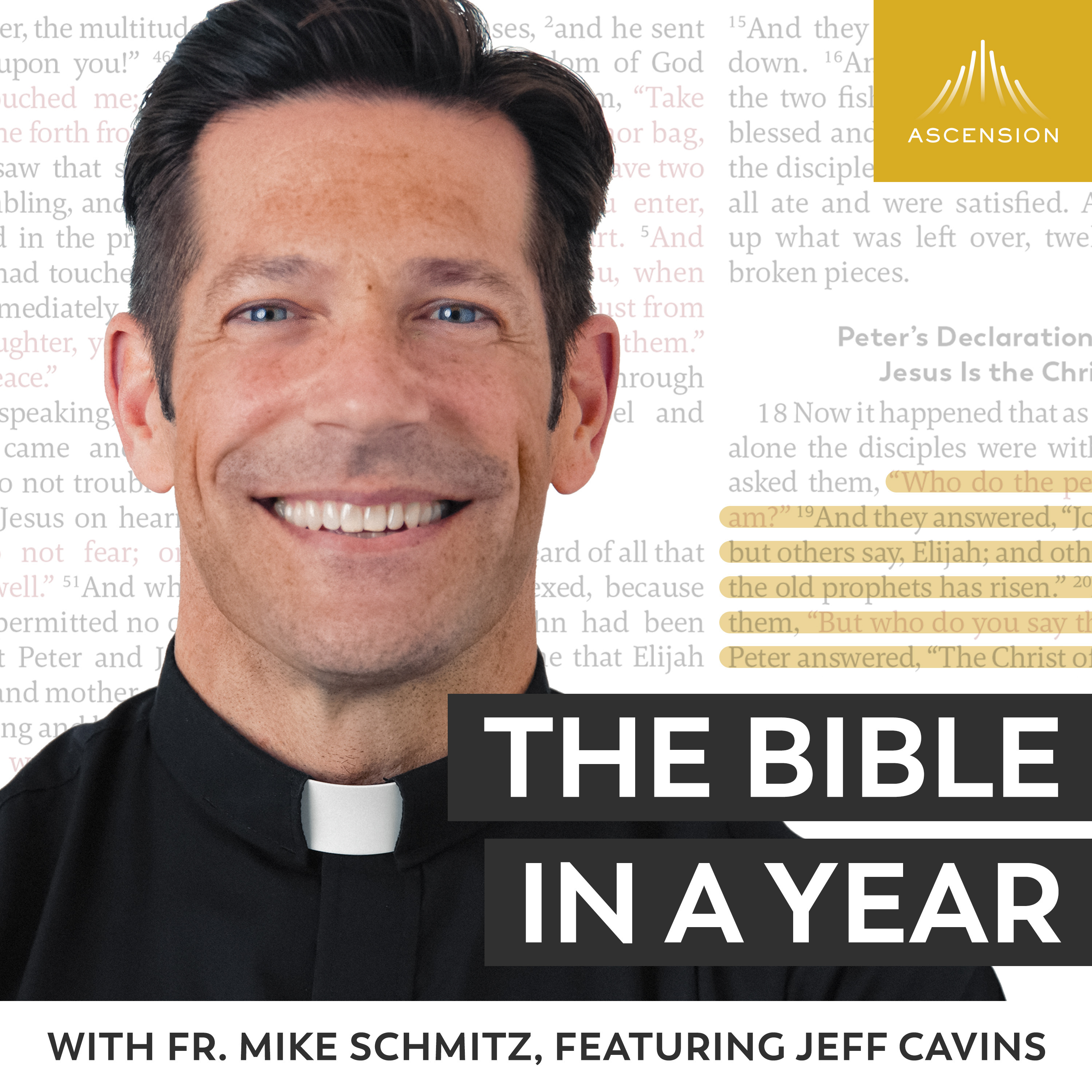
Overview of Day 158: The Reality of Sin (2026)
On Day 158 of Bible in a Year, Father Mike Schmitz reads Mark 9–10 and Psalm 29, focusing on the Transfiguration, the seriousness of sin, discipleship, marriage, wealth, and true greatness in God’s kingdom. The episode’s central theme is that Jesus speaks hard truths because he loves us and calls us higher—especially in how we deal with temptation, attachment, pride, and the desire for status.
Scripture Readings Covered
Mark 9
- The Transfiguration
- Jesus is revealed in glory before Peter, James, and John.
- Moses and Elijah appear, representing the Law and the Prophets.
- The Father’s voice confirms Jesus’ identity: “This is my beloved Son; listen to him.”
- Healing of the possessed boy
- A desperate father asks Jesus to help his son, who has a mute spirit.
- The father’s prayer becomes one of the episode’s key lines: “I believe; help my unbelief!”
- Jesus casts out the spirit and later teaches that some kinds of evil can be driven out only by prayer and fasting.
- Jesus predicts his death again
- The disciples still do not understand his suffering and resurrection.
- True greatness
- Jesus teaches that greatness means being last and servant of all.
- He places a child in their midst as a sign of humble, receptive discipleship.
- Temptations to sin
- Jesus gives severe warnings about causing others to sin and about radical action against one’s own temptations.
- The teaching is summarized by the call to “have salt in yourselves and be at peace with one another.”
Mark 10
- Teaching on divorce
- Jesus affirms God’s original design for marriage: one man and one woman, joined by God.
- He says Moses permitted divorce because of hardness of heart, not because it was God’s ideal.
- Jesus blesses the children
- Children are welcomed, not hindered.
- The kingdom belongs to those who receive it like a child.
- The rich young man
- A man asks how to inherit eternal life.
- Jesus invites him to sell his possessions, give to the poor, and follow him.
- The man leaves sorrowful because he has great possessions.
- Teaching on wealth
- Jesus warns how difficult it is for the rich to enter the kingdom of God.
- He stresses that salvation is impossible by human effort, but possible with God.
- Third prediction of the Passion
- Jesus foretells his arrest, mockery, scourging, death, and resurrection.
- James and John seek glory
- They ask for seats at Jesus’ right and left hand.
- Jesus teaches that true leadership is servanthood, not domination.
- The key summary: “The Son of Man came not to be served but to serve, and to give his life as a ransom for many.”
- Healing of Bartimaeus
- The blind beggar cries out, “Jesus, Son of David, have mercy on me!”
- Jesus heals him; Bartimaeus immediately follows Jesus on the way.
Psalm 29
- A majestic psalm celebrating the voice of the Lord in power, thunder, storm, and glory.
- It ends with a prayer that God would strengthen his people and bless them with peace.
Father Mike’s Main Reflections
Jesus is greater than Moses and Elijah
- Moses and Elijah are not Jesus’ equals; they point to him.
- The Transfiguration reveals Jesus as the fulfillment of the Law and the Prophets.
- The Father’s command, “Listen to him,” means Jesus has final authority.
The disciples misunderstand greatness
- Right after Jesus predicts his suffering and death, the disciples argue about who is greatest.
- Father Mike highlights this as a sharp contrast between Jesus’ path of sacrifice and the disciples’ temptation toward status.
Sin is serious and must be dealt with radically
- Jesus’ harsh language about cutting off a hand, foot, or eye is meant as hyperbole, but the warning is real.
- Father Mike emphasizes that if something in life is leading to sin, it should be removed decisively:
- harmful devices
- destructive habits
- occasions of temptation
- He connects this to the modern reality of smartphones, laptops, and content that repeatedly leads people into sin.
Hell is real, and Jesus speaks about it clearly
- Father Mike stresses that Jesus talks more about hell than anyone else in Scripture.
- The point is not fear for its own sake, but urgency:
- we really can choose against God
- we really can reject heaven
- repentance matters now
Marriage and divorce: God’s original plan
- Jesus’ teaching on divorce points back to creation, not simply to legal permission.
- Father Mike ties this to John Paul II’s Theology of the Body, which starts with the truth that God’s original design was good before sin damaged relationships.
- The message: marriage is not disposable; it is part of God’s intended order.
Wealth can become a spiritual obstacle
- The rich young man is not condemned for being rich alone, but for being attached to possessions.
- Jesus’ challenge is absolute: follow me above everything else.
- Father Mike emphasizes that riches can create a false sense of security and become a rival to trust in God.
Jesus’ standard is impossible without grace
- In several places, Jesus’ teaching seems overwhelming.
- Father Mike reminds listeners:
- God never commands without also giving grace
- if you feel convicted, that is not rejection
- the Lord is calling you higher, not abandoning you
Key Takeaways
- Jesus is not just a teacher; he is the Son of God and Lord of all.
- True greatness in the kingdom means service, humility, and childlike trust.
- Sin must be treated seriously and decisively.
- Marriage, money, and status are all areas where disciples must submit to God’s order.
- Even when Jesus’ words are hard, they are given in love and are meant to lead to life.
- No one is disqualified from God’s love—repentance and grace are always possible.
Notable Lines and Themes
- “This is my beloved Son; listen to him.”
- “I believe; help my unbelief!”
- “If anyone would be first, he must be last of all and servant of all.”
- “What does it profit a man to gain the whole world and forfeit his soul?” as a theme underlying the warnings about wealth and sin
- “The Son of Man came not to be served but to serve.”
- “With men it is impossible, but not with God.”
Practical Application
- Identify any sin, habit, or device that repeatedly draws you away from God.
- Ask where pride, comparison, or the desire for status is shaping your behavior.
- Reflect on whether you are trusting possessions, comfort, or control more than Christ.
- Pray for the grace to say with honesty: “I believe; help my unbelief!”
- Approach Jesus with childlike trust, ready to receive the kingdom as a gift.