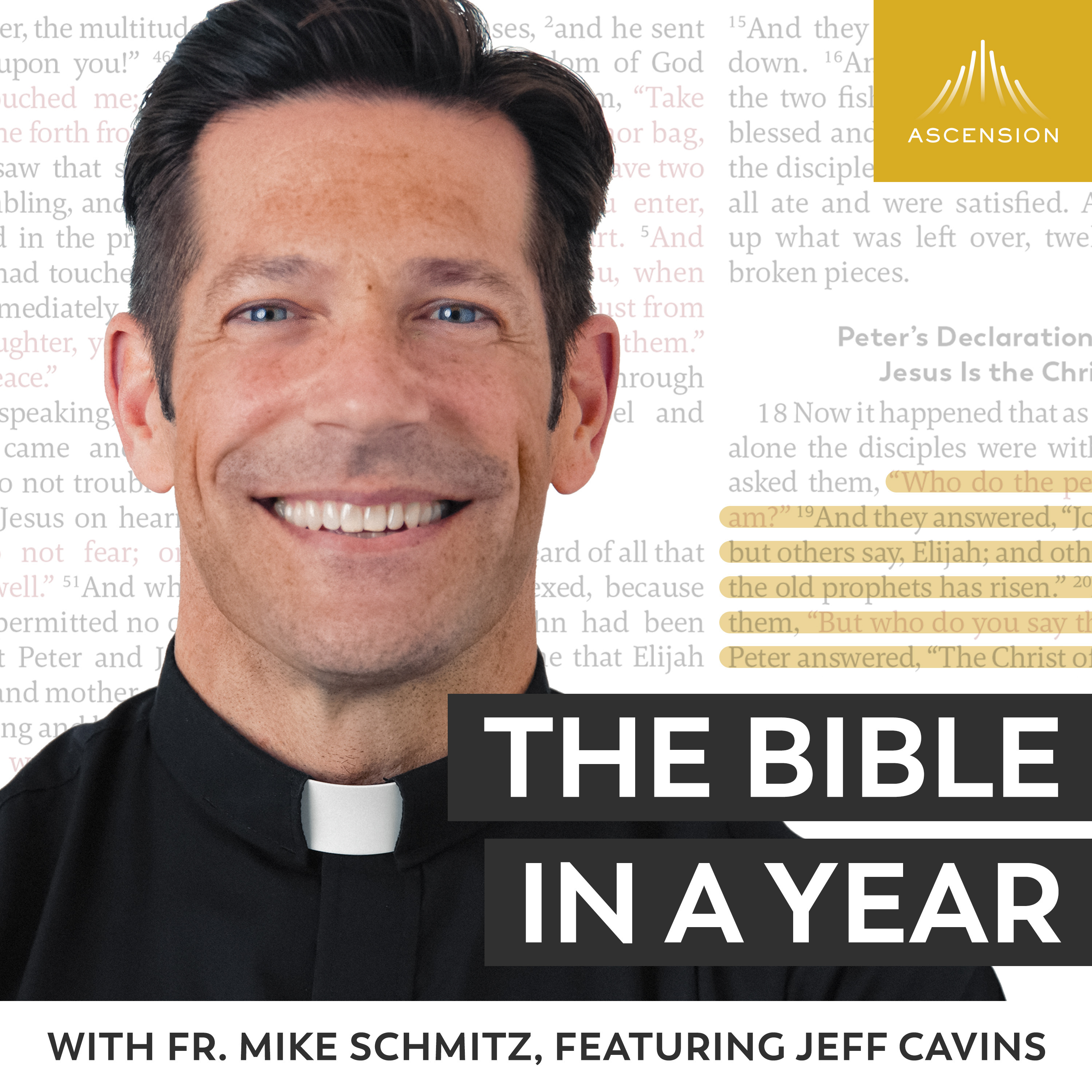
Overview of Day 157: Following Jesus
On Day 157 of Bible in a Year, Fr. Mike Schmitz walks through Mark 7–8 and Psalm 23, highlighting Jesus’ authority over tradition, impurity, illness, scarcity, and even misunderstanding from His own disciples. The episode centers on what it means to truly follow Jesus: not merely external observance, but an inward conversion of heart, humility before God, and willingness to take up the cross.
Key Themes and Takeaways
1. True defilement comes from the heart
Jesus confronts the Pharisees over ritual handwashing and teaches that what enters a person does not defile them—rather, what comes out of the heart does.
- External purity practices are not the issue themselves.
- The deeper problem is using tradition to avoid obedience.
- Jesus lists the sins that flow from within: evil thoughts, theft, murder, adultery, envy, pride, foolishness, and more.
Main point: holiness is not cosmetic; it requires interior conversion.
2. Human tradition must never replace God’s command
Jesus criticizes the Pharisees for using the practice of korban to avoid caring for their parents.
- Fr. Mike stresses that this is a warning against substituting religious “workarounds” for real obedience.
- The episode applies this to modern life: we can easily choose a less costly religious or moral action instead of the one God actually asks of us.
Main point: doing something religious is not the same as doing what God commanded.
3. The Syrophoenician woman models humility and persistence
A Gentile mother begs Jesus to free her daughter from a demon. Jesus’ response is challenging, but her answer reveals profound faith:
- She does not approach Him with entitlement.
- She accepts the order of salvation—first to the Jews, then overflowing to the Gentiles.
- She trusts that even the “crumbs” of Christ’s grace are enough.
Main point: faith often looks like humble persistence, not demandingness.
4. Jesus heals through touch: the sacramental logic of grace
Jesus heals a deaf man and a blind man by touching them directly.
Fr. Mike connects this to the Church’s sacramental worldview:
- God uses material reality to communicate grace.
- The incarnation matters because salvation comes through the flesh of Christ.
- This points toward baptism, Eucharist, and the physical means by which God reaches us.
Notable insight: Tertullian’s idea that “the flesh is the hinge of salvation” fits Jesus’ healing ministry.
5. The feeding of the 4,000 reveals Jesus’ compassion and the disciples’ forgetfulness
Jesus feeds a crowd of 4,000 with seven loaves and a few fish.
- Fr. Mike notes a difference from the feeding of the 5,000: this time Jesus asks the disciples what they have.
- The miracle reveals both Jesus’ generosity and the disciples’ repeated inability to remember what He has already done.
Main point: God invites us to offer what we have, and He multiplies it.
6. Beware the “leaven” of the Pharisees and Herod
Jesus warns the disciples against the leaven of the Pharisees and Herod—symbols of corrupt influence, hardness of heart, and unbelief.
- The disciples misunderstand Him and think He is talking about bread.
- Jesus rebukes them for their spiritual blindness and forgetfulness.
Main point: even after witnessing miracles, disciples can still miss who Jesus is.
7. Peter confesses Jesus as the Christ, but misunderstands the Cross
At Caesarea Philippi, Peter declares: “You are the Christ.”
Immediately after, Jesus explains that the Messiah must suffer, be rejected, die, and rise again.
- Peter objects.
- Jesus rebukes him sharply: “Get behind me, Satan.”
- Fr. Mike explains that Peter becomes a stumbling block by thinking in merely human terms rather than God’s plan.
Main point: recognizing Jesus as Messiah also means accepting the path of the Cross.
8. Discipleship requires self-denial and courage
Jesus’ call is explicit:
- deny yourself
- take up your cross
- follow Him
He warns that whoever is ashamed of Him and His words will face judgment when He comes in glory.
Fr. Mike emphasizes that this is especially relevant in a post-Christian culture, where fidelity to Jesus may cost relationships, reputation, or comfort.
Main point: following Jesus is not about fitting in; it is about faithfulness.
Psalm 23 and the Shepherd’s Care
Psalm 23 is prayed as a meditation on God as the Good Shepherd:
- “The Lord is my shepherd; I shall not want.”
- He leads, restores, and protects.
- Even in the “valley of the shadow of death,” the faithful need not fear.
Fr. Mike prays that God would pursue anyone who has wandered, reminding listeners that Jesus is not only the Shepherd who guides—but also the Shepherd who goes searching for the lost.
Practical Takeaways
What to remember from this episode
- Don’t confuse outward religiosity with inner holiness.
- Be careful not to use tradition as an excuse to avoid obedience.
- Approach God with humility, like the Syrophoenician woman.
- God often works through physical, sacramental means.
- Remember what God has already done for you.
- Real discipleship includes suffering, cross-bearing, and courage.
A simple response for today
- Ask: Where am I substituting appearance for obedience?
- Pray: Lord, give me a humble heart and the courage to follow You.
- Reflect on Psalm 23 as a reminder that the Shepherd is with you in every valley.
Closing Reflection
This episode ties together a major lesson in Mark: Jesus is not just a miracle worker or teacher—He is the Christ who reveals the heart of God. He exposes false religion, welcomes humble faith, provides abundantly, and leads His followers toward the Cross and Resurrection. The call is clear: follow Him with trust, humility, and courage.