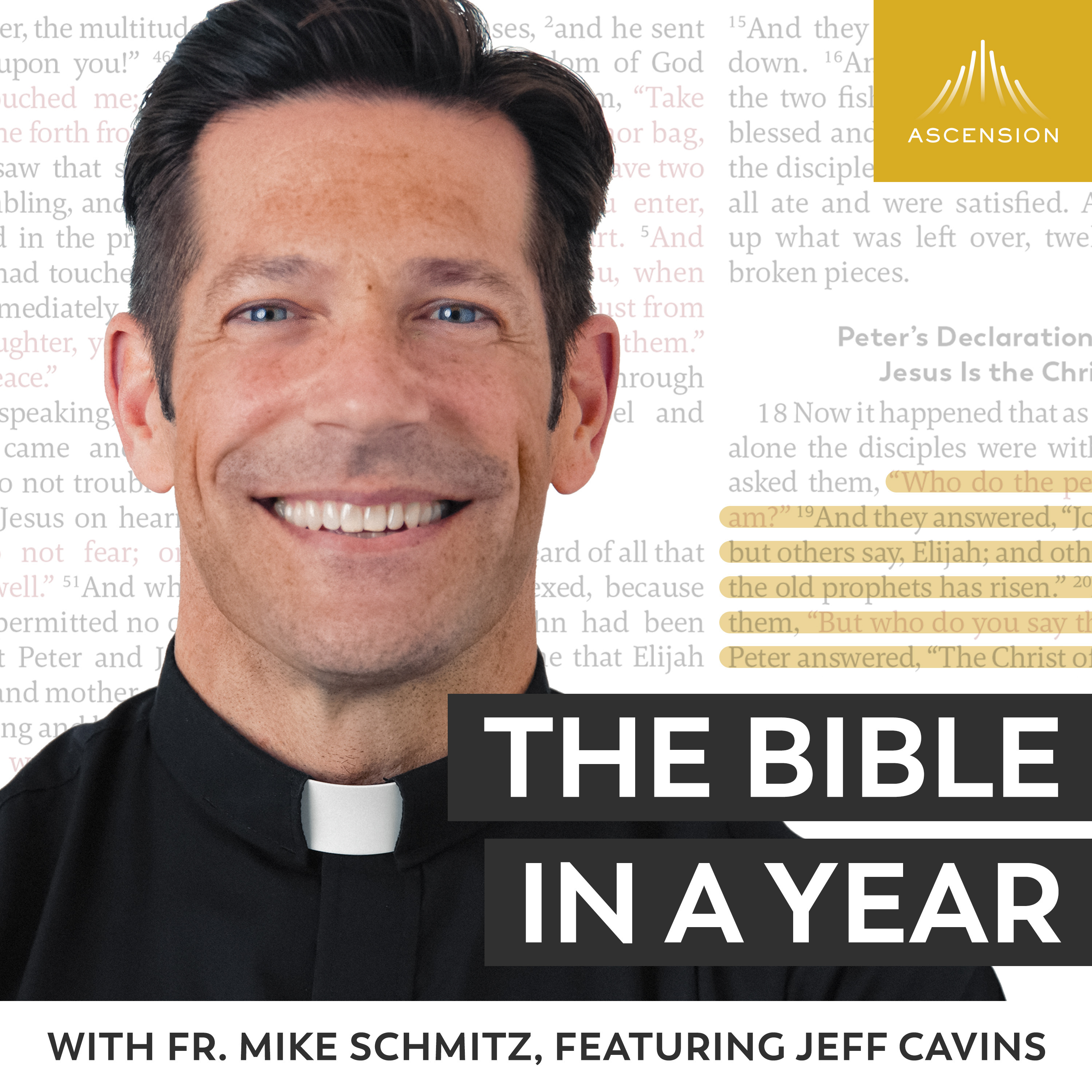
Overview of Day 151: Wisdom and Folly (2026)
In Day 151 of Bible in a Year, Father Mike Schmitz reads 1 Kings 9, Ecclesiastes 6–7, and Psalm 7, focusing on the tension between wisdom and folly, the importance of finishing well, and the danger of chasing wealth, status, or nostalgia without true perspective. The episode pairs Solomon’s growing achievements with God’s warning to remain faithful, then moves into Ecclesiastes’ sobering but practical wisdom about desire, suffering, humility, and the limits of human understanding.
Scripture Readings Summary
1 Kings 9: God’s second appearance to Solomon
- The Lord appears to Solomon after the temple and royal palace are completed.
- God affirms the temple as consecrated and says His name will dwell there.
- But the promise is conditional:
- If Solomon remains obedient like David, his throne will be established.
- If he turns to other gods, Israel will be cut off, and the temple itself will become a ruin and a warning to the nations.
- The chapter also recounts:
- Solomon giving Hiram of Tyre 20 cities in Galilee, which Hiram dislikes.
- Solomon’s extensive building projects, including fortified cities and administrative centers.
- The use of forced labor from the non-Israelite peoples remaining in the land.
- Solomon’s continued sacrifices and shipbuilding enterprise, with gold brought back from Ophir.
Ecclesiastes 6: Frustration of desires
- Qoheleth describes the misery of a person who has wealth, possessions, honor, and long life but cannot enjoy them.
- The chapter stresses that:
- It is vanity to have abundance without the ability to enjoy it.
- Human appetite is never fully satisfied by toil.
- Life is brief, uncertain, and ultimately beyond human control.
- Main theme: having more is not the same as having joy.
Ecclesiastes 7: Wisdom and folly compared
- Several famous wisdom sayings appear:
- A good name is better than precious ointment.
- The day of death is better than the day of birth because it forces us to see life in its full context.
- Mourning can be more instructive than feasting.
- A rebuke from the wise is better than the song of fools.
- Patience is better than pride; anger is foolish.
- The passage urges:
- Do not long for “the good old days.”
- Consider both prosperity and adversity as under God’s sovereignty.
- Avoid extremes of self-righteousness and wickedness.
- The chapter closes by emphasizing that:
- No one is truly righteous without sin.
- Human wisdom has limits.
- God made humanity upright, but people pursue many schemes.
Psalm 7: A plea for justice
- David prays for deliverance from false pursuit and asks God to judge righteously.
- He appeals to his own innocence and calls on God to act against wickedness.
- The psalm ends with confidence that:
- The wicked will fall by their own violence.
- God is a righteous judge who defends the upright.
Father Mike’s Key Reflections
Finish well, not just start well
- Solomon’s life is presented as a warning: the wise builder can still end in foolishness.
- Father Mike emphasizes that what matters most is not only how someone begins, but how they end.
- Solomon received a clear warning from God, but later history will show he did not remain faithful.
Ecclesiastes and the value of perspective
- The “day of death better than the day of birth” line is explained as a call to live with the end in mind.
- Facing mortality helps a person live more intentionally and wisely.
- Mourning, sorrow, and reflection are not bad in themselves—they can sharpen wisdom.
The danger of anhedonia
- Father Mike highlights the problem of not being able to enjoy gifts, even when life is full of them.
- He connects Ecclesiastes 6 to the human tendency to:
- focus on what is missing,
- ignore present blessings,
- stay trapped in anxiety and toil.
- His pastoral takeaway: receive what God has already given—whether family, solitude, freedom, or responsibilities—with gratitude.
Don’t romanticize the past
- Ecclesiastes warns against asking, “Why were the former days better than these?”
- Father Mike notes that this is usually not wisdom, but nostalgia that can distort reality.
- The invitation is to live faithfully now, not idolize an imagined past.
Be careful with criticism
- He reflects on Ecclesiastes 7:21: don’t obsess over what others say about you.
- Since we all speak carelessly at times, it’s wise to take criticism with humility and not let it dominate the heart.
- The broader point: charity and self-awareness should shape how we judge others and how we receive judgment ourselves.
Main Takeaways
- God’s blessings come with a call to obedience.
- Wealth and success are not enough if they cannot be enjoyed.
- Wisdom involves humility, patience, and realistic self-knowledge.
- Nostalgia can be spiritually unhelpful if it blinds us to the present.
- Human beings are not righteous without sin; all need God’s mercy.
- Prayer and trust in God’s justice are the proper response to evil.
Notable Themes
- Solomon’s rise and looming decline
- Temple blessing and covenant warning
- The emptiness of unreceived blessings
- Wisdom over pride, anger, and self-deception
- God as righteous judge
- Learning to live gratefully in the present
Closing Prayer Emphasis
- Father Mike thanks God for Scripture, wisdom, and the freedom to ask hard questions.
- He asks that listeners would bring their brokenness, confusion, and moral struggle before God honestly.
- The episode ends with encouragement to rejoice, pray for one another, and trust God’s goodness day by day.