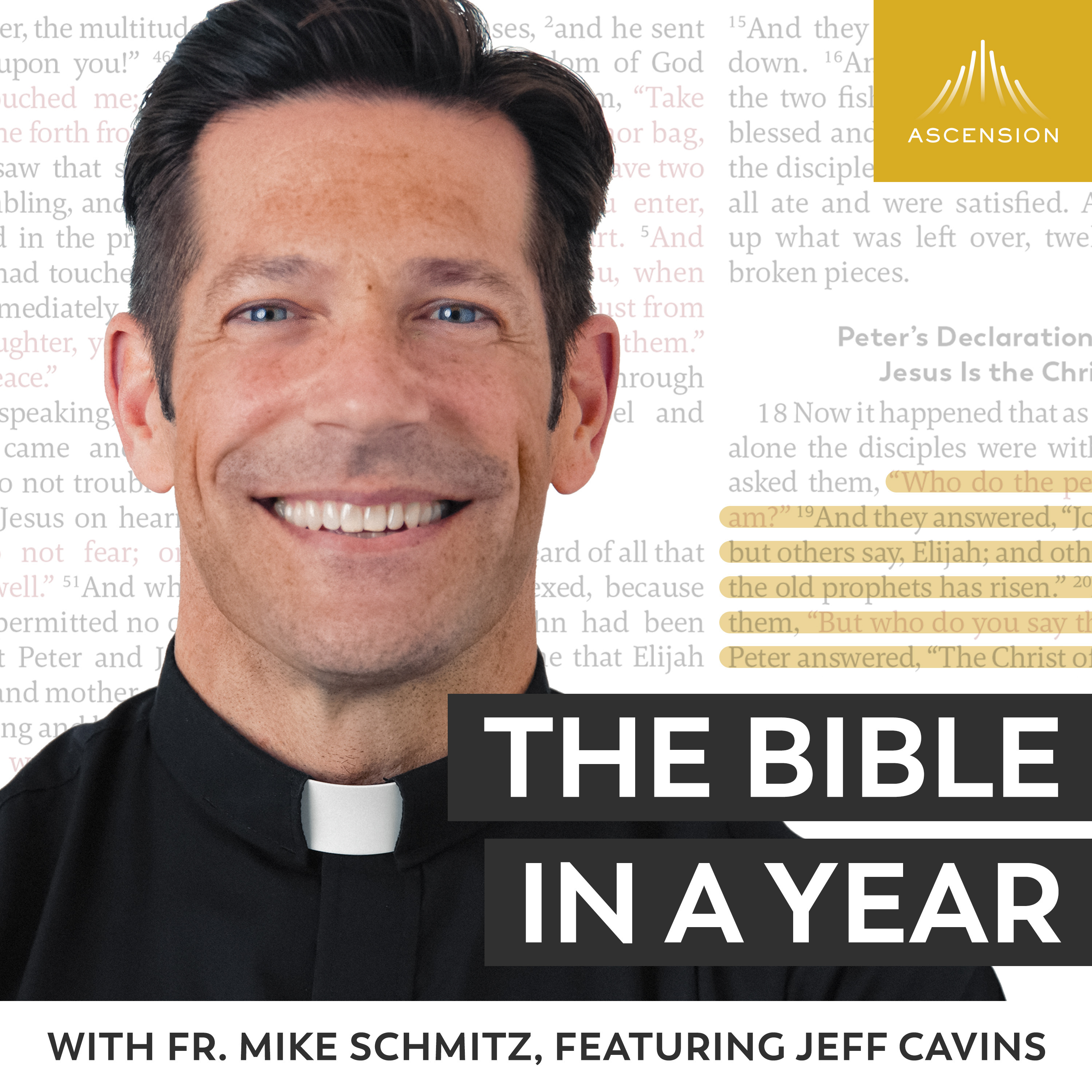
Overview of Day 149: All Is Vanity (2026)
In this episode of Bible in a Year, Fr. Mike Schmitz reads 1 Kings 7, Ecclesiastes 1–2, and Psalm 5. The day focuses on Solomon’s construction projects, then begins a five-day journey through Ecclesiastes—a wisdom book that wrestles with the apparent emptiness of life when viewed apart from God. Fr. Mike emphasizes that Ecclesiastes uses “vanity” in the sense of vapor, fleetingness, and meaninglessness, not superficial pride.
Scripture Readings
1 Kings 7
- Solomon completes major building projects, including:
- His own house
- The house of the forest of Lebanon
- The hall of pillars
- The hall of judgment
- A house for Pharaoh’s daughter
- The chapter also details Hiram’s bronze work for the temple:
- Two bronze pillars, Jachin and Boaz
- The molten sea
- Ten bronze stands and lavers
- Additional temple vessels and furnishings
- The passage highlights the scale, craftsmanship, and beauty of Solomon’s reign and temple construction.
Ecclesiastes 1–2
- The “Preacher” declares: “Vanity of vanities… all is vanity.”
- Major themes introduced:
- Human labor is fleeting
- Nature repeats itself
- Nothing is truly new under the sun
- Wisdom, while better than folly, still ends in death
- Pleasure, achievement, and legacy cannot finally satisfy
- The Preacher reflects on:
- Pursuing wisdom
- Chasing pleasure
- Building wealth and works
- Leaving an inheritance that may not be honored
- The chapter ends with a key tension:
- Life apart from God feels empty
- Yet enjoyment, work, wisdom, and joy are gifts from God
Psalm 5
- A prayer for protection from enemies and deceitful people
- Expresses confidence that:
- God hears the righteous
- God leads in righteousness
- Those who take refuge in Him can rejoice
- God’s favor surrounds the righteous like a shield
Key Takeaways
Ecclesiastes is about the limits of life “under the sun”
- Fr. Mike explains that the book asks a blunt question:
- If life is only about this world, does anything really matter?
- Human efforts can feel repetitive, temporary, and ultimately forgettable.
“Vanity” means more than pride
- The Hebrew idea behind “vanity” is closer to:
- breath
- vapor
- fleetingness
- The point is not self-absorption, but the instability of life without eternal meaning.
Pleasure, wisdom, and success are insufficient by themselves
- Solomon’s experiment with:
- pleasure
- wealth
- achievement
- legacy
- all end the same way: they cannot defeat death or preserve lasting significance on their own.
Meaning comes from God
- Fr. Mike’s central reflection:
- If God exists and gives purpose, then our lives matter
- If there is only this life, everything passes away
- Ecclesiastes points the reader toward the necessity of eternity, divine purpose, and dependence on God.
Fr. Mike’s Reflection
On the message of Ecclesiastes
- The book is not ultimately hopeless, but honest.
- It strips away illusions that:
- success guarantees satisfaction
- memory guarantees significance
- wisdom guarantees control
- The real question becomes whether life is lived with God or apart from Him.
On lasting value
- Fr. Mike stresses that:
- human memory fades
- possessions are temporary
- even accomplishments are vulnerable to time
- Only what is rooted in God endures.
Closing Prayer and Encouragement
- Fr. Mike prays for:
- openness to God’s word
- help in recognizing the limits of human effort
- the grace to do all things with and for God
- He closes by encouraging listeners to keep praying for one another as they continue through Ecclesiastes and onward toward Mark.