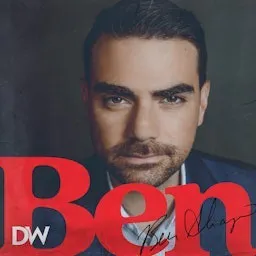
Overview of Ep. 2543 - The Chappelle Clip Shows You What the Left Actually Believes
This episode is a broad political argument centered on a Dave Chappelle joke/comment about Charlie Kirk’s murder, which the host uses to claim that the left is more comfortable with political violence than it admits. From there, the show expands into a larger thesis: that many “moderate” Democrats are only moderates in presentation, while their coalition is increasingly driven by radicals on issues like Israel, immigration, policing, foreign policy, and economic policy. The episode also pivots to Donald Trump’s recent 60 Minutes interview, Republican post-election strategy, and intraparty questions about 2028.
Main Argument: “Moderation Is an Act”
The host’s core claim is that a lot of Democratic “moderation” is performative.
The Chappelle clip as the opening example
- Dave Chappelle’s line about feeling “better” after Charlie Kirk was shot is presented as more than a joke.
- The host argues it reveals an underlying tolerance for violence on the left.
- He contrasts that with another Chappelle joke the same night, saying that one was clearly in the “joke universe,” while the Charlie Kirk line was not.
“Clown nose on, clown nose off”
- The episode repeatedly argues that public figures use comedy, irony, or “just joking” as a shield.
- The host says this is how radicals avoid accountability:
- when challenged, they claim they’re only joking;
- when useful, they speak plainly about politics.
Examples Used to Support the Claim
The episode strings together several examples of left-leaning figures and Democratic politicians to argue that the radical side is the real center of gravity.
Left-wing commentators and podcasters
- Jennifer Welch and Angie Sullivan of I’ve Had It are criticized for laughing at a joke about Charlie Kirk’s death.
- Their apology is mocked as focusing on gun violence rather than the underlying issue of celebrating a political assassination.
- Their fans are portrayed as defending the behavior rather than condemning it.
Democrats and allied figures described as “moderates”
The host argues that many people presented as moderate are aligned with the radical wing:
- James Tallarico is presented as a polished, bipartisan figure, but the host mocks him for appearing alongside Chappelle, Chris Rock, and others.
- Zohran Mamdani is framed as a DSA member who publicly downplays or denies radical positions.
- Abdul Rahman El-Sayed is portrayed as hiding radical views during the campaign, then speaking more openly after winning.
- Chris Rabb is cited as openly advocating for power structures based on proximity to “the pain.”
- Jamie Raskin is quoted arguing the Supreme Court is an obstacle to democracy.
- Elizabeth Warren is used as an example of “affordability” messaging that the host says would not actually lower costs.
The Episode’s Broader View of the Democratic Coalition
The host argues that the Democratic Party’s coalition is held together by shared hostility toward the right, not by policy moderation.
Affordability as cover
- The episode repeatedly says Democratic economic messaging is a mask.
- According to the host, “affordability” language is used to sell policies whose real goals are:
- economic leveling,
- weakening free markets,
- expanding government power,
- and making the U.S. weaker abroad.
Foreign policy and anti-Israel politics
- The host argues many Democrats are using humanitarian language to justify anti-Israel or anti-American foreign policy positions.
- He cites:
- DSA rhetoric on Israel and ICE,
- comments from Ben Rhodes,
- and claims about USAID being vulnerable to misuse or diversion.
- The episode frames these as evidence that the left’s real instinct is to weaken U.S. power and alliances.
Immigration and ICE
- Houston’s mayor is cited for changing ICE cooperation policy “to begin a healing process.”
- The host presents this as part of a broader Democratic pattern of loosening enforcement while using softer rhetoric to sell it.
Trump, the 60 Minutes Interview, and Republican Tensions
The episode then shifts to Trump’s 60 Minutes appearance and the political fallout from the 2026 midterms.
Immigration
- Trump says his immigration crackdown helped and hurt politically.
- He admits deportation enforcement may have gone “too tough” in some cases.
- The host notes this as Trump acknowledging political reality, not endorsing amnesty.
Corruption and net worth concerns
- The interview also touches on Trump’s personal wealth and claims that his net worth increased.
- The host notes corruption remains a major political liability for Republicans.
Trump on enemies
- Trump is quoted saying he hates some of his enemies and does not wish them well.
- The host praises this as unusually honest.
Stephen Miller and the Future of Immigration Policy
A significant portion of the episode focuses on Stephen Miller’s rising influence.
Miller as the hardliner
- Trump names Stephen Miller as chief of staff.
- The host treats this as a sign that no softening on immigration is likely.
- He contrasts that with Democratic attacks on Miller:
- Hakeem Jeffries calls him a “malignant tumor.”
- Robert Garcia calls him a dangerous white nationalist and “comic book villain.”
The episode’s implication
- The host says anyone expecting compromise or amnesty from a Miller-led White House is deluding themselves.
- He presents Miller as the anti-compromise symbol of the administration.
2028 and the Republican Coalition Problem
The episode spends considerable time on what comes next for Republicans.
J.D. Vance
- Vance is discussed as a likely 2028 contender.
- The host says Vance is trying to build a different coalition than Trump’s.
- He criticizes Vance for being too online and too influenced by podcast/media ecosystems.
Alternative media and the “podcast bros”
- David Sachs is quoted arguing that Republicans must cater to podcasts and alternative media because legacy media is hostile.
- The host pushes back, saying:
- podcasts are just another outlet,
- and overreliance on them can distort political judgment.
Ron DeSantis’s critique
- DeSantis is quoted saying conservative media culture is often a grift and not generating strong ideas.
- The host presents this as a more realistic critique of the right’s media ecosystem.
Other Notable Segments
NVIDIA and the China spy scandal
- The episode covers a scandal involving NVIDIA CEO Jensen Huang and a suspected Chinese spy.
- The host treats it as an alarming example of how geopolitical risk and private-sector behavior could destabilize the AI economy.
Dana White as press secretary joke
- Trump’s joke about Dana White being offered press secretary is discussed as more chaotic political theater.
- The host says this kind of silliness becomes less amusing when the public is in a bad mood.
Upcoming stories teased at the end
The episode closes by previewing future segments on:
- Russell Brand and a reported prison sentence,
- Macklemore being denied a Madison Square Garden slot.
Key Takeaways
- The host’s central thesis is that many Democrats and left-leaning figures are not moderate at all; moderation is often just branding.
- He argues the left is increasingly comfortable with political aggression, especially toward conservatives.
- He sees “affordability” rhetoric as a political cover for deeper ideological goals.
- On the right, he warns that being overly online or too dependent on podcast politics is also a danger.
- Trump’s coalition is in flux, and the episode suggests 2028 will hinge on whether Republicans can build a new coalition without losing their core base.
Tone and Style
- Highly combative and partisan.
- Heavy use of irony, mockery, and cultural references.
- The episode mixes commentary, political analysis, and ad reads, with the political argument driving almost all of the content.