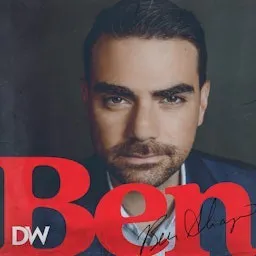
Overview of Ep. 2513 - #Celebs4Hamas: The Scene Outside the UN
In this Daily Wire episode, Ben Shapiro argues that the protests outside the United Nations against Benjamin Netanyahu were less about human rights and more about a broader anti-Western ideology he calls the “red-green alliance” — a coalition of radical leftists and radical Islamists. He spends much of the episode attacking the “genocide” accusation against Israel, warning that the rhetoric is meant to delegitimize the West, unify activists around a shared enemy, and normalize hostility toward Israel and America. The episode also covers the political fallout in the U.S., Trump’s approach to China and Iran, the AI regulation debate, and a culture segment on the New York Times’ “best TV shows” list.
Main Thesis: The UN Protest Was About Anti-Western Politics
Shapiro’s core argument is that the crowds protesting Netanyahu outside the UN were not motivated by concern for civilians or human rights.
- He says the UN itself is largely irrelevant, describing it as a legitimizing platform for dictators and a waste of American taxpayer money.
- The protesters, he argues, were animated by a worldview that treats the West as the primary source of evil and frames authoritarian or anti-Western regimes as “victims.”
- He calls this worldview a “red-green alliance,” combining radical left politics with radical Islamic politics.
His view of the UN
- The UN is portrayed as ineffective, hypocritical, and structurally biased.
- He argues the U.S. should stop funding it and that the institution has repeatedly failed to prevent atrocities.
The “Genocide” Claim and Why He Says It Matters
A large portion of the episode is devoted to rejecting the claim that Israel is committing genocide in Gaza.
His argument against the genocide label
- He says the term is being used as a political weapon, not a factual description.
- He points to:
- Gaza’s population not collapsing in the way it would in an actual genocide.
- The concentration of deaths among military-aged men.
- Israel’s delivery of food aid and vaccinations as evidence that genocide is not the right frame.
Why he thinks the accusation is used
He says the genocide claim serves three purposes:
-
Solidarity-building
It helps the left align with regimes and movements hostile to the West. -
Emotional short-circuiting
The word “genocide” shuts down debate by making Israel morally equivalent to the Nazis. -
Cultic buy-in
He argues that activists use the term as a loyalty test: repeat the claim, and you prove you are part of the movement.
U.S. Politics: Who He Sees as the Real Risk
Shapiro says he is less worried about celebrity activists like Susan Sarandon or Elliot Page than he is about politicians and candidates who will soon hold real power.
People he highlights
- Zohran Mamdani: criticized as a symbol of the anti-Western political current in New York.
- Abdul El-Sayed: presented as a likely future Senate figure aligned with radical anti-Israel politics.
- Other progressive candidates are described as using the Gaza issue to launder broader hostility toward America and the West.
His larger warning
He says this movement is not just street theater — it is entering Congress and city government, and that makes it more dangerous.
Tucker Carlson and the “Horseshoe Right”
Shapiro also spends time criticizing Tucker Carlson.
- He argues Carlson is no longer just a critic of Trump, but actively working to help Democrats and hurt Republicans.
- He frames Carlson as part of the “horseshoe right,” a wing of the right that converges with the left on foreign policy and anti-establishment anger.
- He says Carlson’s public support for figures like Abdul El-Sayed and Graham Platner shows that he wants GOP losses in 2026, not reform.
Iran, China, and Trump’s Foreign Policy
Iran
- Shapiro argues there can be no real negotiated settlement with the Iranian regime because it is fundamentally irrational and hostile.
- He says the U.S. should pursue victory, not a compromised deal that leaves Iran powerful and in control of key chokepoints like the Strait of Hormuz.
China
- He criticizes China as a geopolitical enemy, not just a competitor.
- He says Trump’s public friendliness toward Xi Jinping is mostly theater and does not amount to surrender.
- He opposes any U.S. concession that would weaken America’s position on AI or trade.
AI: Regulation, Competition, and the Risk of Chinese Advantage
The episode includes a major segment on AI policy.
Shapiro’s view
- He is skeptical of heavy-handed AI regulation.
- He argues Democrats and many tech-regulation advocates would slow innovation and hand an advantage to China.
- He praises tech leaders like Jensen Huang and Mark Zuckerberg for arguing that products should be shipped only when they are safe and commercially viable.
Key point
He says the U.S. AI race is a historic economic bet, and overregulation would be self-defeating.
Culture Segment: The New York Times’ Top TV Shows List
Shapiro closes with a pop-culture critique of the New York Times’ ranking of the best TV shows of the 21st century.
His disagreements
He says the list is badly ordered and overrates several acclaimed shows.
His personal top picks
- Band of Brothers
- Breaking Bad
- The Wire
- Chernobyl
- Game of Thrones
- Severance
- Lost
- The Office
- Downton Abbey
- The Shield
He especially praises shows that show strong character development, excellent writing, and a clear moral arc.
Bottom Line
This episode is a forceful polemic about what Shapiro sees as a broad anti-Western coalition operating through campus activism, street protests, progressive politics, and even parts of the Republican-aligned media ecosystem. His central message is that the fight over Israel is really a fight over the West itself, and that Americans need to recognize the political and cultural stakes before these movements gain more power.