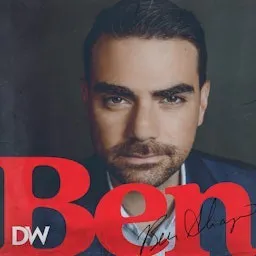
Overview of Ep. 2510 - I Don't Care If The Trump Administration "Banned" CNN
This episode is a long-form critique of the mainstream media’s claim that President Trump “banned” CNN, Politico, and MSNBC from the White House. The host argues that this is not a First Amendment violation, but rather a long-overdue rejection of outlets he sees as openly partisan and historically protected by false claims of objectivity. The episode also broadens into a larger argument about media bias, activist journalism, political propaganda, education, Gaza coverage, and celebrity involvement in Middle East politics.
Trump, the White House, and “Banning” CNN
What actually happened
- The administration did not shut down these outlets.
- It revoked White House press badges, removed them from certain workspaces, and excluded them from the press pool.
- The host argues this is access restriction, not censorship.
Core argument
- The First Amendment protects the right to publish and speak, not a guaranteed seat in the White House briefing room.
- He says the White House is under no obligation to grant special access to outlets it views as hostile or propagandistic.
- He emphasizes that Trump is simply doing out loud what prior administrations did more quietly.
The Media Bias / Objectivity Argument
Main thesis
The episode argues that “objective journalism” is largely a myth:
- Journalists have always been political actors.
- The modern press’s claim to neutrality is framed as a self-serving fiction.
Historical examples used
- James Callender and other early partisan journalists
- Elijah Lovejoy, Horace Greeley, Ida Tarbell, Upton Sinclair, Ida B. Wells
- William Randolph Hearst and yellow journalism
- 20th-century figures like Walter Lippmann, who helped popularize the idea of objective journalism as a professional ideal
Modern media examples
- He points to legacy TV networks and high institutional trust eras as the period when the illusion of neutrality held best.
- He argues the internet exposed the ideological lean of the press.
- He repeatedly calls out CNN, Politico, and MSNBC as examples of outlets whose mistakes and framing consistently move in one political direction.
Obama and Biden as Precedent
The episode spends a large chunk of time arguing that Democrats and Democratic administrations have long restricted access when it suited them.
Obama examples cited
- Labeling Fox News a “communications arm of the GOP”
- Excluding Fox from some access and pool opportunities
- Surveillance and retaliation episodes involving reporters and leaks
- General preference for friendly press coverage
Biden examples cited
- Restricted access after credentialing changes
- Excluding the New York Post after Hunter Biden coverage
- Coordinated press questions and other signs of heavy messaging control
Takeaway
The host argues that media outrage over Trump is selective and hypocritical because prior Democratic administrations did the same thing, just with more polished language.
Nicole Hannah-Jones and Activist Journalism
The episode pivots to Nicole Hannah-Jones as an example of an activist journalist whose politics shaped her reporting and public advocacy.
Story discussed
- Her decision years ago to enroll her daughter in a high-poverty school as part of a broader argument about education and racial inequality.
- Her later public regret and criticism of the school system.
Host’s critique
- He argues her original premise was flawed: that school failure is mainly about racism and funding rather than behavior, parental involvement, incentives, and institutional quality.
- He uses the story to criticize the broader progressive habit of treating abstract ideology as a substitute for practical parenting and policy.
Gaza, Activist Media, and False Narratives
Another major segment focuses on media coverage of Gaza and the host’s view that the press routinely repeats propaganda.
Main claims in the episode
- Many Gaza-based “journalists” are really Hamas-approved stringers or propagandists.
- Western media allegedly amplified false or misleading claims about:
- starvation in Gaza
- Israeli conduct in the war
- civilian casualty framing
- the legitimacy of Hamas-linked sources
Specific examples mentioned
- Motaz Azaiza as a widely promoted photojournalist who later revealed sympathetic views toward the October 7 attacks and Hamas-adjacent media realities.
- Claims that media outlets used misleading imagery and narratives to frame a starvation crisis.
- Mention of Al Jazeera firing staff members linked to Hamas or Palestinian Islamic Jihad after legal pressure.
Host’s broader point
He argues that media coverage of political Islam and the Israel-Gaza war is deeply compromised and that audiences were misled by emotionally powerful but misleading images and narratives.
Miss Rachel, Macklemore, Ed Sheeran, and Celebrity Politics
The episode also turns to pop-culture figures who wade into political issues.
Miss Rachel and activist branding
- The host criticizes Miss Rachel as a child-friendly entertainer who also promotes political messaging.
- He connects her to pro-Gaza advocacy and to figures he says are tied to propaganda narratives.
Ed Sheeran / Macklemore controversy
- Macklemore reportedly used a stage opportunity to push pro-Palestinian politics and was then removed from a tour.
- Ed Sheeran attempted to “both sides” the issue and says his concerts are about unity.
- The host argues Ed Sheeran should have simply stayed out of politics and “shut up and sing.”
Lesson the host draws
- Celebrities often damage their own standing when they enter political fights they don’t understand.
- Trying to satisfy both sides usually leaves them alienated from everyone.
Legal and Practical Outlook
Court case / precedent
- The host references Sherrill v. Knight and argues that the legal situation is murky but probably leans toward some limits on arbitrary exclusion.
- He predicts the matter may end up in court and potentially be partially upheld or blocked depending on how the administration justifies the restrictions.
Strategic point
- He says Trump should have been more careful in how this was rolled out.
- Even so, he insists the underlying principle is justified because legacy media already operate with a built-in partisan framework.
Key Takeaways
- The episode argues that White House press access is a privilege, not a constitutional entitlement.
- Trump’s action is framed as a blunt, open version of what prior administrations did quietly.
- The host rejects the idea that mainstream outlets like CNN or Politico are neutral arbiters.
- He uses examples from education, Gaza coverage, and celebrity activism to argue that institutions often hide ideology behind professionalism.
- The larger theme is that public trust in media has collapsed because the media pretend to be objective while acting politically.
Closing Note
The episode ends with a teaser for a members-only segment featuring more analysis and an interview with Patrick Clancy.