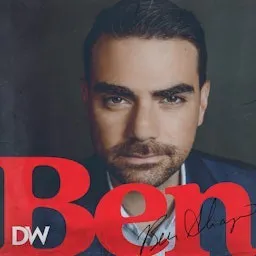
Overview of Ep. 2508 - Radical Islam Is On The March
This episode is a wide-ranging, highly polemical monologue that centers on Ben Shapiro’s argument that radical Islam and political Islam are growing threats in the U.S. and abroad, while many left-wing activists, politicians, and cultural figures either excuse or align with them. The show also spends significant time promoting the Daily Wire’s new film Run, Hide, Fight: Infidels, then pivots into domestic terrorism, Middle East instability, AI regulation, Democratic politics, and a culture-war dispute involving Ed Sheeran and Macklemore.
Major Theme: Radical Islam, Terrorism, and the “Red-Green Alliance”
Shapiro argues that radical Islamic ideology is advancing in the West and that too many people underestimate the danger or actively side with it for political reasons.
Key examples discussed
- A thwarted ISIS-linked plot in Pennsylvania:
He highlights the arrest of a Pennsylvania man accused of plotting a terror attack, citing alleged ISIS pledges, bomb-making materials, and online chatter about attacking “infidels.” - Abdul El-Sayed in Michigan:
Shapiro frames the Democratic Senate candidate as sympathetic to Islamist politics, pointing to:- his history with the Muslim Students Association,
- a past protest against former terrorists speaking at the University of Michigan,
- and an imam associated with his orbit praising Hamas leader Ismail Haniyeh.
- Broader “jihadi supporter” claims:
He extends this argument to other politicians and candidates, including Zohran Mamdani, and says the next Congress could include multiple people he views as sympathetic to jihadist causes.
Core argument
- Shapiro’s central claim is that left-wing anti-American politics and Islamist politics often overlap, especially on campuses, in activism, and in electoral politics.
- He says many leftists see Islamists as anti-Western allies, despite the long-term danger to themselves and American institutions.
Run, Hide, Fight: Infidels and Daily Wire’s Media Strategy
A large portion of the episode is devoted to hyping the new Daily Wire film Run, Hide, Fight: Infidels.
What Shapiro says about the film
- He describes it as:
- entertaining,
- provocative,
- and meant to depict the threat of Islamic terror in a way Hollywood won’t.
- He claims the film is being attacked by the left and that theaters are canceling screenings and posters are being torn down.
- He presents the movie as part of a broader mission to build right-leaning entertainment that competes with Hollywood.
Business/cultural pitch
- Shapiro repeatedly encourages listeners to subscribe to Daily Wire to support more films and entertainment projects.
- He frames the company’s entertainment arm as part of a civilizational struggle:
culture is upstream of politics, and entertainment matters in how people perceive threats.
Foreign Policy: Saudi Arabia, the Houthis, and the Limits of Islamic Governance
Shapiro argues that the Middle East episode illustrates the weakness and incompetence of Islamic regimes.
Main points
- The Houthis and the Bab el-Mandeb Strait
- He says Iran-backed Houthis have seized strategic territory in Yemen, threatening a major shipping chokepoint.
- He emphasizes the geopolitical importance of the Red Sea route and the potential effect on global oil prices.
- Saudi military weakness
- Despite massive U.S. arms sales and decades of assistance, Shapiro says Saudi Arabia has failed to stop the Houthis.
- He argues this proves the Saudi state is militarily incompetent and dependent on the West.
- Iran as the “head of the snake”
- He frames the U.S. objective as weakening Iran economically and strategically rather than sending in troops.
- He argues Iranian pressure on shipping and oil routes is designed to destabilize the region and raise global energy prices.
Shapiro’s broader thesis
- He argues that Islam as a governing philosophy fails, and that modern infrastructure, finance, military power, and technology in Muslim-majority states depend heavily on Western systems and knowledge.
- He cites the UAE as a partial exception, saying it is more West-aligned than Saudi Arabia.
Israel, U.S. Weapons Sales, and Criticism of Tucker Carlson
The episode also addresses U.S. military aid and arms sales to Israel.
Key takeaways
- Shapiro says the Trump administration’s sale of heavy bombs to Israel is sensible because Israel is the region’s only reliable ally capable of defending itself.
- He argues that these weapons are for stockpiling and deterrence, especially if future administrations cut off support.
- He criticizes Tucker Carlson for opposing the transfer and argues Carlson underestimates Israel’s military needs, especially in Gaza.
Domestic Politics: Protests, Impeachment Theater, and the Populist Right
Protests against Treasury Secretary Scott Bessent
- Shapiro plays clips of activists shouting at Bessent over sanctions on Iran and Cuba.
- He mocks the protesters as ignorant and ideologically extreme.
Thomas Massie’s impeachment push
- He notes that Rep. Thomas Massie introduced impeachment articles against Defense Secretary Pete Hegseth over Iran-related military actions.
- Shapiro dismisses this as grandstanding and says the standard Massie proposes would implicate many past defense secretaries.
AI Regulation: A Strange Coalition of Populists and Democrats
Another segment focuses on AI regulation, where Shapiro mocks both left-wing alarmism and populist anti-tech rhetoric.
Who he highlights
- Bernie Sanders and Steve Bannon
- Shapiro derides them as “parasites” joining forces to warn about AI.
- Kamala Harris and Chris Coons
- He criticizes Democratic calls to slow AI development and regulate it heavily.
- Scott Bessent
- He cites Bessent arguing for open-source AI as a way to prevent regulatory capture and Chinese dependence.
Main argument
- Shapiro says the panic around AI is overblown and often comes from people who do not understand the technology.
- He frames the regulatory push as a mix of fear, ignorance, and attempts at government control.
Democratic Politics: Kamala Harris, Gavin Newsom, Wes Moore, Brandon Johnson
The episode also briefly covers Democratic jockeying and what Shapiro sees as the party’s leftward drift.
Notable points
- Kamala Harris
- Shapiro says she wants another presidential run and mocks her past attempts to explain AI.
- Gavin Newsom
- He highlights Newsom’s claim that he would not run if Harris runs, suggesting political caution rather than confidence.
- He also mocks Newsom’s rhetoric about capitalism “not working.”
- Wes Moore
- Shapiro says Moore avoids condemning radical DSA policies and is likely positioning for a presidential run.
- Brandon Johnson
- He criticizes Chicago’s mayor for seeking reelection despite poor approval ratings and what Shapiro views as catastrophic governance.
Culture War: Ed Sheeran, Macklemore, and “Speech Censorship”
The episode ends with a discussion of a public dispute after Macklemore’s pro-Palestinian comments allegedly caused venue backlash on Ed Sheeran’s tour.
Shapiro’s take
- Macklemore is portrayed as a cynical provocateur using the tour to regain relevance.
- Ed Sheeran is defended as trying to keep politics out of his concerts, though Shapiro says he should have set that boundary sooner.
- He contrasts this with criticisms from:
- AOC, who calls it elite censorship,
- and Mehdi Hasan, who frames it as suppression of speech.
Cultural takeaway
- Shapiro says live music should be a political escape, not a platform for activist lecturing.
- He praises the Goo Goo Dolls’ John Rzeznik for saying concerts should unite audiences rather than divide them.
Bottom Line
This episode is built around one central message: radical Islam is a major threat, and many left-wing activists, politicians, and cultural figures either ignore it or actively assist it. From terror plots and Middle East shipping routes to campus politics, AI regulation, and pop-music disputes, Shapiro frames nearly every topic as part of a larger struggle between Western civilization and anti-Western ideology.