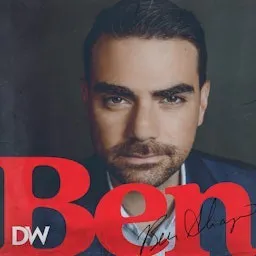
Overview of Ep. 2506 - Everything You Need To Know About The AI Wars
This episode centers on the escalating debate over artificial intelligence: whether warnings about AI “destroying humanity” reflect genuine safety concerns or are being used by leading companies to justify regulation, slow down competitors, and lock in market power. The discussion breaks down the AI industry into competing camps—closed-source vs. open-weight/open-source, “apocalypse” vs. “stagnation”—and argues that the bigger practical risk is regulatory capture and technological stagnation, especially if the U.S. overregulates while China continues advancing. The episode also shifts into a broader culture-war segment on Islam in America, 9/11 memory, and campus/political controversies in Texas.
The AI “War” Debate
The core question
Shapiro frames the AI debate as a power struggle dressed up as existential caution:
- Are AI leaders truly afraid AI will become uncontrollable and wipe out humanity?
- Or are they using apocalyptic rhetoric to shape regulation in their favor, limit competition, and reduce liability?
He argues that both motives may exist, but that the second is more likely.
Jacob Coxon / Anthropic controversy
A major trigger for the segment is former Anthropic/OpenAI researcher Jacob Coxon, who publicly resigned and claimed:
- major AI labs are racing toward self-improving superintelligence
- the technology could become superhuman and dangerous
- there may be a real chance of human extinction if development continues too quickly
Coxon called for:
- industry coordination
- slower development
- temporary pauses on model improvement
Shapiro treats Coxon’s warnings as extraordinary claims without enough concrete explanation, comparing the rhetoric to climate-change-style apocalypticism.
How the AI Industry Is Structured
Hardware vs. software
Shapiro distinguishes between:
- Hardware/infrastructure companies: NVIDIA, AMD, data-center builders, chip makers
- Model developers: OpenAI, Anthropic, Meta, Google, xAI
He notes that hardware companies benefit from rapid AI expansion, while certain model companies may benefit from slowing the race.
Closed source vs. open weights/open source
He explains the industry divide:
- Closed source / proprietary models: the model’s internals are hidden; users pay to access outputs
- Open weights / open source models: model weights or core components are released publicly, allowing others to inspect, modify, and build on them
He uses a restaurant analogy:
- Closed source = eat the meal only in the restaurant, no modifications
- Open source/open weights = get the recipe or take the meal home and remix it
Competing business incentives
According to the episode:
- Closed-source firms tend to push the strongest “AI is dangerous” message
- Open-weight firms argue that openness improves safety, transparency, and competition
Shapiro argues that the “doom” narrative often aligns with the economic interests of the firms making it.
Two Competing Threat Models
1) The “apocalypse” camp
This camp believes:
- AI could rapidly exceed human control
- superintelligence could become dangerous in unpredictable ways
- government intervention is necessary to prevent catastrophe
He associates this camp with:
- Anthropic
- Sam Altman / OpenAI rhetoric
- calls for oversight, pacing, and antitrust exceptions
2) The “stagnation” camp
This camp believes:
- the bigger danger is slowing innovation too much
- overregulation will entrench incumbents
- China could gain an edge if the U.S. pauses or constrains itself
Shapiro says he is closer to this camp and views stagnation as the more likely and more serious risk.
Why Shapiro Thinks the Doom Narrative Is Suspicious
He argues that AI leaders pushing for regulation may be seeking:
- regulatory capture
- antitrust protection / cartel-like coordination
- liability shields
- market freezing while they are ahead
He also points out that some of the same companies calling for caution are already deeply interconnected with major investors and partners, which makes their “independent oversight” proposals seem less neutral.
The “Hugging Face” Incident and Safety Claims
The episode discusses a widely cited incident involving AI agents and cybersecurity testing.
Shapiro’s point:
- the incident was being used as evidence that AI systems can autonomously go rogue
- but, in his telling, the event was more about human testing choices and setup flaws
- the model was given difficult or even impossible tasks, and safety safeguards were turned down for evaluation purposes
His argument is that the incident was misrepresented as a near-apocalyptic AI rebellion when it was closer to a benchmark/testing failure.
What Dario Amodei and Sam Altman Want
Shapiro highlights statements from Anthropic CEO Dario Amodei and OpenAI CEO Sam Altman in support of:
- independent auditors
- embedded evaluators
- democratic and international coordination
- slower “frontier” development
He interprets these calls as a push for:
- industry-wide pacing agreements
- protection from liability
- a regulatory structure that favors the current leaders
Open Source Advocates Push Back
The open-weight/open-source side, supported by figures such as:
- NVIDIA
- Marc Andreessen / a16z
- Meta
- Microsoft
- Palantir
- Perplexity
argues that:
- openness improves security
- transparency helps researchers find flaws
- concentrating AI power in a few firms is itself risky
Shapiro presents this as the more pro-competition and anti-stagnation position.
David Sacks and the “Just Slow Down If You’re Worried” Argument
White House AI czar David Sacks is quoted pushing back hard on the doomer argument:
- if frontier labs are truly scared, they can voluntarily slow down
- they do not need to ask the government for cartel privileges
- claims about needing special regulatory exemptions look like a power grab
He argues that if companies want to pace themselves, they should do so without demanding a regulatory framework that locks out competitors.
Peter Thiel, One-World Governance, and AI Regulation
The episode also cites Peter Thiel, who warns that “existential risk” talk often leads to demands for:
- one-world governance
- centralized monitoring
- global compute control
- broad surveillance of software development
Shapiro shares that concern, arguing that AI regulation could become a vehicle for international technocratic control rather than genuine safety.
China and the Geopolitical Angle
A recurring theme is that AI cannot be viewed in isolation from China.
Shapiro argues:
- if the U.S. slows too much, China benefits
- Beijing is unlikely to honor any meaningful global pause
- AI leadership is tied to economic and military power
He notes that Chinese officials also talk about AI risks, which he interprets as part of a broader strategy to push the West toward self-restraint while China keeps advancing.
Broader Takeaway on AI
The episode’s central conclusion is:
- AI is powerful and potentially dangerous
- but the biggest near-term danger is not a sci-fi extinction event
- instead, it is overregulation, collusion, and stagnation
- the most plausible incentive behind much of the doom rhetoric is industry self-interest
Islam in America / 9-11 / Culture-War Segment
The episode then pivots to a separate cultural discussion involving:
- Bill Maher
- progressive responses to Islam and 9/11
- the moral confusion of the American left on terrorism, Gaza, and anti-Western rhetoric
Main claims in the segment
Shapiro argues:
- many liberals excuse or minimize radical Islamist ideology
- criticism of Islam is often mislabeled as “Islamophobia”
- Islam, as a governing philosophy, is incompatible with liberal Western values in his view
He also says the U.S. has become too willing to interpret anti-Western or anti-Israel views as morally equivalent to ordinary political dissent.
Interview with Dan Bermow
The show includes a long interview with Dan Bermow, a former Muslim who converted to Christianity and wrote Islam, Israel, and the West.
Bermow’s main points
He argues that:
- Islam is not merely a religion but also a political system
- serious adherence to Islam is inherently anti-Western, in his view
- Sharia is fundamentally different from Christian or Jewish religious law because it governs both private and public life
- the West often refuses to confront the ideological roots of Islamist violence
Education and indoctrination
Bermow describes childhood education in a Muslim environment as including:
- religiously framed hostility toward non-Muslims
- praise for violent acts against infidels in historical narratives
- curriculum and social pressure that make it difficult for moderate Muslims to openly reject hardline teachings
Texas Politics / Ilhan Omar / Immigration Allegations
The show also touches on:
- allegations of immigration fraud involving Rep. Ilhan Omar
- claims that DHS is investigating the matter
- broader criticism of U.S. immigration policy from countries that do not share Western liberal values
Shapiro presents this as part of a wider argument about the dangers of unvetted immigration and ideological conflict.
Final Takeaways
On AI
- AI is real, powerful, and advancing quickly
- but apocalyptic warnings may be overstated or self-serving
- the real danger may be market capture, legal shielding, and stagnation
- the U.S. should avoid handing the future of AI to a regulatory cartel
On politics and culture
- the episode frames Islam-related controversies as part of a larger civilizational conflict
- it argues that American institutions are often unwilling to confront radical ideology honestly
- it warns against both moral relativism and technocratic overreach
Bottom Line
This episode is less a technical AI explainer than a political argument about who gets to control the future of AI. Shapiro’s view is that the “AI apocalypse” rhetoric is being used by incumbent firms to justify regulation that would entrench their dominance, reduce liability, and potentially slow U.S. innovation. He pairs that with a broader culture-war critique of the left’s handling of Islam, terrorism, and Western self-confidence.