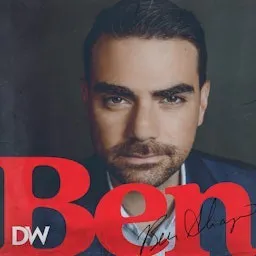
Overview of Ep. 2503 - Lindsay Clancy's Jurors SPEAK... And It's Terrifying
This episode of The Ben Shapiro Show focuses heavily on the aftermath of the Lindsay Clancy mistrial, with Ben Shapiro criticizing jurors who publicly defended Clancy and arguing that the jury appears to have engaged in sympathy-driven nullification rather than a strict reading of the evidence. The show then broadens into a larger theme: American discourse increasingly prioritizes narrative, identity, and emotion over facts. That framework is applied to the Carmelo Anthony murder case, media/cultural controversies involving Jimmy Kimmel and Nick Offerman, a major Daily Wire partnership announcement with Clay Travis, and updates on Iran, Russia, and Ukraine.
Lindsay Clancy Jurors: Sympathy, Nullification, and Public Commentary
Main argument
Shapiro’s central view is that the jurors’ public comments reveal a troubling willingness to substitute compassion for legal judgment. He argues that:
- The prosecution’s job was to prove the case against Lindsay Clancy, who was accused of killing her three children.
- Some jurors appeared more focused on whether she was “treated nicely” than on the facts of the case.
- The jury outcome looked, to him, like a mix of:
- some jurors who believed she was guilty but didn’t want to convict,
- and at least one juror who thought there was reasonable doubt but still wanted conviction.
Key points
- Shapiro repeatedly condemns Clancy’s defense attorney for grandstanding, especially for invoking feminism and asking for a Trump pardon in a state case.
- He stresses that the case involved a “mentally ill woman who murdered her own children,” not a feminist martyr.
- He argues the likely hung-jury outcome was understandable given the emotional and complicated facts, but that the jurors’ public rationalizations were not convincing.
Patrick Clancy and defamation
Shapiro strongly supports Patrick Clancy and says he should sue people spreading conspiracy theories that he was involved in the deaths.
He highlights:
- the alleged misinformation campaign against Patrick Clancy,
- the emotional horror of the 911 call,
- and the cruelty of attacking a grieving spouse who later remarried.
Narrative Over Evidence: The Carmelo Anthony Case
Shapiro uses the Carmelo Anthony case to argue that politics and activism often override facts.
His critique of the left-leaning narrative
He criticizes:
- James Tallarico for suggesting Carmelo Anthony was victimized because there were no Black jurors,
- broader claims that the criminal justice system is inherently racist,
- and public figures who turn clear-cut violent crimes into identity narratives.
Evidence Shapiro emphasizes
According to the transcript, he cites reporting that Anthony had:
- violent social media activity,
- gun-related photos,
- texts expressing hate and criminal behavior,
- and prior signs of dangerous conduct.
His point: the evidence matters more than the storyline people want to tell.
Entertainment and Media Commentary
Jimmy Kimmel
Shapiro mocks reports that Jimmy Kimmel Live may end in 2027, saying it would be a public benefit. He contrasts Kimmel’s earlier, funnier persona with what he sees as later “woke scolding” and mean-spirited political preaching.
Nick Offerman / The Last of Us
A major chunk of the episode is devoted to Nick Offerman criticizing Shapiro over a clip from a prior discussion of The Last of Us.
Shapiro’s defense:
- He says he accurately described the episode’s plot.
- He rejects the claim that this makes him homophobic.
- He argues that simply describing gay characters as men who like men is not discriminatory.
- He says Offerman’s reaction misunderstands both the episode and Shapiro’s commentary.
South Park joke
Shapiro briefly praises South Park creators Trey Parker and Matt Stone for jokingly renaming the show “South America” in a satirical jab at Trump-era nationalism.
Daily Wire Announcement: Clay Travis Partnership
The episode includes a major promotional announcement: Daily Wire is partnering with Clay Travis and his brand, Sport and State.
What the partnership includes
- Daily Wire will feature Sport and State editorial content.
- The Clay and Buck Show will be available for streaming on DailyWire.com.
- Shapiro presents this as a major expansion of conservative media collaboration.
Clay Travis interview highlights
Clay Travis talks about:
- building new media brands,
- sports, politics, and culture overlap,
- and his excitement about reaching a larger audience through Daily Wire.
Sports and Culture: WNBA and College Football
In a lighter segment with Clay Travis, they discuss:
- the WNBA’s resistance to gender-related controversies,
- Travis’s satirical offer to field an all-male roster identifying as women,
- and his challenge offering cash to WNBA teams or even an eighth-grade boys team to prove they could compete.
They also discuss the changing definition of “amateur” and “professional” college sports:
- NIL has blurred the line between college and pro athletics.
- Former NFL players trying to return to college ball create legal and competitive issues.
- Travis argues Congress may need to intervene, though Shapiro is skeptical Congress will do anything meaningful.
Foreign Policy Updates: Iran, the Houthis, and Russia
Iran and U.S. strikes
Shapiro reports that:
- the U.S. struck Iranian crude tankers tied to Iran’s shadow oil network,
- Iran’s currency has collapsed,
- and the U.S. has intensified sanctions on Iranian-linked airlines and logistics networks.
His framing is that Iran is being squeezed economically and strategically.
Houthis and Saudi Arabia
He says Iran-backed Houthi attacks on Saudi infrastructure are part of broader Iranian pressure tactics. He criticizes the Biden administration for being too soft on Saudi defense and Iran.
Ukraine and Russia
He also covers:
- Ukrainian drone strikes on Russian refineries,
- declining Russian oil processing,
- and diplomatic efforts by U.S. figures like Jared Kushner and Steve Witkoff.
Shapiro is skeptical of peace talks unless Russia offers real concessions.
Key Takeaways
- The Lindsay Clancy jury reaction is, in Shapiro’s view, a warning sign: legal judgment is being overridden by sympathy and politics.
- Patrick Clancy is portrayed as a real victim of both tragedy and online defamation.
- The Carmelo Anthony case is used to argue against narrative-driven justice and identity-based spin.
- Cultural commentary remains central, from Jimmy Kimmel to Nick Offerman to South Park.
- Daily Wire is expanding materially through its partnership with Clay Travis.
- Foreign policy coverage emphasizes pressure on Iran and Russia and skepticism toward empty diplomacy.
Bottom Line
This episode is a mix of courtroom commentary, media criticism, culture-war rebuttals, and geopolitical updates. The unifying theme is Shapiro’s argument that modern institutions—jurors, journalists, activists, and entertainers—too often let ideology and emotion overpower evidence, law, and common sense.