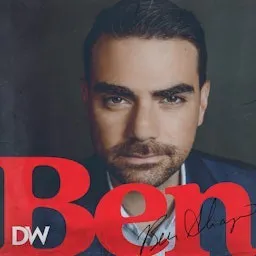
Overview of Ep. 2501 - The Looming Economic Disaster, Explained
This episode argues that the United States is heading toward a major fiscal and political crisis driven by runaway government spending, especially on welfare/entitlement programs, and that both parties have become part of a “uniparty” unwilling to make hard choices. Ben Shapiro ties together rising bond yields, higher mortgage rates, public distrust of government, resistance to AI and innovation, and growing pressure from foreign adversaries as signs that America is weakening itself from within. He also critiques J.D. Vance’s defense of Tucker Carlson, highlights corruption reporting from Chris Rufo, and closes with commentary on the Venice Film Festival and a promo for Run, Hide, Fight, Infidels.
The Central Thesis: America Is “Committing Suicide” Through Spending
Shapiro’s main point is that empires do not usually collapse from one external blow; they die by draining their own finances.
Core claim
- The U.S. is spending beyond its means and has no serious political will to reverse course.
- The real problem is not military spending, but the massive growth of the welfare state and entitlement obligations.
- Both parties increasingly accept the premise that the government should solve most problems, which makes fiscal restraint politically difficult.
Historical framing
- He compares the U.S. trajectory to past empires, especially Britain, which he says traded imperial power for domestic welfare commitments.
- He quotes Founding Fathers and LBJ-era history to argue that debt, welfare expansion, and political denial eventually produce stagnation, inflation, and decline.
Bond Markets, Debt, and the Warning Signs
The episode opens with economic alarm bells:
- Bond yields are rising, which means government borrowing is becoming more expensive.
- Mortgage rates are up, putting pressure on consumers and the housing market.
- Shapiro interprets this as evidence that investors are losing confidence in America’s long-term fiscal discipline.
His interpretation
- Rising yields reflect fear that the U.S. will never stop borrowing.
- Markets are increasingly pricing in the possibility of inflation, debt stress, or future instability.
- He argues that America’s debt problem is now so large that normal political fixes are unlikely.
The “Uniparty” and Political Cowardice
A major theme is that neither major party wants to actually cut spending.
What he means by “uniparty”
- Republicans and Democrats alike benefit from promising government money and avoiding austerity.
- Populism encourages politicians to promise that no one will have to sacrifice.
- Shapiro says the political class treats debt reduction as untouchable while entertaining “crazy ideas” on everything else.
Notable takeaway
- He argues that the political system is built to avoid hard tradeoffs, even when the country can’t afford that approach.
Government Corruption and the Size of the State
Shapiro points to a Gallup poll showing most Americans believe government is corrupt, and he says they are right.
His argument
- Corruption grows naturally when government becomes huge and controls enormous flows of money.
- The bigger and more intrusive the state, the more incentives there are for fraud, favoritism, and capture.
- He says corruption is not an exception to big government; it is a predictable outcome.
AI as the Only Plausible Way to Grow Out of Debt
A major section argues that AI may be the only realistic path to preserving America’s economic position without massive austerity.
Shapiro’s view of AI
- AI is a transformative tool that will increase productivity and lower costs.
- He rejects the idea that AI will completely replace human judgment, but sees it as profoundly useful.
- He believes the U.S. must win the AI race or risk letting China capture the gains.
Economic logic
- If spending keeps rising, the U.S. either:
- inflates away the debt,
- cuts spending radically, or
- grows fast enough to outpace liabilities.
- Shapiro says AI is the only current technology that makes the third option plausible.
Political contrast
- He praises Trump administration figures who argue for growth through innovation.
- He also criticizes central bankers and regulators who he thinks are using outdated assumptions.
Bernie Sanders and the Anti-Tech Backlash
Shapiro uses Bernie Sanders as a symbol of the left’s anti-innovation instincts.
His criticism
- Sanders wants an immediate pause on advanced AI and a permanent ban on superintelligence.
- Shapiro mocks this as a reflexive attempt by old politicians to stop technological change.
- He argues this anti-tech populism is dangerous because it blocks the very productivity gains America needs.
Broader concern
- He says resistance to data centers, automation, and new technologies is part of a larger political habit: blaming capitalism and innovation instead of bad policy.
Manufacturing, Deindustrialization, and Free Markets
Shapiro also addresses claims that capitalism “deindustrialized” America.
His counterargument
- He says technology, not capitalism, eliminated many industrial jobs.
- Manufacturing output has still grown even as labor input fell.
- The real story is higher productivity with fewer workers, not the disappearance of industry.
Takeaway
- He argues politicians on both sides romanticize lost factory jobs while ignoring how modern productivity works.
Foreign Threats: Russia and China Exploiting Weakness
The episode links domestic weakness to growing pressure from abroad.
Russia
- He discusses reports of Russian aggression, including a drone incident near a German airport.
- He warns that Russia may be testing NATO’s resolve and assuming the West will not respond strongly.
China
- He notes Chinese military harassment near Japan and broader Indo-Pacific pressure.
- He argues China and Russia see the U.S. as fiscally and politically vulnerable.
Bottom line
- In Shapiro’s view, American weakness invites foreign provocation.
- He believes a bankrupt welfare state and declining military confidence make the U.S. less secure.
J.D. Vance, Tucker Carlson, and “Moral” Coalition-Building
A long segment focuses on Vance’s defense of Tucker Carlson.
Shapiro’s position
- He says this is not just about personal friendship.
- The real issue is whether Tucker Carlson should be treated as a legitimate and influential voice in conservatism.
His criticism
- He argues Carlson is anti-Zionist, anti-American in key respects, and too friendly to radical or pro-jihad figures.
- He says Vance is politically and morally boxing himself in by refusing to denounce Carlson’s influence.
- He frames the issue as one of coalition standards: who belongs in the movement, and who doesn’t.
Political risk
- Shapiro says Vance is tying himself to a figure who will keep creating problems through 2028 and beyond.
Corruption Case Study: Chris Rufo on California Medicaid Fraud
Chris Rufo joins to discuss alleged Medi-Cal fraud in California.
Main points from the interview
- Rufo describes a case involving a man allegedly billing California Medicaid for millions while living a luxury lifestyle.
- He says his team used AI and public records to identify suspicious billing patterns and ghost-like businesses.
- He argues that fraud is endemic in large government programs, especially Medicaid/Medi-Cal.
Bigger lesson
- Shapiro and Rufo use the story to reinforce the argument that expansive welfare systems are magnets for abuse.
- They suggest the problem is structural, not just a few bad actors.
Cultural Note: Venice Film Festival and Daily Wire’s New Film
The episode closes with a quick cultural detour:
- Shapiro mocks the Venice Film Festival for pro-Palestinian chanting and what he sees as the self-destructive politics of the arts world.
- He promotes Run, Hide, Fight, Infidels, Daily Wire’s upcoming film about confronting radical Islam.
- The trailer is presented as an example of entertainment that does not cater to the cultural left.
Main Takeaways
- America’s biggest problem is fiscal, not merely political.
- Entitlement and welfare spending are the real drivers of debt growth.
- AI and productivity growth may be the only way to avoid long-term economic decline.
- Government corruption scales with government size.
- Russia and China are probing American weakness.
- Conservatives, in Shapiro’s view, need stricter standards about who counts as part of the movement.
Notable Quotes and Themes
- “Empires don’t die — they commit suicide.”
- “There is, in fact, a uniparty.”
- “We need to grow our way out of this.”
- “The only thing on the horizon that can outgrow the debt problem is AI.”
- “The size of government and the size of corruption are linked.”