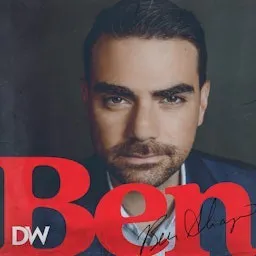
Overview of Ep. 2480 - Radical Islam INVADES The US Senate?!
In this episode, Ben Shapiro argues that the Democratic Party is increasingly aligning itself with radical Islamist and far-left activists, using Michigan Senate nominee Abdul El-Sayed as the central example. He also covers a Senate hearing on the Muslim Brotherhood that Democrats largely boycotted, the Senate committee vote to hold Anthony Fauci in contempt, and Tucker Carlson’s latest monologue and “program,” which Shapiro frames as a cynical, economically incoherent, post-liberal pitch. The episode includes an interview with Ayaan Hirsi Ali, who warns that Islamist political influence is growing in the West through enclave politics, student organizations, and coalition-building with the left.
Abdul El-Sayed, Michigan, and the Democratic Coalition
Shapiro’s core critique
- Shapiro presents Abdul El-Sayed as a radical Democrat whose public statements and past posts, in Shapiro’s view, show:
- pro-terrorism or terrorism-apologetic sympathies,
- strong anti-Israel rhetoric,
- support for defunding the police,
- and ideological overlap with socialism and identity politics.
- He argues El-Sayed’s victory shows the modern Democratic coalition is increasingly built around:
- highly educated urban/suburban voters,
- and concentrated Muslim voting blocs in places like Dearborn.
Main examples cited
- El-Sayed’s past comments comparing 9/11 and U.S. foreign policy.
- His description of Israel’s government as “evil” and Netanyahu as a war criminal.
- His reluctance to condemn Iran’s leadership because of sympathy in Dearborn.
- His deleted social media posts supporting defunding the police and framing policing as structural oppression.
Political takeaway
- Shapiro says El-Sayed is not really appealing to traditional working-class voters.
- He argues Democrats are trying to win elections by mobilizing hardened ideological and ethnic blocs, even if that means embracing anti-American or antisemitic elements.
The Muslim Brotherhood Hearing and “Red-Green Alliance”
What happened
- The Senate Judiciary Committee held a hearing on the Muslim Brotherhood.
- Shapiro says every Senate Democrat walked out rather than attend.
Shapiro’s argument
- He describes the Muslim Brotherhood as a terrorist-linked organization with influence in the U.S. through:
- mosques,
- advocacy groups,
- student groups,
- and organizations like CAIR and the Muslim American Society.
- He argues the Brotherhood’s long-term strategy is societal infiltration and gradual Islamization.
- He repeatedly uses the term “Red-Green Alliance” to describe cooperation between:
- radical Islamists,
- and democratic socialists/leftists who share anti-Western, anti-capitalist, and anti-Israel instincts.
Ayaan Hirsi Ali’s contribution
- Hirsi Ali says center-left parties in Europe and the U.S. have underestimated Islamist political organizing.
- She argues that enclaves matter and that even a relatively small but highly organized bloc can reshape politics.
- She says Islamist and socialist movements have both helped hollow out Western institutions from within.
Anthony Fauci Held in Contempt
What the committee did
- A Senate committee voted to hold Anthony Fauci in contempt after he invoked the Fifth Amendment and declined to answer questions.
Shapiro’s view
- He says Fauci lied to Congress and the public repeatedly and should face consequences.
- He notes the legal path is still uncertain because:
- it may need to go to the full Senate,
- then possibly to the DOJ,
- and there are questions about how Fauci’s Biden pardon affects Fifth Amendment protections.
Tucker Carlson’s “Program” and Shapiro’s Response
Carlson’s message, as presented here
- Carlson teased a major announcement that was not actually a third-party launch.
- Instead, he offered a broad cultural and political monologue about what America “should” be:
- fair,
- sovereign,
- productive,
- beautiful,
- healthy,
- honest,
- optimistic,
- wise,
- decent,
- and united.
Shapiro’s critique
- He says Carlson’s message is:
- economically illiterate,
- anti-trade,
- anti-market,
- and designed to demoralize listeners by insisting everything is rigged.
- Shapiro frames Carlson as building a “DSA from the right”:
- a populist-nationalist movement that mirrors left-wing socialist rhetoric,
- while posing as anti-establishment.
Bottom line
- Shapiro argues Carlson is not truly offering a viable political program.
- He says the real function is to generate outrage, clicks, and influence while pushing listeners toward conspiratorial thinking.
Interview With Ayaan Hirsi Ali: Key Points
Main themes
- Hirsi Ali says Islamism is not just a foreign problem; it has taken root in Western politics through:
- immigrant enclaves,
- universities,
- activist networks,
- and tactical alliances with the left.
- She argues that the Democratic Party is being transformed by these alliances, just as some European center-left parties were.
Her broader warning
- She distinguishes between Islam and Islamism, emphasizing that:
- Islamism is the political movement aiming to reshape society,
- and it is not the same as ordinary Muslims.
- She says the West has made infiltration easier through openness, migration, and institutional tolerance.
Main Takeaways
- Shapiro’s central claim is that the Democratic Party has crossed a line by normalizing radical Islamist-aligned figures and groups.
- He treats Abdul El-Sayed’s rise as a symptom of a larger coalition of:
- anti-Israel activists,
- Islamist organizers,
- and socialist progressives.
- He sees the Muslim Brotherhood hearing, the Fauci contempt vote, and Tucker Carlson’s rhetoric as evidence of a fractured, volatile political environment.
- The episode’s broader message is a warning that U.S. institutions are being pressured by ideologies hostile to Western liberalism, and that both the left and parts of the right are helping normalize that pressure.
Notable Themes and Rhetorical Motifs
- “Red-green alliance”: Shapiro’s shorthand for Islamist-left cooperation.
- Enclave politics: the idea that concentrated, highly organized blocs can dominate primaries and local power.
- Post-liberalism / anti-system rhetoric: used to describe Tucker Carlson’s messaging.
- Institutional capture: a recurring claim that universities, media, and political parties have been softened to extremist influences.