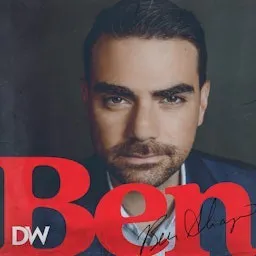
Overview of Ep. 2479 - Your Grandparents Would Kill for Your Grocery Bill
In this episode of The Ben Shapiro Show, the host argues that while grocery prices are still high and frustrating, modern Americans have wildly unrealistic expectations about affordability and quality of life. He uses food costs as a launching point for a broader critique of “black-pilled” pessimism, anti-capitalist populism on both the left and right, and what he sees as a decline in common-sense economic thinking. The episode also covers marijuana legalization’s harms, internal Democratic radicalization, leaks on Iran policy, Spain’s migrant crisis in Ceuta, conspiracy theories about Israel, and a few culture-war stories involving academia, Andrew Tate, and the WNBA.
Grocery Prices, Inflation, and Unrealistic Expectations
The central argument is that grocery prices are not going back to 2019 levels unless the U.S. enters a serious deflationary depression, which would be far worse than current inflation.
Key points
- Grocery prices are up significantly since 2019, but the host says they have been flattening compared with the pandemic inflation spike.
- He argues that the Trump administration’s tariff-focused approach was never really about lowering consumer prices.
- A major theme is that young people in particular have “broken” expectations about how much life should cost.
Main takeaway
- The host says people are comparing reality not to history, but to an unrealistic fantasy of permanent low prices.
The Case Against “Black-Pilled” Politics
A major theme is that pessimism and doom-scrolling distort politics and make voters think everything in America is failing.
What he argues
- Americans are, by historical and global standards, richer, better housed, better fed, and more comfortable than earlier generations.
- Food now takes a much smaller share of household income than it did decades ago.
- The idea that “nobody can afford food” is, in his view, a dramatic exaggeration.
Broader political point
- If both parties promise impossible utopia, voters will bounce between them when reality fails to match the promise.
- He warns that demoralization narratives on the right are becoming self-defeating.
Anti-Capitalism on the Left and Right
The episode spends a long stretch criticizing anti-market rhetoric from both progressive activists and populist conservatives.
Left-wing example
- He mocks Wisconsin Democrat Francesca Hong for blaming capitalism for climate change and using sweeping ideological buzzwords.
Right-wing example
- He criticizes “common good conservatism” and anti-data-center / anti-tech sentiment.
- He argues that capitalism and innovation are the reason goods and services improve and become cheaper over time.
His conclusion
- You cannot demand lower prices while also pushing policies that increase costs, limit innovation, or reduce productivity.
Marijuana: A Case for Re-Regulation
The host shifts to a rare example where he thinks government should get more involved: marijuana.
Main claims
- Legalization has gone too far and pot is “poisoning brains.”
- Marijuana use is now widespread, especially among young people.
- High-potency THC is linked, in his view, to anxiety, paranoia, memory issues, lower motivation, and possible long-term IQ loss when use begins in adolescence.
Policy stance
- He frames cannabis deregulation as a mistake and suggests re-regulation is warranted.
- He argues that society promoted marijuana too aggressively and ignored its harms.
Democratic Radicalization: Michigan and the Left’s Direction
The show covers Michigan Democrat Abdul El-Sayed winning his Senate primary and frames it as another sign of Democratic radicalization.
Host’s view
- El-Sayed is presented as anti-American and hostile to Israel.
- The host argues Democrats are increasingly unified by hatred of America rather than constructive policy.
Related point
- He portrays the party as being pulled toward activist rhetoric, anti-capitalism, and anti-Israel identity politics.
Tucker Carlson, Daryl Cooper, and Anti-Israel Conspiracy Thinking
Another major segment focuses on what the host sees as conspiratorial, anti-Semitic narratives spreading through the “horseshoe” of far left and far right commentary.
Topics discussed
- Daryl Cooper’s claims about Israel and Islamophobia.
- Tucker Carlson’s platforming of anti-Israel / anti-West voices.
- The host says these narratives ignore historical reality and instead blame “the Jews” for nearly everything.
Takeaway
- He argues this kind of conspiratorial thinking has become mainstream in certain online circles and is deeply unserious.
Iran, Leaks, and U.S. Military Readiness
The episode also covers reporting that the Trump administration may be leaking military planning details to Iran.
Main concerns
- Leaks undermine U.S. bargaining power and operational security.
- The host says anyone leaking sensitive military information should be investigated and jailed.
- He also notes reports that the U.S. has depleted large portions of its stockpile of precision long-range missiles during the conflict.
Broader argument
- He frames the leak problem as evidence of a serious internal dysfunction in the administration.
Spain’s Ceuta Crisis and “Horseshoe” Conspiracies
A long segment addresses the migrant crisis in the Spanish enclave of Ceuta.
What happened
- Large numbers of migrants, many from Morocco and elsewhere, crossed into Ceuta.
- CNN and the Times are cited describing severe overcrowding, exhaustion, hunger, and lack of shelter.
Host’s commentary
- He mocks the inconsistency of activists who apply humanitarian language selectively.
- He also ridicules claims that Israel or the U.S. orchestrated the crisis.
Social media reaction
- He criticizes Hasan Piker and Anna Kasparian for promoting conspiratorial explanations involving Israel and America.
- His point: these claims are absurd and evidence-free.
Jason Arday: Alleged Academic Fraud and Identity Politics
The episode briefly covers British academic Jason Arday, who is now accused of fabricating parts of his life story and plagiarizing his dissertation.
Allegations discussed
- Claims that he could not speak or read until late in childhood.
- Claims about extraordinary athletic and charitable achievements that appear unverified.
- A dissertation alleged to contain copied passages from another student’s work.
Host’s reaction
- He presents the story as a major unmasking and a cautionary tale about identity politics in academia.
Andrew Tate, WNBA Culture, and Other Commentary
The final segments are more of a grab bag of culture-war commentary.
Andrew Tate
- The host mocks Tate’s prison tweets as pseudo-philosophical nonsense.
WNBA
- He points out an irony involving a coach who supports trans activism while complaining about men in coaching.
- He also mocks Angel Reese’s claim that she lacked dolls that looked like her as a child, calling it victimhood mythology.
Bottom Line
This episode is built around a broad argument that:
- Americans are not as impoverished as they feel.
- Politicians and influencers exploit grievance and impossible expectations.
- Anti-capitalist thinking on both the left and right leads to bad policy.
- Cultural and political radicals are pushing conspiracies, demoralization, and identity narratives instead of practical solutions.
The show mixes economics, foreign policy, marijuana policy, and culture-war commentary into a single message: reality is better than the doom narrative, but only if people stop insisting on utopia.