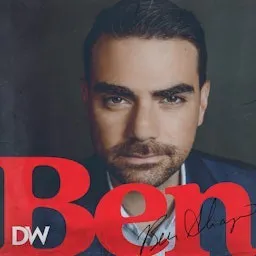
Overview of Ep. 2474 - This Viral Video Is Everything Wrong With America
This episode of The Ben Shapiro Show argues that one of the core problems in American politics and culture is the erosion of personal responsibility. Ben Shapiro uses a viral Caleb Hammer clip about people making poor food choices while using EBT/SNAP benefits as a springboard to critique modern politics, which he says increasingly frames bad outcomes as society’s fault rather than the result of individual decisions. From there, he connects the idea to government spending, food policy, school lunches, social media culture, and several news items involving Gavin Newsom, Lindsey Graham, and Rosie O’Donnell.
Central Argument: Personal Responsibility vs. Government Paternalism
Shapiro’s main thesis is that American politics now rewards the message: “It’s not your fault.” He argues that:
- People make real choices, including about food, spending, parenting, and work.
- Politicians exploit those choices by promising government solutions instead of accountability.
- This mindset expands government, weakens social institutions, and reduces individual virtue.
He says the left tends to treat bad outcomes as structural failures, while parts of the right have also drifted toward that logic. His broader claim is that once people stop seeing themselves as responsible for their decisions, government grows larger and national problems worsen.
The Viral Caleb Hammer Clip and the Food-Responsibility Debate
The episode’s anchor is a viral clip from financial host Caleb Hammer, where he reacts in disbelief to a woman showing off what she bought with government food assistance:
- lots of chips
- tortillas
- multiple blocks of cheese
- cookies
- Froot Loops
- French onion dip
- milk and other processed foods
Shapiro uses the clip to make the point that unhealthy eating is often a choice, not simply the result of food access or cost. He argues that:
- Healthy eating is harder, but still possible.
- Cheap unhealthy food often costs about the same as cheap healthy food.
- People, especially parents, are making value judgments about what they buy.
He also pushes back on the idea of “food deserts,” saying the evidence suggests food access explains only a small portion of dietary differences.
Data and Claims About Food Prices and Subsidies
Shapiro spends significant time citing statistics to argue that food is expensive relative to a few years ago, but still not historically unaffordable:
- Early 1900s families spent about 40% of income on food.
- Today the average American household spends under 10% of disposable income on food.
- He says food prices rose sharply after 2021 but remain manageable by historical standards.
He then argues that subsidies tend to raise prices in sectors where government intervenes heavily, pointing to examples like:
- hospital services
- college tuition
- child care
- medical care
His conclusion: more government subsidies for groceries would likely worsen the problem, not solve it.
Zohran Mamdani, SNAP, and the Politics of “Free” Food
Shapiro critiques Zohran Mamdani for arguing that no New Yorker in the wealthiest city in the world should worry about affording food. Shapiro says:
- New Yorkers already have SNAP/EBT and other assistance.
- A city-owned grocery store is not the answer.
- Claims about grocery access in Manhattan are exaggerated.
He frames Mamdani’s rhetoric as part of a broader political impulse to make the government responsible for outcomes that are, in his view, mostly driven by individual choices.
J.D. Vance, School Lunches, and Conservative Contradictions
A major segment focuses on Vice President J.D. Vance and how his views have evolved:
- In his memoir, Vance described changing his eating habits after a Marine drill instructor called him out for eating cake.
- Shapiro says the earlier version of Vance represented a traditional conservative belief in self-improvement and discipline.
- He contrasts that with a newer framing in which Vance reportedly described becoming “detached” from his family’s culture when he objected to sugary breakfast cereal.
Shapiro argues that the original lesson—“you can change your habits”—is being lost in favor of a more class-based explanation that treats family eating habits as a product of social status.
He also revisits Michelle Obama’s school lunch reforms, saying that while the lunches may have been more nutritious, kids rejected them because government cannot force people to make better decisions.
The Broader Political Consequences
Shapiro says the “nothing is your fault” worldview has three major consequences:
-
Government expands endlessly
If people aren’t responsible for themselves, then the state must step in. -
Government priorities get distorted
Core functions like defense get downplayed in favor of endless social spending. -
Personal virtue declines
People become more dependent, less accountable, and more willing to take from the system.
He uses a clip of a woman arguing that military spending is too high and social spending too low to illustrate what he sees as a misunderstanding of actual federal priorities. He says the U.S. already spends heavily on social programs when you count both direct spending and private/indirect benefits.
The Moral and Cultural Theme
Shapiro broadens the argument beyond economics. He says the real problem is cultural:
- Social media rewards victimhood and blame-shifting.
- Modern politics encourages people to see themselves as victims of systems rather than agents of their own lives.
- The founding generation believed in choice, accountability, and the need for constitutional limits because human beings are morally capable of both good and evil.
He even cites Pope Leo on the importance of virtue, discipline, and stepping away from endless scrolling and distraction.
Gavin Newsom Affair Story and the “Power” Narrative
Another major section discusses a Vanity Fair article by a woman who had an affair with Gavin Newsom when he was mayor of San Francisco.
Shapiro’s takeaway is not to defend Newsom, but to criticize the article’s framing. He argues the writer:
- admits the affair was consensual,
- says she was drawn to Newsom’s power,
- but still tries to frame the situation through a lens of coercion and power dynamics.
Shapiro says this reflects a postmodern idea, associated with thinkers like Michel Foucault, that all relationships are about power. He rejects that framing and argues that adults must take responsibility for their own choices, even when those choices are stupid or destructive.
Lindsey Graham Funeral Coverage and Political Reactions
The show also covers the memorial/funeral event for Senator Lindsey Graham, which Shapiro treats as a major political moment.
Key points:
- President Trump gave a warm and humorous eulogy, reflecting on their rocky relationship in 2016 and later friendship.
- Shapiro argues Graham was often unfairly labeled a warmonger.
- He says Graham actually wanted peace, but believed peace required confronting enemies like Russia and Iran.
- Trump, Fetterman, and others were highlighted as part of the event.
Shapiro also notes that the Senate was expected to vote on a Russia sanctions bill in Graham’s honor, which he sees as fitting.
John Fetterman and the Democratic Party’s Internal Divide
Shapiro praises John Fetterman for criticizing the far left wing of the Democratic Party, especially:
- the DSA
- abolitionist slogans like abolish the border, prison, or Senate
- pro-Hamas activism
- the party’s drift toward extremism
He presents Fetterman as one of the few Democrats willing to call out the party’s radical direction.
Kathy Hochul, Taxation, and Rosie O’Donnell’s Trump Parody
Two lighter, more sarcastic segments follow:
- Kathy Hochul’s office mocked the idea of high-earning athletes living in New York by joking about taxing LeBron James, which Shapiro says perfectly captures the state’s tax-hungry politics.
- Rosie O’Donnell released a parody song mocking Donald Trump, including crude references to his anatomy and intelligence. Shapiro dismisses it as bad, childish, and not remotely clever.
Disturbing TikTok Murder-Suicide Story
The episode closes on a serious and tragic segment about a viral TikTok trend and a murder-suicide case involving Sarah Gilson and her husband Sean Duffy.
According to the discussion:
- Sarah posted a TikTok joking about making a “Netflix documentary” exposing her soon-to-be ex-husband as a pedophile.
- She had recently obtained an emergency protective order against him.
- Shortly afterward, he allegedly killed her and then himself.
- The case involved accusations that he had inappropriately touched a minor at a basketball tournament.
- Shapiro’s guest, Lyndon Blake, explains that the case is horrifying, preventable, and made worse by the way social media turned a real danger into viral content.
The segment emphasizes that social media is not private, and viral performance can have dangerous real-world consequences.
Main Takeaways
- Shapiro’s core message is that personal responsibility is essential and that politics increasingly undermines it.
- He argues that government cannot fix bad personal decisions, especially around food, parenting, and finances.
- He sees the left’s worldview—and some drift on the right—as encouraging dependency and victimhood.
- Several side stories reinforce the theme: Gavin Newsom, J.D. Vance, school lunches, Lindsey Graham, and the TikTok tragedy all serve as examples of what happens when accountability is blurred.
Notable Line of Argument
The most seductive line in politics is: “It’s not your fault.”
That idea, Shapiro argues, is politically powerful but socially destructive.