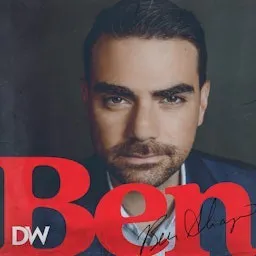
Overview of Ep. 2473 - LIQUIDATE THE RICH: Mamdani Releases Names, Addresses Of Apartment Owners
This episode centers on Ben Shapiro’s critique of Zohran Mamdani’s New York City politics, which he frames as explicit class warfare: exposing property owners’ names and addresses, promoting government-run grocery stores, and advancing rent control and other socialist policies. Shapiro argues these moves are designed less to solve housing or affordability problems than to intimidate wealthy New Yorkers, inflame resentment, and gradually undermine private property and market incentives. The episode also expands into a broader warning about anti-Americanism, radical Islam, 9/11 politics, polling on socialism, and several culture-war stories.
Mamdani, Property Owners, and “Class Warfare”
Released property database
- Shapiro says Mamdani’s administration published a searchable database listing New York property owners’ names and addresses under the guise of a pied-à-terre tax.
- He argues the release is effectively doxxing and an intimidation tactic aimed at “the rich.”
- He says the list appears overbroad, including:
- primary residences that should not have been included
- modest homes and lower-value properties
- public figures and city officials
- His central claim: the goal is not tax administration but mobilizing resentment against property owners.
Why he sees it as dangerous
- Shapiro argues that publicizing addresses increases personal risk and encourages political harassment.
- He says this strategy is meant to push wealthy residents and investors out of the city.
- He claims that if the city drives out capital and owners, it will:
- reduce tax revenue
- depress home values
- discourage new housing development
- weaken the city’s economy
Historical comparisons
- He compares Mamdani’s approach to:
- Marx and Engels
- Stalin’s class targeting of “kulaks”
- Robert Mugabe’s land seizures
- His point: populist rhetoric about fairness often turns into property seizure and economic destruction.
City-Run Grocery Stores and Socialist Policy Critique
The grocery-store plan
- Mamdani also announced a plan for five city-run grocery stores.
- Shapiro calls this a fantasy project that would:
- cost taxpayers heavily
- operate at a loss
- distort the private grocery market
- create eventual shortages or supply problems
Shapiro’s argument
- He says Americans are already well-fed, not facing systemic starvation.
- He points to low-cost grocery examples and the high U.S. obesity rate as evidence that the problem is not food scarcity.
- He argues the city stores would not meaningfully improve affordability, but would instead:
- undercut private stores
- invite inefficiency
- create dependency on subsidies
- damage the supply chain
Broader criticism of socialism
- Shapiro uses polling and history to argue that socialist ideas are often unpopular once people understand them.
- He frames “democratic socialism” as a rebranding effort for policies that often lead to:
- rationing
- shortages
- bureaucratic control
- reduced incentives to build and invest
9/11 Families, Anti-Americanism, and Radical Islam
Families object to Mamdani’s presence at memorial events
- The episode spends a long segment on 9/11 families demanding Mamdani be barred from anniversary memorial events.
- Shapiro says they view him as:
- insufficiently respectful of 9/11
- sympathetic to anti-American and Islamist figures
- politically tied to people who minimized or defended terrorism
Examples cited
- Mamdani’s associations with:
- Imam Siraj Wahhaj
- Ramzi Kassem
- DSA-aligned figures who made anti-9/11 or anti-American statements
- Hasan Piker
- Shapiro argues these connections show that Mamdani is part of a broader anti-American political culture.
Larger thesis
- Shapiro argues the real problem is not “Islamophobia,” but radical Islam, and that Western political elites have been too eager to downplay it.
- He claims decades of messaging taught Americans to see themselves as the problem rather than Islamist extremism.
- He also cites his view that left-wing politics and anti-Americanism have merged into a durable coalition.
Polling on Socialism and Government Aid
What the poll found
Shapiro cites Manhattan Institute polling showing:
- limited support for universal basic income
- Americans prefer targeted aid over universal cash giveaways
- most voters want government assistance to address the basic minimum, not income equality
- a majority support work requirements for some benefits
Shapiro’s takeaway
- He argues the public is not nearly as receptive to socialist redistribution as activist politicians assume.
- According to him, Mamdani-style politics succeeds more through:
- youth rebellion
- anti-American sentiment
- class resentment
- cultural transgression
Culture and Media Segments
Hunter Biden and Nick Fuentes
- The episode notes Hunter Biden’s sit-down with Nick Fuentes.
- Shapiro treats it as another example of the political “horseshoe” where extremes meet around anti-establishment resentment.
Christopher Nolan’s The Odyssey
- Shapiro discusses criticism of Nolan’s film adaptation by translator Emily Wilson.
- He says her complaints overlap with some right-wing critiques:
- the film’s ethics
- its treatment of women
- its Western moral framing
- He uses this to illustrate how cultural criticism from left and right sometimes converges.
Other pop-culture notes
- New Black Panther casting news
- Comic-Con trailers and appearances
- Johnny Depp’s latest trailer
- Katy Perry’s awkward concert stunt
Main Takeaways
- Shapiro’s core warning is that class resentment is being weaponized as politics in New York City.
- He argues Mamdani’s policies are less about affordability than about undermining property rights and market economics.
- The episode’s larger theme is that anti-Americanism—not just socialism—has become the cultural engine behind a new generation of radical politics.
- He closes by suggesting the U.S. must resist the normalization of this worldview before it becomes entrenched nationally.