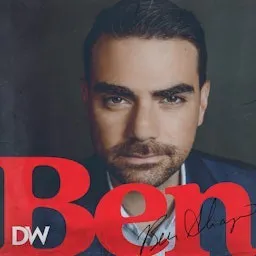
Overview of The Ben Shapiro Show — Ep. 2472: “Fauci's Diary REVEALED.... And What It Shows Is Ugly”
This episode centers on newly released excerpts from Anthony Fauci’s personal diary, which Ben Shapiro uses to argue that Fauci was far more ego-driven, politically coordinated, and misleading in private than he was in public. The show then broadens into a critique of Chinese influence operations, the growing power of the Democratic Socialists of America inside the Democratic Party, escalating antisemitic and Islamist violence in Western cities, Trump’s appearance at the White House Correspondents’ Dinner, and the ongoing problem of leaks from within the U.S. government about the Iran conflict.
Anthony Fauci’s Diary and the COVID Narrative
Main claims Shapiro emphasizes
- Fauci kept a roughly 1,100-page diary/scrapbook from late 2019 through retirement in 2022.
- Shapiro argues the diary reveals:
- Extreme self-regard and obsession with media praise.
- A willingness to shape public narratives while privately knowing more than he admitted publicly.
- Coordination with political figures and media allies.
Examples highlighted
- Fauci saved flattering press clips, celebrity praise, and notes calling him a “hero” or “national treasure.”
- He reportedly wrote that he was among the most famous people in the country and that his status was “explosive.”
- Shapiro says Fauci privately acknowledged early that:
- COVID likely did not originate from the wet market in Wuhan.
- The virus spread more like bad influenza than a highly lethal disease.
- Lockdowns were being pushed despite the lower fatality rate he privately recognized.
Shapiro’s larger argument
- Fauci publicly presented himself as “science,” but privately appears to have been:
- politically self-protective,
- media-obsessed,
- and willing to support policies that were later described differently in public.
China: Influence Operations and Information Warfare
What the episode argues
Shapiro shifts from Fauci to China, arguing that Beijing has waged a broad campaign against the U.S. through:
- Foreign influence spending
- Media operations
- Online echo chambers
- Intellectual property theft
- Misinformation around COVID
Key points
- Chinese-linked entities allegedly spend heavily in the U.S. under FARA and through more opaque channels.
- Some Chinese state media operations are registered foreign agents.
- Shapiro argues China’s influence is visible in:
- U.S. media narratives,
- social media radicalization,
- and political polarization on both left and right.
The Democratic Party vs. the DSA
Core theme
A major segment argues that the Democratic Party is being increasingly captured by the Democratic Socialists of America (DSA) and other far-left factions.
Shapiro’s argument
- The modern Democratic Party is not meaningfully separate from its radical wing.
- Barack Obama is portrayed as a polished version of Bernie Sanders-style politics, not a moderate.
- The party’s internal “moderates” are too weak to resist the left.
Examples discussed
- Megan Romer and other DSA figures are presented as openly supporting:
- abolishing the Senate,
- abolishing ICE,
- ending borders,
- defunding the Pentagon,
- and major state ownership of the economy.
- Bernie Sanders is described as still having enormous influence and continuing to defend radical allies.
- Rahm Emanuel is cited as recognizing the DSA is politically dangerous for Democrats.
Political takeaway
- Shapiro argues the Democratic Party is heading toward an ideological split, but the radicals are currently winning because:
- they have energy,
- they dominate activist culture,
- and they benefit from the appeal of “outsider” politics.
Democratic Party Vulnerabilities in Michigan and New York
Michigan Senate race
The episode discusses the Democratic primary battle between:
- Haley Stevens, a conventional but still left-leaning Democrat
- Abdul El-Sayed, portrayed by Shapiro as a far-left, anti-Israel candidate with extremist sympathies
Shapiro’s point
- Democrats may be forced to choose between:
- a candidate who is too weak for the DSA,
- or a radical candidate who could hurt them in the general election.
New York and Zohran Mamdani
Shapiro argues that:
- Mamdani-style politics are a sign of the left’s ongoing radicalization.
- Calling for protests against Netanyahu in New York creates a climate where violence becomes more likely.
- He ties this to recent attacks on Jews and broader “globalized intifada” rhetoric.
Rising Violence in the West
Incidents referenced
Shapiro connects several recent attacks to Islamist extremism and Western civilizational decline:
- A stabbing attack in New York where the attacker reportedly shouted “Allahu Akbar.”
- A Berlin Pride event attack involving a vehicle and a suspect with alleged ISIS sympathies.
- A Paris stabbing attack in which the suspect reportedly claimed “Allah ordered me to do it.”
Shapiro’s interpretation
- Western institutions are failing to confront extremist ideology directly.
- Activists and authorities often refuse to name the ideological cause.
- He criticizes what he sees as a self-destructive instinct to avoid “politicizing” obvious acts of terror.
Trump at the White House Correspondents’ Dinner
Main theme
Shapiro reviews several jokes Trump made at the dinner, treating them as a mix of effective political comedy and trolling.
Jokes highlighted
- Trump joked about CBS being run by a “gay dictator,” referring to Bari Weiss.
- He mocked Jake Tapper over Biden cognitive decline reporting.
- He teased Ilhan Omar and Gavin Newsom.
- He made a controversial joke comparing Caitlin Collins to Dylan Mulvaney, which triggered media outrage.
Shapiro’s reaction
- He generally defends the joke as fair game and mocks the media for pretending to be offended.
- He argues the outrage reflects media hypocrisy more than actual harm.
Katy Perry, Celebrity Politics, and Cultural Absurdity
Brief lighter segment
Shapiro mocks the weirdness of modern celebrity culture, especially:
- Katy Perry’s political reactions,
- her prior military-themed imagery,
- and her now-politicized use of her own music.
Purpose of the segment
It serves as a comedic break before returning to the more serious issue of government leaks and foreign policy.
Iran, Leaks, and National Security
The major warning
Shapiro ends on a serious note: he wants the president to identify and fire leakers who are undermining U.S. strategy toward Iran.
What he objects to
Leaks allegedly reveal:
- U.S. military assessments,
- munitions stockpile concerns,
- and internal disagreement over how hard to strike Iran.
His argument
- Leaking this information:
- weakens deterrence,
- helps Iran,
- damages U.S. negotiating leverage,
- and may constitute a form of betrayal.
- Even if the leaks were true, he argues they should not be public during an active conflict.
Shapiro’s final point
- A credible threat of force requires secrecy and discipline.
- Internal leakers, in his view, are sabotaging that posture.
Key Takeaways
- Fauci’s diary is presented as evidence that he was far more self-important and politically strategic than he admitted publicly.
- COVID origins are framed as something Fauci likely knew more about early on than he told the public.
- China is portrayed as a major foreign influence actor inside the U.S.
- The Democratic Party is depicted as increasingly dominated by radicals, not moderates.
- Western cities are shown as failing to confront Islamist violence and antisemitic mobilization.
- Trump’s dinner jokes are treated as effective trolling and media bait.
- Leaks on Iran are framed as a serious national security threat and a sign of internal sabotage.
Overall Tone
The episode is highly combative and polemical, with Shapiro:
- attacking Fauci’s credibility,
- mocking media and political elites,
- warning about foreign influence and ideological capture,
- and arguing that Western institutions are failing to defend themselves.