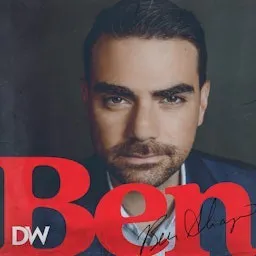
Overview of Ep. 2471 - MASK OFF: Commie Carlson
This episode is a broad, combative monologue in which Ben Shapiro argues that Tucker Carlson has “fully revealed” a worldview that is not conservative, but instead closer to Marxist or Bernie Sanders-style class politics mixed with conspiracy thinking. From there, the show pivots into critiques of Candace Owens, reactions to anti-Jewish violence in New York, commentary on policing and political activism, and a defense of AI/data-center development and market-driven innovation.
Tucker Carlson: “Mask Off” and the Conservative Movement
Shapiro’s central claim is that Tucker Carlson is no longer meaningfully conservative.
What Shapiro says Carlson really believes
- The U.S. economy is rigged by elites and billionaires.
- Class conflict is the real issue, not race, trans issues, or BLM.
- Foreign policy hawks and “neocons” are pushing disastrous wars.
- The media and “ruling class” manipulate the public to keep people divided.
Shapiro argues that Carlson’s recent remarks and social-media posts show a worldview that:
- sounds like Bernie Sanders with a different accent,
- rejects free-market conservatism,
- leans heavily into populist, conspiratorial anti-elite rhetoric,
- and is hostile to traditional conservative foreign policy.
Carlson on foreign policy
Shapiro especially attacks Carlson’s views on:
- U.S. support for Israel,
- Iran,
- Russia,
- Hamas,
- and broader American military power.
He portrays Carlson as:
- anti-interventionist to an extreme,
- sympathetic to authoritarian regimes,
- and willing to frame U.S. and Israeli actions as driven by sinister “they” forces.
Shapiro’s broader warning
He frames Carlson as an influential figure still near the White House, warning that:
- Carlson should not be seen as a guide for the Republican Party,
- his rhetoric could mislead conservatives,
- and his worldview is inconsistent with American interests.
Candace Owens and the “Lunch Mystery”
A major segment is devoted to Candace Owens, whom Shapiro accuses of:
- spreading bizarre speculation,
- offering a $10,000 reward to identify who he ate with on the day Charlie Kirk was shot,
- and then being “scammed” or misled by a bad identification.
Shapiro’s reaction
He mocks the entire episode as absurd and paranoid, insisting:
- he does not know the person Owens named,
- the claim is false,
- and her content is wildly unreliable.
He also uses the segment to argue that Owens is:
- vulnerable to scams,
- sensationalist,
- and not credible.
Anti-Jewish Violence in New York
Shapiro then shifts to a serious news item: the stabbing of two men in New York, including a Jewish man leaving synagogue on Tisha B’Av.
Key points he emphasizes
- One victim was a Jewish man wearing a yarmulke.
- The attacker allegedly shouted “Allahu Akbar” and other incoherent statements.
- The suspect had prior arrests.
- Officials described mental health as a factor.
His broader argument
Shapiro says this fits a pattern:
- anti-Jewish hate crimes are disproportionately high in New York and nationwide,
- mainstream coverage tends to downplay anti-Jewish motives,
- and political leaders on the left are inconsistent about which victims of violence they treat as politically important.
He uses this to criticize what he sees as a “matrix of oppression” in left-wing politics, where:
- some victims are elevated based on identity categories,
- while Jewish victims are often minimized because they are seen as “too white” or “too successful.”
Police Use of Force and Left-Wing Activism
The episode also covers a police shooting in Wisconsin and the reaction from progressive activists.
Shapiro’s framing
He argues that:
- the man shot by police had a serious criminal history,
- officers repeatedly ordered him to drop a knife,
- and nonlethal tactics were attempted first.
He then criticizes activist outrage, especially from DSA-aligned figures, saying they:
- reflexively portray police actions as murder,
- ignore the facts of the case,
- and apply a racial double standard depending on the victim’s identity.
AI, Innovation, and Data Centers
A large portion of the episode is dedicated to defending AI and infrastructure growth.
Main themes
- AI will cause disruption, but historically new technologies create more abundance.
- Data centers and power infrastructure should not be treated as a threat to be stopped.
- The White House and major tech firms are moving to ensure energy costs are not dumped on households.
Shapiro’s argument
He says:
- innovation is good for economic growth,
- AI could dramatically improve productivity and safety,
- and self-driving technology already shows real-life benefits.
He uses Elon Musk’s comments to support the idea that AI may eventually surpass human capability in many tasks and create a future of abundance.
Criticism of anti-data-center narratives
Shapiro rejects claims that data centers:
- disproportionately harm poor or minority communities,
- are making people sick,
- or are consuming meaningful amounts of farmland.
He says these arguments are exaggerated and are really designed to slow innovation.
Elite Politics, the DSA, and “Communist Rhetoric”
Another recurring target is the DSA left.
Shapiro’s critique
He argues the DSA:
- is dominated by overeducated, underproductive white progressives,
- is hostile to markets,
- and promotes redistributionist or socialist ideas under the banner of “rights.”
He praises President Trump’s attacks on what he calls communist rhetoric, and says the DSA’s political coalition is out of step with average Americans.
John Leguizamo and Celebrity Politics
Shapiro closes with a jab at actor John Leguizamo.
His point
He argues that:
- actors should not be treated as political authorities,
- Leguizamo’s self-described socialist views are unserious,
- and wealthy celebrities often espouse radical politics while benefiting from capitalism.
He mocks Leguizamo’s comments about:
- socialism,
- inequality,
- ICE,
- and Latino identity politics.
Bottom Line
This episode is a highly adversarial, personality-driven commentary show with a few recurring themes:
- Tucker Carlson is, in Shapiro’s view, a pseudo-conservative populist and conspiracy theorist.
- Candace Owens is portrayed as unreliable and absurdly speculative.
- Anti-Jewish violence in New York is treated as a serious and underrecognized threat.
- The left is accused of applying identity-based double standards to violence and policing.
- AI, innovation, and market expansion are defended as essential and beneficial.
Overall, the episode is less a structured interview and more a polemical takedown of Tucker Carlson and the broader populist/leftist horseshoe Shapiro believes is distorting American politics.