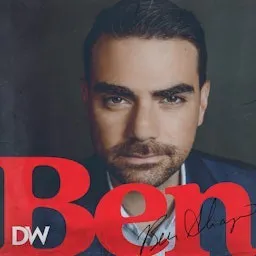
Overview of The Daily Wire’s The Ben Shapiro Show (Ep. 2438)
Ben Shapiro argues that a coordinated “demoralization op” is underway: American-right influencers such as Candace Owens, Tucker Carlson, and others are allegedly laundering Russian propaganda by portraying Vladimir Putin’s Russia as morally superior to the United States. The episode also covers New York’s hard-left politics, Medicaid fraud investigations, the AI/data-center energy debate, U.S. foreign policy toward Iran, and a few cultural flashpoints ranging from NBA Finals politics to White House reflecting pool renovations.
The Russia “op” and Candace Owens’ Moscow trip
Main argument
Shapiro’s central thesis is that Candace Owens’ appearance in Russia was not innocent curiosity but part of a broader Russian influence effort to:
- weaken confidence in America,
- promote “multipolarity,” and
- normalize the idea that Russia is more Christian, traditional, or morally serious than the West.
Key points
- Owens reportedly appeared at the St. Petersburg International Economic Forum, which Shapiro describes as a known Russian intelligence and soft-power hub.
- He compares her rhetoric to overt propaganda, arguing she and similar personalities are repeating Kremlin talking points about family, faith, and Western decline.
- He strongly pushes back on claims that Russia is a model for conservative values, citing Russia’s:
- low fertility rate,
- high abortion rate,
- high substance abuse and suicide rates,
- weak church attendance,
- and demographic dependence on other populations.
His broader framing
Shapiro says this is not healthy skepticism about America; it is credulity toward authoritarian propaganda. In his view, the message is: America is irredeemably broken, so power should shift to U.S. adversaries.
New York politics, Mamdani, and the left’s agenda
Zohran Mamdani and the NBA Finals ad
Shapiro mocks a political ad aired during the NBA Finals from New York Democratic Socialists, using it as evidence that the New York left is increasingly radical and confident.
“Mother” becomes “gestating parent”
He also criticizes a New York legislative push to replace traditional family terms in law, including:
- mother → “gestating parent”
- father → “non-gestating parent”
- and related changes in family-court terminology.
His point: the left is not merely changing language, but redefining basic social and biological categories.
Trump on communists
Shapiro highlights Trump’s anti-communist messaging and uses it to contrast with the New York left’s economic ideas, which he describes as:
- confiscatory,
- anti-property,
- and ultimately destructive.
Waste, fraud, and Medicaid abuse
Luke Rosiak interview
Investigative reporter Luke Rosiak joins to discuss alleged Medicaid fraud, especially in home-health and hospice systems.
Main claims discussed
- Some home-health programs are being used to pay people to “hang out with their own families.”
- Rosiak describes a Bhutanese refugee-linked network that he says has received huge sums through Medicaid in Ohio.
- He argues the program has been turned into a form of de facto foreign aid, with money flowing through shell-like structures and advocacy groups connected to providers.
Political reaction
Shapiro and Rosiak say Democrats reacted to the hearing by shouting over witnesses rather than addressing the evidence.
AI, energy, and the Doug Burgum interview
The anti-AI backlash
Shapiro warns that Democrats—and even some people on the right—are becoming hostile to AI data-center buildouts, which he sees as a major strategic mistake.
Doug Burgum’s case for AI and energy dominance
Interior Secretary Doug Burgum argues that:
- AI is a national security issue, not just a tech issue.
- The U.S. is in an AI arms race with China.
- Energy abundance is essential to both prosperity and military advantage.
- Data centers can benefit local communities by lowering rates, boosting tax revenue, and creating jobs.
Energy and foreign policy link
Burgum ties AI development to:
- American oil and gas production,
- LNG exports,
- reduced dependence on adversaries,
- and the Trump administration’s “drill, baby, drill” approach.
Foreign policy: Iran, the war powers vote, and Rubio
Iran conflict
Shapiro says the U.S. should not agree to a weak deal with Iran that:
- freezes the conflict without ending it,
- releases money to Tehran,
- or allows Iran to rebuild its nuclear and missile programs.
He argues the better path is either:
- continued pressure and containment, or
- further strikes that permanently degrade Iranian military capability.
War powers resolution
He criticizes a mostly symbolic House vote aimed at constraining U.S. action on Iran, saying it undercuts the president and signals weakness.
Rubio hearing
The episode includes a bizarre exchange in Congress where a Democrat questions Marco Rubio over “shoes” and Trump’s conduct, which Shapiro uses to mock the seriousness of congressional oversight.
Cultural detours and media mockery
Sports and “fascism”
Shapiro ridicules the idea that sports are inherently authoritarian because politicians sometimes use them for symbolism. He notes historical examples like:
- Teddy Roosevelt boxing at the White House,
- Lincoln wrestling,
- and the general absurdity of the modern media framing.
Spurs / Wembanyama commentary
He briefly goes into basketball analysis, criticizing coaching decisions and arguing the Spurs mishandled Victor Wembanyama and Dylan Harper.
White House reflecting pool
Interior’s work on the reflecting pool is presented as a small but emblematic example of Trump-era restoration and aesthetics.
Notable takeaways
- Shapiro sees Russian propaganda and anti-American demoralization as a real and coordinated threat.
- He believes the American left’s economics are increasingly about confiscation and control, not fairness.
- He argues that AI and energy expansion are essential to U.S. competitiveness and national security.
- He views Medicaid fraud, immigration-linked abuse, and local political radicalism as interconnected failures of governance.
- On Iran, his message is blunt: do not reward aggression with a bad deal.
Bottom line
This episode is a forceful blend of foreign-policy alarm, anti-left polemic, investigative reporting, and media criticism. Shapiro’s core message is that America is being weakened from within by elites, grifters, and foreign influence—and that the proper response is more confidence in American power, industry, and national identity.