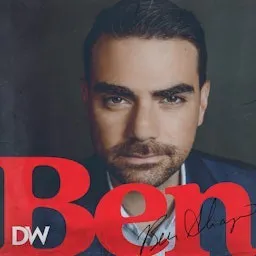
Overview of Ep. 2437 - Left WEEPS As Bari Weiss FIRES 60 Minutes Host
This episode argues that America’s legacy institutions are breaking away from left-wing control, using the reported firing of Scott Pelley from 60 Minutes as the central example. The host frames the move as evidence that mainstream media is no longer a protected left-wing preserve, then broadens the discussion to the Democratic Party’s leftward radicalization, the rise of the DSA/progressive insurgency, and a growing split between conventional Republicans and a conspiratorial “woke right.” The episode ends by contrasting all of that with Marco Rubio’s more traditional, national-interest-focused foreign policy message.
The Scott Pelley / 60 Minutes Firing as a Symbol
- The episode presents Scott Pelley’s firing from 60 Minutes as a watershed moment showing that the old media establishment is losing its grip.
- It argues that 60 Minutes was never truly objective, but rather a left-leaning institution that is now being restructured under new leadership.
- The host mocks Pelley’s public confrontation with new management and says his reaction reflected entitlement, martyrdom, and self-importance rather than journalistic principle.
- A termination letter from CBS leadership is read as a firm response to insubordination, with the episode praising the decision as overdue.
- The broader point: the left is losing institutional control, and that loss is destabilizing its power.
The Media Narrative and “Objective Journalism” Critique
- The episode pushes back against the idea that legacy outlets like CBS News were ever neutral arbiters.
- It argues that mainstream media has long leaned left and that its “objectivity” was mostly a branding strategy.
- Examples cited include:
- favorable treatment of Joe Biden,
- editing Kamala Harris in a way that made her sound more coherent,
- past reporting on Ron DeSantis and the COVID vaccine rollout,
- the Dan Rather / Bush National Guard document scandal.
- The core claim is that media errors usually benefited Democrats because the newsroom culture was already ideologically aligned with them.
The Democratic Party’s Leftward Spiral
Why the party is becoming more radical
- The episode argues that Democrats historically stayed happy with their party when it had institutional power and could deliver policy wins.
- Now that Democrats are losing control, their base is pushing for more radical change rather than moderation.
- The host says the party has moved dramatically left since the Clinton era, and today’s “center-left” figures would have been considered moderate Democrats in the past.
Examples from recent elections and candidates
- New Jersey: The episode highlights Adam Hamawi as a sign of how far left Democratic politics have moved, portraying him as tied to extremist and anti-Israel politics.
- California: It notes that even a figure like Xavier Becerra can be seen as too moderate for the current left.
- Los Angeles: Karen Bass is described as effectively becoming the “moderate” option only because the city’s political center has shifted so far left.
- New York: The episode discusses Zoran Mamdani backing a socialist challenger in a House race, framing it as part of a broader Democratic civil war.
The Progressive/DSA Faction vs. the Old Left
- A major theme is that the Democratic Party is being pulled apart by a more aggressive socialist wing.
- The episode describes this wing as openly anti-establishment, anti-border, anti-police, and increasingly anti-Israel.
- It claims the party’s traditional leadership is caving to these activists instead of confronting them.
- The host presents the DSA as growing in membership and influence, with momentum inside local, state, and federal politics.
- The central warning: the “new left” is not just replacing moderates, but pressuring the older hard-left faction too.
The “Woke Right” and Megyn Kelly Segment
- The episode argues that some right-leaning media figures are drifting toward a conspiratorial, grievance-driven politics that overlaps with the far left.
- Megyn Kelly and Sean Ryan are singled out as examples of this “woke right” tendency.
- The host claims this faction is increasingly anti-Israel, anti-establishment, and eager to form a strange alliance with left-wing radicals.
- This is contrasted with the Republican Party proper, which the host says has largely rejected these figures’ politics.
Marco Rubio as the Contrast to the Extremes
- Marco Rubio’s Senate testimony is presented as a refreshing example of normal, coherent Republican foreign policy.
- Rubio emphasizes:
- American national interest,
- U.S. global leadership,
- the importance of confronting Iran and China,
- and the strength of American power.
- The episode uses Rubio to argue that most voters still support a conventional, serious foreign policy posture.
- This segment is meant to contrast sharply with the ideological chaos on both the far left and the conspiratorial right.
Main Takeaways
- The episode’s central thesis is that left-wing institutional dominance is collapsing, especially in media.
- The Democratic Party is portrayed as becoming more radical because it is losing control over the institutions that once sustained it.
- A growing socialist/activist wing is overtaking the old Democratic establishment.
- On the right, some media personalities are said to be drifting into a fringe, conspiracy-heavy politics that is not representative of the broader GOP.
- Rubio’s comments are used as a reminder that normal, statecraft-focused politics still exists and remains popular.
Closing Note
- The episode teases an upcoming segment about a Trump appointment to replace Tulsi Gabbard at DNI.
- It also ends with a promotional reminder to become a member to access the full show.