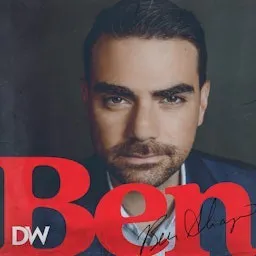
Overview of The Daily Wire’s The Ben Shapiro Show Ep. 2436
This episode is a wide-ranging commentary on what the host describes as the “weaponization” of Western values—especially anti-racism, free speech, and liberalism—against the West itself. The main segments cover a controversial UK stabbing case and police response, the denial of entry to Hasan Piker and Cenk Uygur in the UK, Russia’s use of American influencers for propaganda, Bernie Sanders’ AI ownership proposal, Democratic candidate Graham Platner’s online scandals, Pride Month/cultural politics, and U.S. policy toward Iran and Hezbollah.
UK Stabbing Case and Police Response
What happened
- The host focused heavily on the case of Henry Novak, an 18-year-old university student in the UK who died after being stabbed.
- He argued that police initially mistook the victim for the suspect after the alleged attacker claimed he had been the victim of a racist assault.
- The episode highlights body-cam footage showing officers not believing Novak when he said he had been stabbed and was struggling to breathe.
Main criticism
- The host framed the incident as an example of how authorities can be conditioned to treat racism allegations as more credible than contradictory evidence.
- He argued that the police response reflected a broader incentive structure in Western institutions: if a person of color accuses a white person of racism, officials are pressured to believe the claim first and ask questions later.
Western Values, “Weaponized” Liberalism, and the Paradox of Tolerance
Core argument
- The episode’s central theme is that the West has adopted values like anti-racism and tolerance, but those values are now being used to undermine the West itself.
- The host invoked the “paradox of tolerance” and argued that societies must stop treating accusations of racism as automatically decisive.
Broader claim
- He compared the UK police case to a larger pattern in media and politics:
- race-based narratives are treated asymmetrically,
- anti-Western actors are protected by liberal institutions,
- and Western societies are losing confidence in their own civilizational values.
Hasan Piker, Cenk Uygur, and the UK Entry Ban
What the episode covered
- The host discussed reports that Hasan Piker and Cenk Uygur were denied entry to the UK because their presence was deemed “not conducive to the public good.”
- He rejected their claim that the ban was due to criticism of Israel, arguing the issue is broader hostility to the West and tolerance of extremist rhetoric.
The host’s framing
- He described both men as left-wing influencers who:
- claim to defend liberalism,
- but admire or excuse authoritarian regimes like Cuba, China, Russia, and Hamas-controlled Gaza.
- He also mocked Piker’s claim that liberalism is in decline while he presents himself against fascism.
Russia, Propaganda, and American Influencers
Main point
- The episode alleged that Russia is using American and American-adjacent influencers to produce pro-Russia propaganda.
- The host cited examples including Candace Owens, Marjorie Taylor Greene, the Tate brothers, and others who have praised Russia or portrayed it favorably.
Takeaway
- He argued that this is not subtle: Russia wants America weakened and is leveraging free-speech culture to recruit useful voices in the U.S.
- His conclusion: people who romanticize Russia or other authoritarian states are falling for a propaganda campaign.
Bernie Sanders, AI, and Government Ownership
What Sanders proposed
- The host attacked Bernie Sanders’ proposal for a 50% public ownership stake in major AI companies through a massive tax/seizure framework.
- He portrayed the plan as socialist expropriation disguised as taxation.
The host’s critique
- He argued that:
- innovation creates wealth rather than “extracting” it,
- government ownership would stifle competition,
- and Sanders is unqualified to oversee such a complex industry.
- The segment also framed Sanders as aligned with Chinese interests because of his criticism of AI development.
Graham Platner and Democratic Radicalism
Scandal recap
- The episode revisited Graham Platner, a Democratic candidate in Maine, and discussed:
- a Nazi tattoo,
- explicit online posts,
- and allegations of inappropriate sexting behavior.
- The host mocked Platner’s attempt to present himself as a model of “healthy masculinity.”
Broader political point
- The host used Platner as evidence that Democrats are still willing to embrace highly controversial figures if they fit the party’s political moment.
- He warned that this kind of radicalism is not disappearing and could quickly return if Democrats regain power.
Pride Month, DEI, and Culture-War Politics
Topics covered
- The episode also touched on:
- corporate Pride messaging,
- Sesame Street’s Pride-themed social media post,
- UN and NYC Pride statements,
- and New York Times commentary defending heterosexuality.
Main argument
- The host said these examples show that identity politics is still entrenched and likely to resurface strongly.
- He also argued that DEI policies and affirmative action will come back if Democrats regain control.
Iran, Hezbollah, and U.S. Foreign Policy
Foreign policy update
- The episode closed with a long segment on Iran, Hezbollah, and the strategic implications of U.S. and Israeli military pressure.
- The host argued Trump was right to target Iranian military and nuclear infrastructure and that Iran is currently weaker than it was before.
Key concern
- He warned that if the U.S. pressures Israel not to act against Hezbollah in exchange for talks with Iran, Iran could regain leverage.
- He stressed that negotiations should not let Iran “link” its regional proxy warfare to its own survival or sanctions relief.
Key Takeaways
- The episode’s unifying theme is that Western institutions are being manipulated by people who claim to support Western values while actually undermining them.
- The host sees this pattern in:
- criminal justice and policing,
- media narratives around race,
- left-wing activism,
- foreign propaganda,
- and U.S. domestic politics.
- His overall message: if the West does not defend its own values more aggressively, those values will continue to be turned against it.