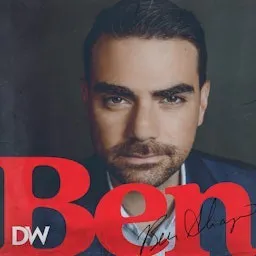
Overview of Ep. 2433 - Inside The Left’s Radical Cos-Playbook To Destroy America
This episode argues that modern Democrats increasingly rely on political “cosplay” and symbolic dressing-up to signal identity and ideology rather than appealing through straightforward policy. The central example is Rep. Alexandria Ocasio-Cortez wearing a hijab-like head covering at an Eid dinner with Zohran Mamdani, which the host frames as a deliberate sign of solidarity with radical Islamist and anti-American politics. From there, the show broadens into a critique of other Democrats who, in the host’s view, are pretending to be types they are not: a blue-collar Trump voter, a Bible-believing Texan, or a working-class populist.
AOC, Hijab, and the Host’s “Third Worldism” Critique
The AOC example
- The host says AOC’s head covering was not a generic scarf or simple sign of respect, but a clear imitation of hijab.
- He argues this was a calculated political signal, not an accident.
- In his reading, the gesture reflects alignment with:
- radical Islamists
- anti-colonial/“third worldist” ideology
- a Democratic Party increasingly shaped by immigrants and activists who blame America for global problems
Why he thinks it matters
- The episode contrasts AOC’s look with past U.S. political visits to the Middle East, where figures like Laura Bush, Condoleezza Rice, Hillary Clinton, Michelle Obama, and Nancy Pelosi did not wear hijab.
- The host treats this as evidence of a long-standing Western rejection of compulsory Islamic dress norms.
- He argues AOC’s choice was meant to be visually and politically legible, not neutral.
Other Examples of Political Cosplay
Zohran Mamdani
- Mamdani is described as more openly consistent than AOC in his cultural signaling.
- The host points to his appearance in traditional Muslim dress during campaigning as part of the same broader pattern.
Graham Platner
- The host says Platner is pretending to be a working-class oyster farmer and a stereotypical Trump voter.
- He argues that image is misleading, describing him as wealthy and privileged despite the rugged public persona.
- Platner’s anti–private equity messaging is presented as part of a manufactured populist identity.
James Talarico
- Talarico is portrayed as cosplaying as a Bible-centered Texas Christian while holding radical left views.
- The host cites criticism that Talarico’s church supports books and ideas the show considers sexually explicit and gender-ideological.
- The episode highlights Talarico eating ribs and wearing Texas-style clothing as an artificial attempt to seem culturally Texan.
Jill Biden and the Biden Mental Decline Controversy
- The episode revisits Joe Biden’s disastrous debate performance and argues the public was misled for years about his condition.
- Jill Biden’s later comments admitting she was frightened by the debate are presented as proof that she knew something was seriously wrong.
- The host also criticizes:
- Jen Psaki for claiming she never saw Biden decline
- Karine Jean-Pierre for attributing the debate debacle to a cold
- The broader point: major institutions and Democratic officials lied to protect Biden politically.
Kathy Hochul’s Failed Trump/Knicks Dunk
- New York Gov. Kathy Hochul is mocked for trying to score political points off Trump using the Knicks.
- The host says she got basic basketball facts wrong, which made the attempt backfire.
- This is used as another example of politicians trying to borrow cultural credibility they don’t actually have.
The Pope, AI, and Economic Centralization
The AI encyclical
- The pope’s new AI-focused encyclical is discussed and largely criticized.
- The host agrees with broad cautions about AI being used immorally, but rejects the call for heavy centralized control.
Main objections
- He argues the pope’s language slips into redistributionist and quasi-socialist thinking.
- The host says innovation usually starts as a luxury, then becomes broadly accessible through competition and market diffusion.
- He warns against using morality as a pretext for centralized control over technology and data.
Bigger concern
- The host frames this as part of a larger ideological battle on the right between:
- liberty and free markets
- virtue enforced through centralized regulation
- He clearly favors the former and says religious authority should not be used to justify economic micromanagement.
Key Takeaways
- The episode’s core thesis is that symbolism matters in politics, and Democrats are increasingly using costume and identity signaling to communicate ideological alignment.
- AOC’s hijab is treated as the episode’s most important symbol, representing solidarity with radical foreign or anti-American currents.
- The host sees similar pattern-matching in Platner and Talarico, who he says are both impersonating voter archetypes they do not genuinely represent.
- Biden family credibility is further damaged by Jill Biden’s comments, which the host views as an admission of a long-running cover-up.
- The pope’s AI remarks are criticized as well-intentioned but economically misguided, especially where they imply more centralized control over technology.
Sponsors and Ad Reads Mentioned
- MidiHealth
- Supersure
- NetSuite
- Balance of Nature
- Shopify
These sponsor messages are interspersed throughout the episode and are not part of the main political commentary.