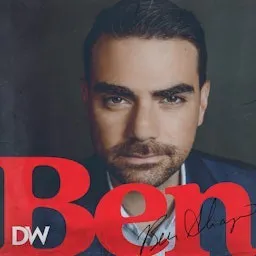
Overview of Ep. 2431 - Billionaires Aren’t The Problem
This episode is a forceful defense of free markets, private property, and wealth creation, centered on the argument that billionaires are not the cause of economic hardship. The host uses Jeff Bezos’s CNBC interview as a springboard to criticize anti-capitalist rhetoric on the left and the “woke right,” arguing that attacks on rich people often substitute envy and political theater for real solutions to affordability, innovation, and growth.
Main Economic Arguments
Billionaires, markets, and prosperity
- The episode argues that billionaires become wealthy by creating products and services that improve lives, not by “stealing from the poor.”
- Free markets are presented as the main mechanism that makes goods and services cheaper, better, and more abundant over time.
- The host insists that:
- Higher incomes help affordability.
- Lower expenses help affordability.
- More competition and innovation help affordability.
- A recurring point is that the economy is not a fixed pie; wealth can grow through productivity and innovation.
Government is framed as the main obstacle
- The host argues that many affordability problems are driven by:
- regulation,
- subsidies,
- market distortions,
- and other forms of government intervention.
- Examples used include:
- expensive rent,
- high taxes,
- and the alleged failures of redistributionist policy.
Jeff Bezos, AI, and the “Anti-Success” Narrative
Bezos on CNBC
The episode focuses heavily on Bezos’s remarks that:
- politicians often pick a villain instead of solving root problems,
- the U.S. has “two economies” of prosperity and struggle,
- and private business creates far more societal value than philanthropy alone.
The host agrees with Bezos that:
- taxing a billionaire more will not solve structural problems like poverty or a teacher’s salary,
- and that business growth creates jobs, investment, and broader prosperity.
Artificial intelligence
Bezos’s comments on AI are also defended:
- AI will likely change jobs rather than eliminate work altogether.
- New technology causes dislocation, but over time it increases productivity and creates new opportunities.
- The host argues that AI panic repeats the same mistake made in past technological shifts.
Political and Cultural Critique
The left, the “woke right,” and populist resentment
The host says both sides increasingly promote:
- anti-capitalist sentiment,
- distrust of success,
- and hostility toward people who earn more money.
He argues that:
- this kind of politics is built on envy,
- and that demonizing rich people is easier than proposing real solutions.
Kevin O’Leary and basic financial discipline
The episode defends Kevin O’Leary’s comments about not spending $28 a day on lunch if you make $70,000 a year.
- The point: financial responsibility matters.
- The host treats criticism of this advice as another example of people rejecting basic economic reality.
Fran Lebowitz and anti-billionaire rhetoric
The host dismisses Fran Lebowitz’s comparison of modern billionaires to robber barons, arguing that:
- modern finance and technology employ huge numbers of people,
- and large-scale investment is essential to innovation and job creation.
Democratic Party and the Left’s Direction
Democrats moving left
The host cites polling suggesting voters want Democrats to move toward the center on:
- crime,
- immigration,
- economic issues,
- and trans issues.
He argues the party is doing the opposite by embracing more extreme figures and rhetoric.
Criticism of Zohran Mamdani and other progressives
The episode sharply attacks New York socialist Zohran Mamdani and other progressives as:
- unserious about economics,
- focused on punishing wealth,
- and motivated more by spectacle than policy.
Extremism and antisemitism
The host also highlights:
- pro-Palestinian and anti-Israel rhetoric among some Democrats,
- comments from Ilhan Omar and Bernie Sanders,
- and what he sees as growing tolerance for antisemitic narratives on the left.
He describes this as part of a broader collapse into ideological extremism.
Foreign Policy and Cuba
Raul Castro indictment
The episode briefly covers the announcement of an indictment involving Raul Castro and conspiracy to kill U.S. nationals.
Cuba regime change talk
The host discusses whether the U.S. should pressure or intervene in Cuba, noting:
- the regime is weak,
- the Cuban economy is broken,
- but internal uprising is historically difficult without organized opposition.
He expresses hope that the communist regime eventually falls, while warning about the risks of prolonged stalemate.
Key Takeaways
- Wealth creation is not exploitation by default; it often comes from innovation, competition, and better products.
- Economic hardship is usually not solved by punishing billionaires.
- Free markets, not class warfare, are presented as the best path to affordability and growth.
- AI and other technologies should be viewed as productivity tools, not job-killers.
- The host sees both the left and parts of the right as increasingly driven by envy, anti-capitalism, and resentment rather than workable policy.