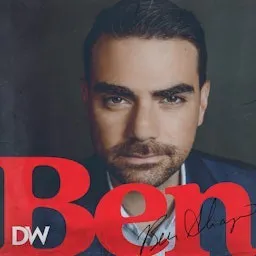
Overview of Ben Shapiro Reviews The Odyssey
In this review, Ben Shapiro gives Christopher Nolan’s The Odyssey an enthusiastic near-masterpiece verdict, praising its visuals, performances, and thematic ambition while also calling out several “stones in the shoe” that he считает unnecessary or distracting. He argues that the film is a bold, beautifully made adaptation that adds a clear moral framework—centered on guilt, natural law, and the consequences of violating order—even if it takes major liberties with Homer’s original text.
Overall Verdict
Shapiro’s bottom line is strongly positive:
- He rates the film roughly 8.5 to 9 out of 10
- He calls it “a masterpiece” and one of Nolan’s strongest works
- He says it starts slowly, but becomes increasingly powerful and emotionally effective in the second half
- He believes it will make a fortune and that critics of certain casting choices are overreacting to a movie that is otherwise excellent
Main Themes and Interpretation
Shapiro spends much of the review explaining what he thinks the film is really about:
- Odysseus is portrayed as living in self-imposed exile, burdened by guilt
- He regrets not only the war itself, but especially the slaughter and destruction associated with the fall of Troy
- The film introduces a recurring moral idea called “Zeus’s law”:
- Treat others as you would want to be treated
- Don’t violate the natural order or moral law
- If you do, the consequences spread outward and infect everything
- Shapiro interprets the film as having a conservative moral framework
- Human beings are depicted as greedy, violent, and flawed
- Odysseus learns he cannot control everything
- Order, restraint, and sacrifice matter
He especially praises the idea that Odysseus must make one final moral compromise to save Ithaca, then go into exile so Telemachus can inherit leadership.
What Shapiro Praises Most
Direction and Visuals
He repeatedly emphasizes that Nolan is operating at the top of his craft:
- Gorgeous cinematography
- Iconic, unforgettable imagery
- Strong staging of action set pieces
- Particularly impressed by:
- The fall of Troy
- The Trojan Horse sequence
- The Cyclops scene
- Giant and siege sequences
- The Cersei segment
Acting
He says most of the cast is excellent, especially:
- Matt Damon as Odysseus
- Robert Pattinson as the antagonist
- Tom Holland as Telemachus
- Anne Hathaway as Penelope
- Jon Bernthal as Menelaus
- Charlize Theron as Calypso
- Corey Hawkins in a supporting role
- John Leguizamo as Emeus/related supporting part, which Shapiro says he liked
Criticisms and Casting Debates
Shapiro addresses several casting choices that had sparked online criticism. He groups them into those he thinks are minor and those he thinks are real mistakes.
Casting choices he says do not bother him much
- Travis Scott as the bard
He says the role is tiny and doesn’t affect the film much. - Lupita Nyong’o as Helen
He argues the film itself makes clear that Helen is not the real reason for the war; she is a pretext for geopolitical conquest. - Zendaya as Athena
He says this is actually clever:- Athena is presented through Odysseus’s subjective vision
- The film links Athena to a young woman murdered during the sack of Troy
- This supports the idea that gods and humans overlap in his mind
Casting/choices he thinks are genuine flaws
- Use of modern words like “dad,” “mom,” and “daddy”
- He says this breaks immersion and was unnecessary
- Elliot Page as Sinon
- He calls this the biggest casting mistake
- He argues the performance doesn’t work physically or vocally for the role
- He says it undermines key scenes and feels like an unforced error
Technical Notes
Shapiro also gives a mixed but mostly positive technical assessment:
- Sound mixing: a recurring issue
- He says the score sometimes overwhelms dialogue
- This is especially noticeable in scenes with Calypso
- Score by Ludwig Göransson:
- Good, but not among the composer’s best
- He thinks Oppenheimer had a stronger score
- Writing:
- Strong overall
- Some modern language choices and one casting decision are the main weaknesses
Final Takeaway
Shapiro’s review is a strong endorsement of The Odyssey as a visually stunning, thematically rich, and emotionally effective Christopher Nolan film. He argues that:
- The movie is excellent despite a few distracting flaws
- Its moral framework aligns with traditional/conservative ideas about order and consequence
- Viewers should not let a few bad choices prevent them from enjoying what he considers an exceptional cinematic experience
In short: he thinks it’s one of the best movies of the year, and possibly one of Nolan’s top-tier films.