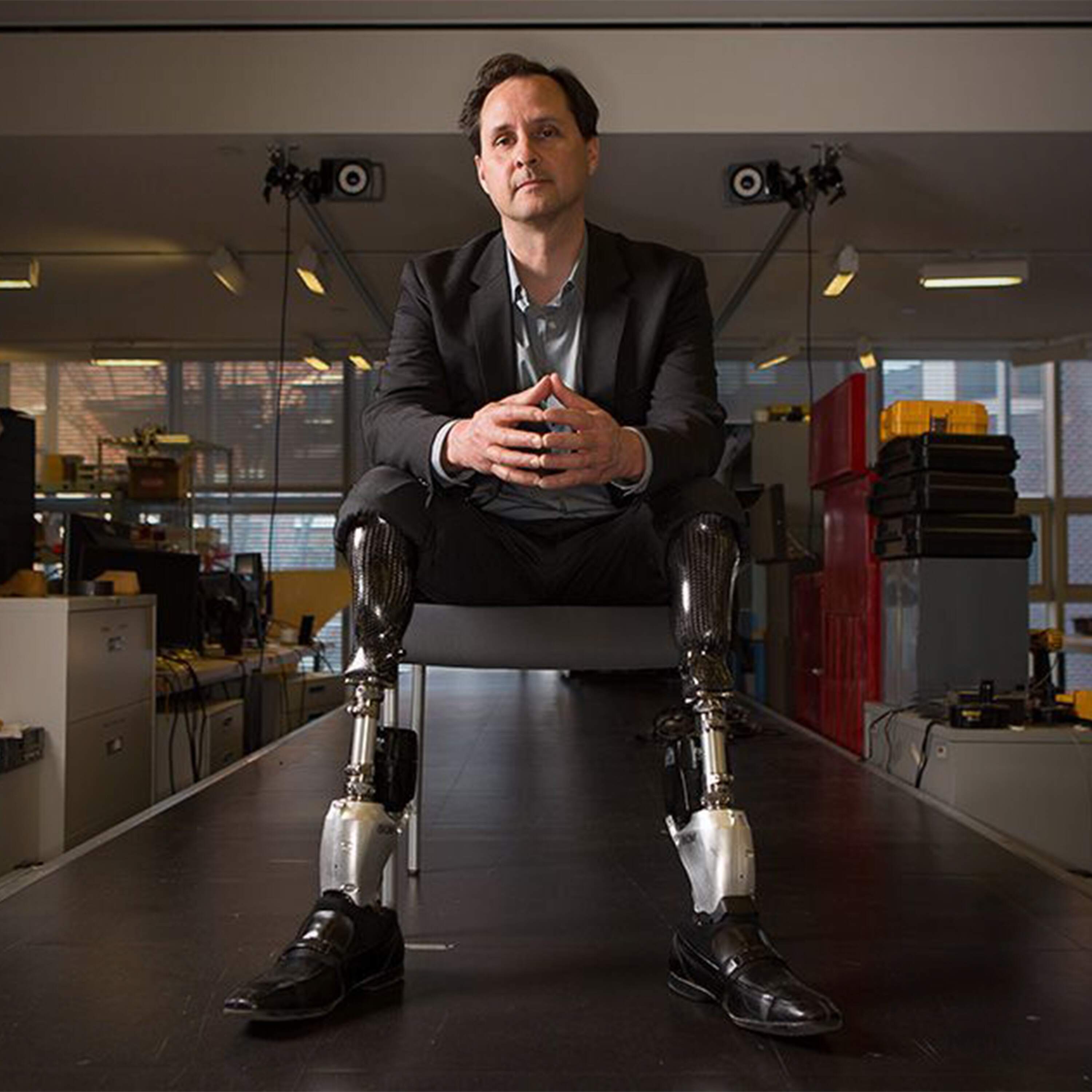
Overview of The case for merging human bodies with machines
This TED Radio Hour episode from NPR explores the growing boundary between humans and machines: robots in everyday spaces, bionic prosthetics that restore bodily sensation, artificial skin that can “feel,” and gene-editing tools that reshape the microbiome inside our bodies. Across the episode, the core question is not whether augmentation will happen, but how to design it so it feels safe, intuitive, humane, and even beautiful.
Main Theme: Augmentation Without Losing Humanity
The episode frames “augmenting humans” as a design challenge as much as a technical one. The speakers argue that the future of technology will depend on whether machines and body-linked devices can:
- feel legible and predictable to people
- reduce fear and friction
- restore function and independence
- preserve human dignity, agency, and emotion
Rather than imagining technology as cold or alien, the episode pushes toward a future where machines move, sense, and interact in ways that fit naturally into human life.
Katie Kwan: Why Robot Movement Matters
Katie Kwan, a dancer turned robot choreographer, explains that movement is communication. Humans instantly read motion for cues about safety, intention, and emotion, so robots that move awkwardly or aggressively can feel unsettling even if they are technically useful.
Key ideas
- Robots are increasingly entering everyday environments: offices, hospitals, homes, streets.
- Motion design affects whether people feel safe, welcomed, or threatened.
- Robots should be built not just to perform tasks, but to behave in socially intelligible ways.
- Kwan’s work at Google’s Everyday Robots used AI to train multiple robots to move together smoothly, like a flock.
Takeaway
A robot’s usefulness is not enough; its movement style shapes how people emotionally experience it.
Hugh Herr and Jim Ewing: Bionics That Feel Like Part of the Body
MIT engineer and biophysicist Hugh Herr, himself a double amputee, discusses a new surgical approach called the agonist-antagonist myoneural interface (AMI). The procedure reconnects muscles in a way that preserves the brain’s sense of limb position and movement, allowing prosthetics to feel more integrated and controllable.
Jim Ewing, a climber who lost his ankle after a severe fall, became one of the first patients to receive the procedure.
Key ideas
- Traditional amputations sever the natural muscle-nerve feedback loop.
- AMI preserves proprioception, the body’s sense of where limbs are in space.
- After surgery, patients can feel and control bionic limbs more naturally.
- Jim described the prosthetic as becoming part of him, and turning it off felt emotionally jarring.
Takeaway
The future of prosthetics is not just replacement, but deep neural integration—so a machine limb can become embodied.
Ana Maria Coclita: Artificial Skin That Senses Touch, Heat, and Humidity
Materials scientist Ana Maria Coclita describes “smart skin” designed to mimic some of the sensory functions of human skin. Her artificial skin can detect touch, temperature, and humidity, and could eventually be used on prosthetics or as a patch for burn victims.
Key ideas
- Human skin is an enormously complex sensory organ.
- Existing artificial skin often restores appearance but not sensation.
- Her material uses tiny nanostructures that generate electrical signals when stimulated.
- The technology could help prosthetic users feel textures and temperature, or help robots become more sensitive and safer around humans.
Takeaway
Skin is not just a covering; it is a sensory interface. Recreating it could transform medicine and robotics.
Jennifer Doudna: Editing the Microbiome From Within
Nobel Prize-winning biochemist Jennifer Doudna expands the “augmentation” idea inward, into the body’s microbiome. Using CRISPR and metagenomics, her work aims to precisely edit microbial communities linked to disease and environmental harm.
Key ideas
- CRISPR can edit genes with precision, like a word processor for DNA.
- The microbiome influences conditions such as asthma, Alzheimer’s, obesity, and diabetes.
- Precision microbiome editing could one day prevent disease or reduce methane emissions in livestock.
- This approach is more targeted than antibiotics, probiotics, or fecal transplants.
Takeaway
Human augmentation is not only mechanical; it can also be biological, working through the tiny organisms that live inside us.
Big Takeaways
1. The future of tech is embodied
Technology is moving beyond screens and into bodies, skin, movement, and physical environments.
2. Design matters as much as function
A machine can be efficient and still feel frightening. Human-centered design should prioritize comfort, trust, and emotional clarity.
3. Augmentation can restore agency
Bionics and smart materials can help people regain movement, sensation, and independence.
4. The human-machine boundary is becoming more fluid
From prosthetics to robots to microbiome editing, the episode suggests that “cyborg” is becoming less science fiction and more everyday reality.
5. Beauty and play have a place in engineering
Several speakers argue that future devices should not only work well, but also feel graceful, expressive, and even joyful.
Notable Insight
“It’s not a question of whether the robots are coming. It’s a question of how quickly—and what they’re going to look like when they do show up.”
This captures the episode’s central argument: the important challenge is not stopping augmentation, but shaping it wisely.
Conclusion
The case for merging human bodies with machines presents augmentation as a hopeful, practical, and deeply human project. Whether through robot choreography, prosthetic embodiment, artificial skin, or microbiome editing, the episode argues that the best future technologies will not replace people—they will extend human capability while preserving safety, dignity, and connection.