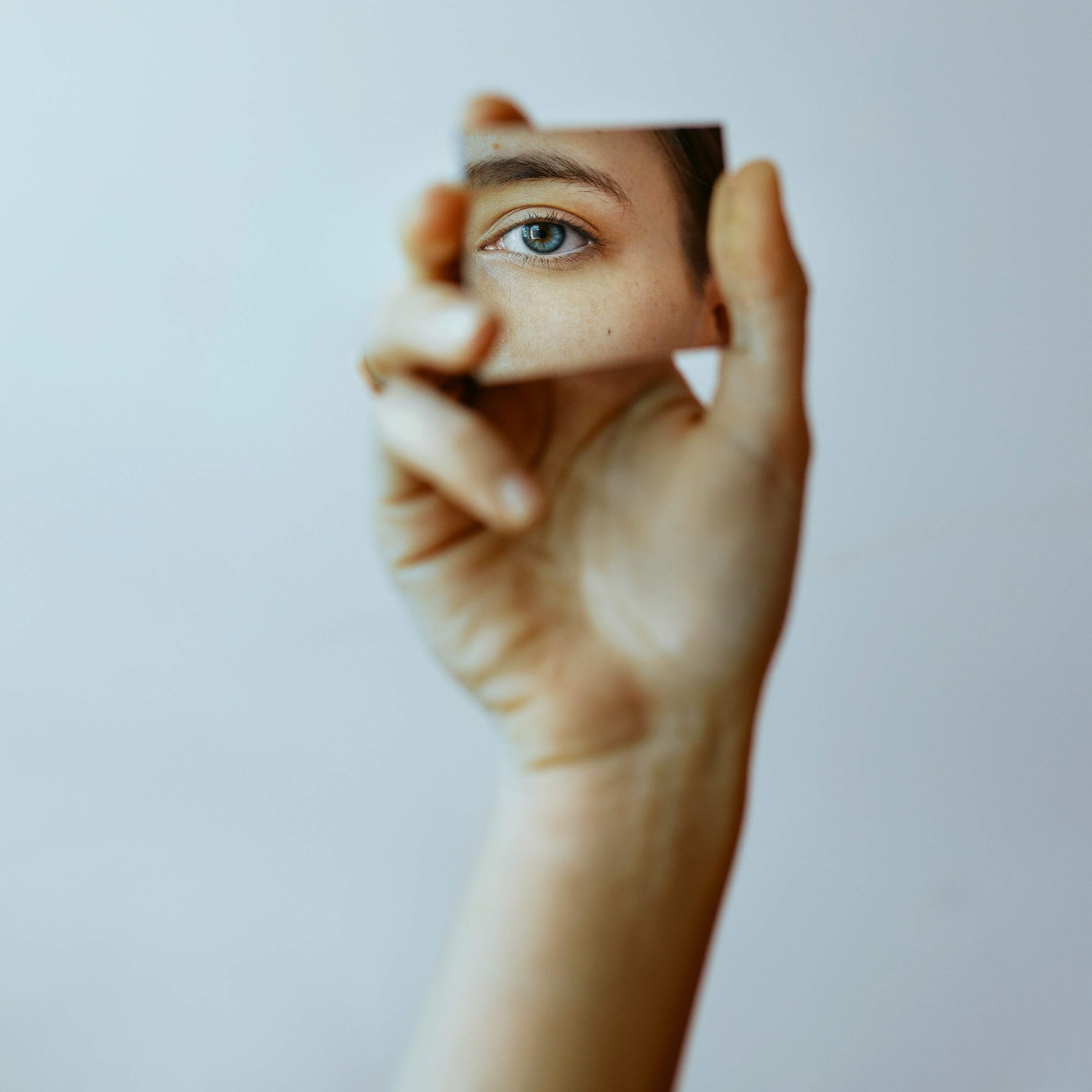
Overview of How you see yourself (TED Radio Hour — NPR)
This episode explores self-perception from four angles: how we present ourselves in photos, how we defend or change our moral self-image, how cultural and digital forces shape beauty standards, and what neuroscience tells us about the constructed nature of the self. Guests include portrait photographer David Suh, psychologist Dolly Chugh, journalist Elise Hu, and science writer Anil Anandaswamy. The episode weaves practical techniques, social science experiments, cultural critique, and neuroscience to show how malleable—and fragile—our sense of self is, and what we can do to respond more thoughtfully.
Main segments and core ideas
David Suh — Portraits, posing, and feeling like yourself
- Problem: Many bright, confident people freeze or feel awkward in front of a camera due to childhood experiences and cookie‑cutter posing.
- Approach: He rejects scripted poses and treats posing as an embodied, present practice. Techniques include guided breathing, grounding attention in the body, mirroring movements, co‑movement (“dance” with the subject), and tailoring wardrobe and silhouettes to the person’s identity.
- Philosophy: Photos should reflect both inner self and outer presentation. He resists “fake it till you make it” in favor of playful exploration that can expand someone’s self-image.
- Practical outcomes: Clients often feel more confident and discover aspects of themselves they didn’t expect.
Dolly Chugh — Moral identity, bounded ethicality, and “goodish” people
- Key concept: Many people have a central moral identity—being seen as a “good person” matters—and threats to that identity trigger defensive maneuvers.
- Bounded ethicality: Ethical behavior is not a binary (good vs. bad); it fluctuates across situations and time. People can be ethical in some contexts and not in others—sometimes unintentionally.
- “Goodish” framework: Instead of striving to be a fixed “good” person, adopt a growth mindset—be a “goodish” person who actively looks for and learns from mistakes. This reduces defensive posturing and allows real moral development.
- Social dynamics: Virtue signaling can sometimes be about feeling better rather than becoming better. Honest, vulnerability‑friendly responses (e.g., listening and learning when called out) model the growth mindset Chugh advocates.
Elise Hu — K‑beauty, South Korea’s global influence, and AI filters
- Observation: South Korea has an outsized influence on global beauty standards—skincare routines, surgical trends, cosmetic exports—and its culture frames appearance as tied to social and economic opportunity.
- Cultural drivers: Homogeneity and strong social pressure make cosmetic alteration both a means of fitting in and a perceived responsibility to family/community.
- Global spread: Social media and affordable medical tourism have exported K‑beauty aesthetics; South Korea is a major cosmetics exporter.
- Emerging risk: AI‑generated filters produce hyper‑real, homogenized standards that flatten human diversity and push a never‑ending augmentation arms race.
- Parenting and resistance: Hu models authenticity (e.g., appearing without makeup publicly), and urges leaning into human variety to counter narrowing standards.
Anil Anandaswamy — The constructed self and altered selves (neuroscientific view)
- Narrative self: Our identity is largely a story built from memories; conditions like Alzheimer’s reveal how fragile that story construction can be.
- Bodily self: Sense of ownership and agency (feeling that one’s body parts belong to you and that you cause actions) are constructed. Disorders such as xenomelia, phantom limbs, and schizophrenia demonstrate this.
- Broader point: The self is both robust and fragile—constructed by brain and body processes—and acknowledging that construction can cultivate empathy toward people with altered selves.
- Ethical implication: Understanding the constructed nature of self can encourage less rigid attachment to identity and more compassion.
Key takeaways
- Self‑image is multidimensional: how you look, how you act morally, how you narrate yourself, and how your brain constructs body ownership and agency.
- Small behavioral tools (grounding, mirroring, wardrobe choices) can change how you appear and feel in photos.
- Moral identity is dynamic; embracing a “goodish” growth mindset helps people learn from mistakes instead of defending an immutable moral label.
- Cultural and technological forces (K‑beauty, social media, AI filters) intensify and globalize narrow beauty ideals—leading to material and psychological costs.
- Neuroscience shows the self is a construction—recognizing that can make us more empathetic and flexible about identity.
Actionable tips (what you can do next)
-
For better portraits:
- Ground and breathe before posing; notice contact points (toes, chair).
- Mirror the photographer’s movements and facial expressions to loosen up.
- Choose clothes and silhouettes that feel like the version of yourself you want to try on.
- Treat posing as play/experimentation, not performance.
-
For ethical growth:
- Swap “I must be a good person” for “I’m a goodish person—learning and improving.”
- Seek feedback instead of defensiveness when someone calls out harm.
- Practice noticing your small ethical lapses (don’t wait to be caught) and correct them.
-
For resisting harmful beauty norms:
- Reduce use of hyper‑real filters and model unedited appearances in your social circles.
- Teach kids media literacy about filters and beauty standards early.
- Celebrate and amplify diverse, non‑homogenized representations.
-
For empathy and perspective:
- Remember the self is partly constructed—be patient with yourself and others when identities shift (due to illness, mental health, or life change).
- When encountering someone’s altered sense of self, prioritize listening, curiosity, and support.
Notable quotes
- David Suh: “Posing is a practice of being present in your body and communicating who you are through body language.”
- Dolly Chugh: “What if we were to just forget about being good people… and instead set a higher standard of being a goodish person.”
- Elise Hu: “Digital culture is now reshaping our actual faces and bodies… AI’s idea of attractiveness is only increasingly inhuman and cyborgian.”
- Anil Anandaswamy: “The self that each one of us takes oneself to be is not as real as it seems.”
Further resources
- David Suh — Instagram: @davidsuhphoto; TED Talk at ted.com
- Dolly Chugh — Book: A More Just Future; TED Talk at ted.com
- Elise Hu — Book: Flawless: Lessons in Looks and Culture from the K‑Beauty Capital; TED Talk at ted.com
- Anil Anandaswamy — Book: The Man Who Wasn’t There; TED Talk at ted.com
This episode balances practical, everyday strategies (posing, parenting, receiving feedback) with deeper conceptual shifts (growth vs. fixed moral identity; constructed selves) to help listeners see themselves—and others—more clearly and compassionately.